Understanding Intel Processors in Industrial Computing
The query "IBM CPU" often refers to a historical context, as IBM was a major designer and manufacturer of CPUs, most notably for its own mainframe and Power Systems. In the modern industrial computing landscape, Intel processors are the dominant x86 architecture standard, powering a vast majority of embedded systems, industrial PCs, and edge devices. These processors are chosen for their performance, software compatibility, and robust ecosystem.
Key Specifications and Technical Details
Modern industrial computers utilize a range of Intel processor families, each suited to different performance and power requirements. Key specifications to consider include:
-
Processor Series: This includes energy-efficient Intel® Processor N-series (e.g., N100) for fanless, low-power applications, and more powerful Intel® Core™ i-series (e.g., i3, i5) for demanding computational tasks.
-
Generation: Newer generations (e.g., 12th, 13th, 14th Gen) offer improved performance per watt, enhanced integrated graphics, and newer instruction sets.
-
Core Count: Ranging from 4 cores in entry-level models to 12+ cores in high-performance workstations, affecting multitasking and parallel processing capability.
-
Thermal Design Power (TDP): Critical for fanless designs; lower TDP processors (like the N-series) enable completely silent, reliable operation in harsh environments without moving parts.
Use Cases and Applications
Intel-based industrial computers are deployed across diverse sectors due to their reliability and processing power.
-
Digital Signage & Kiosks: Powering 24/7 displays in retail, transportation, and public venues.
-
Factory Automation: Acting as controllers for PLCs, HMIs, and vision inspection systems on the shop floor.
-
Edge Computing & IoT Gateways: Processing data locally from sensors and devices before sending it to the cloud.
-
Thin Clients & VDI: Providing secure, centralized desktop access in corporate and healthcare environments.
Comparison of Common Intel Processor Series for Industrial Use
| Series | Typical Models | Cores/Threads | Ideal For | Key Feature |
|---|---|---|---|---|
| Intel® Processor N-Series | N95, N100, N150 | 4-8 / 4-8 | Fanless systems, digital signage, basic computing | Ultra-low power, fanless design, cost-effective |
| Intel® Celeron® | J4125 | 4 / 4 | Entry-level industrial PCs, thin clients | Reliable, low-cost, proven longevity |
| Intel® Core™ i3 | 1215U, 1315U | 6-10 / 8-12 | General-purpose industrial workstations, kiosks | Balanced performance, integrated graphics |
| Intel® Core™ i5 | 1235U, 1335U, 1250P | 10-12 / 12-16 | Advanced automation, medical imaging, edge servers | High performance, robust multi-tasking |
Thinvent's Range of Intel-Powered Industrial Solutions
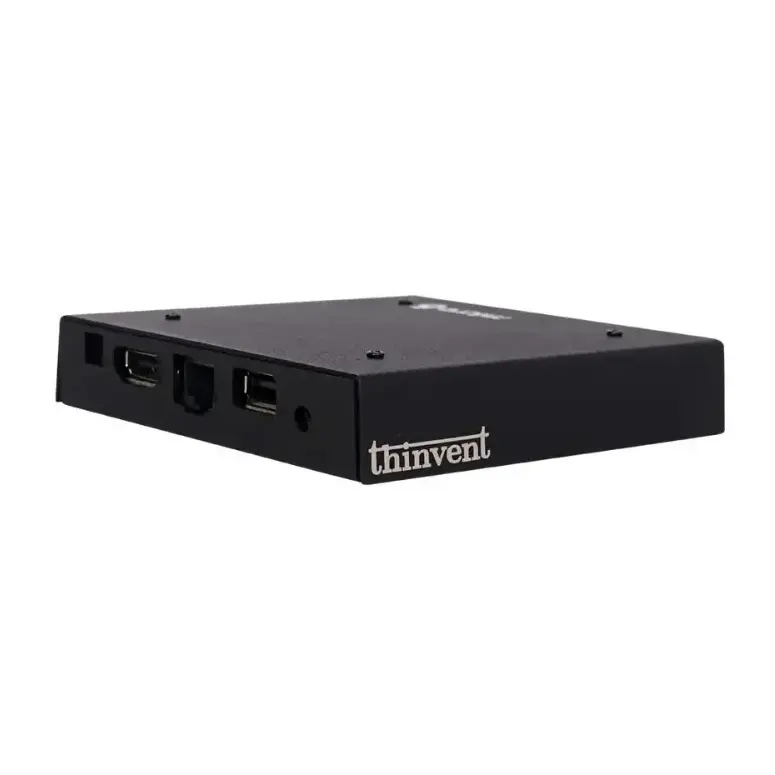
Thinvent leverages the full spectrum of Intel processor technology to build robust industrial computing solutions. Our product lines include compact Mini PCs and Thin Clients utilizing efficient Intel N-series and Celeron processors for space-constrained, fanless applications. For more demanding tasks, our Industrial PCs and All-in-One systems are equipped with powerful Intel Core i3 and i5 processors from the latest generations, delivering the performance needed for complex automation, data analysis, and graphical interfaces. All Thinvent systems are engineered for durability, wide-temperature operation, and long-term reliability in challenging industrial environments.