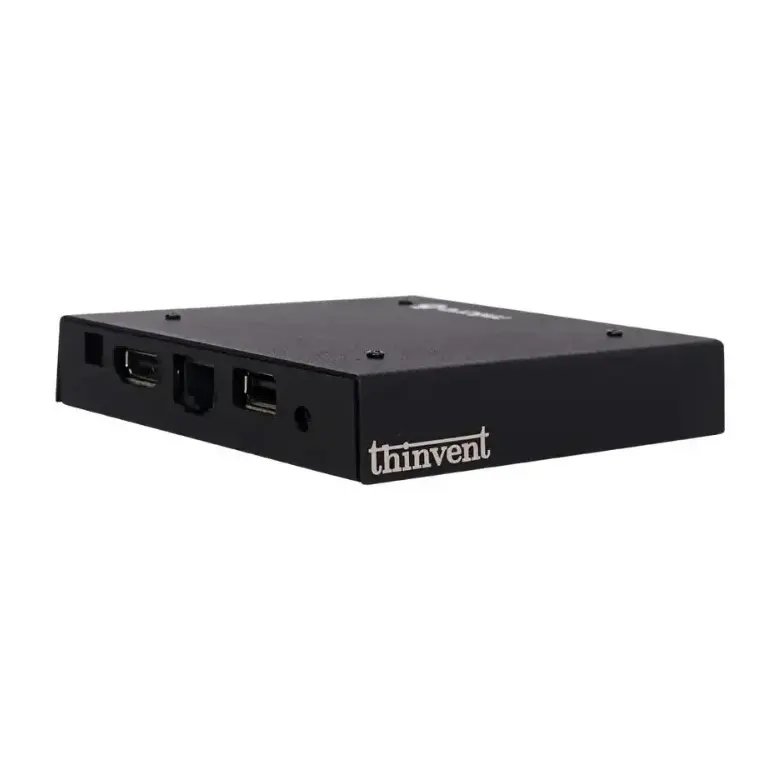
What Is an Industrial Computer?
An industrial PC (IPC) is a computing platform engineered for continuous operation in environments where a standard office desktop would struggle — factory floors, control cabinets, kiosks, warehouses, vehicles and outdoor enclosures. Beyond raw performance, an IPC is defined by its thermal design, power input tolerance, mounting options, I/O flexibility and long-term component availability. Where a consumer PC is designed for a comfortable desk, an industrial PC is designed for heat, dust, vibration, electrical noise and years of uninterrupted duty cycles.
Key Specifications and Technical Details
When specifying an IPC, the processor determines the workload ceiling, but the platform around it determines whether the system survives. Look for a fanless chassis with passive heat dissipation, solid-state storage with no moving parts, wide-range DC input, and a serial or digital I/O option for legacy equipment. The table below summarises the specs that matter most.
| Specification | What It Affects | Typical Industrial Requirement |
|---|---|---|
| Processor | Compute headroom, virtualisation, AI inference at the edge | Intel® Core™ i3/i5, Celeron®, Intel® N-series |
| Cores / Threads | Multitasking, SCADA, multiple HMIs | 4 – 12 cores |
| Memory (DDR4) | Number of concurrent apps, VMs, databases | 4 GB – 32 GB |
| Storage (SSD) | Boot speed, shock resistance, log retention | 128 GB – 1 TB |
| Cooling | Dust ingress, noise, service life | Fanless passive cooling |
| Serial Ports | PLCs, meters, legacy controllers | DB9 RS-232/RS-485 |
| Display Outputs | Dual-monitor HMIs, signage | HDMI / VGA / DisplayPort |
| Ethernet | Machine networks, redundancy | Dual Gigabit |
| Operating System | Application compatibility, update policy | Windows 11 Pro / Linux / DOS |
| Power Input | Vehicle and DIN-rail installations | 12 |