What Is an Industrial Computer?
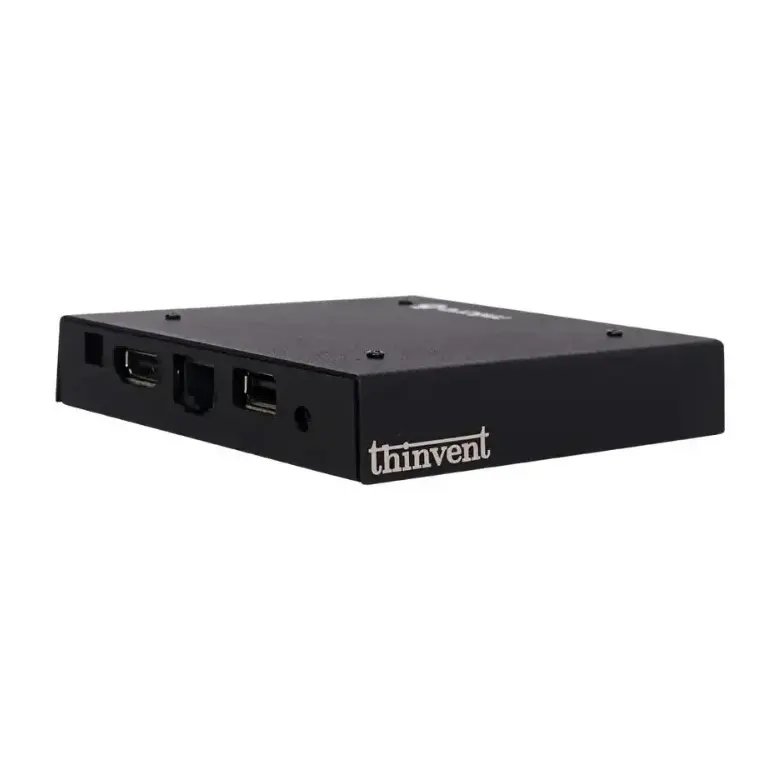
An industrial computer is a computing platform engineered to run continuously in environments where a standard office desktop or consumer mini PC would quickly fail. Instead of being optimised for low cost and thin aesthetics, an industrial PC (IPC) is designed around thermal headroom, wide operating temperature ranges, vibration tolerance, dust and moisture resistance, and long-term component availability. The result is a machine that can sit on a factory floor, inside a kiosk, in a control cabinet, or on a vehicle and keep running for years without routine attention.
The defining characteristics are usually fanless cooling, a rugged metal chassis, industrial-grade power input, watchdog timers, and a long product lifecycle. Because industrial systems often control machinery, collect sensor data, or drive a display that operators depend on, reliability and predictable behaviour matter far more than peak benchmark scores.
Key Specifications and Technical Details
Industrial computers are specified differently from consumer PCs. The table below outlines the parameters that matter most when selecting a unit.
| Specification | Typical Industrial Requirement | Why It Matters |
|---|---|---|
| Cooling | Fanless, passive heatsink | No moving parts to clog with dust or fail |
| Chassis | Aluminium or steel, often wall/VESA mountable | Heat dissipation, mechanical protection |
| Operating temperature | Extended range, often 0–50 °C or wider | Factory floors, cabinets, outdoor kiosks |
| Power input | 12 V or 9–36 V DC, wide-range | Vehicle, DIN-rail and cabinet power rails |
| Storage | SSD, sometimes mSATA/M.2 with shock rating | Resistance to vibration and shock |
| Serial I/O | RS-232 / RS-485 DB9 ports | PLCs, meters, scales, legacy machinery |
| Networking | Dual Gigabit Ethernet | Separation of control and plant networks |
| Mounting | DIN rail, VESA, wall bracket | Fits existing control panels |
| Lifecycle | Multi-year availability, stable BOM | Fleet consistency across deployments |
Processor choice is usually driven by workload, not by marketing tiers. Intel Celeron and N-series chips (N95, N100, N150, J4125) suit gateway, HMI and data-logging roles, while Intel Core i3 and i5 parts such as the 1215U or 13th and 14th generation equivalents handle vision, multi-display signage, edge analytics and virtualisation. Memory is commonly 8 GB to 32 GB DDR4, and storage generally ranges from 128 GB to 1 TB of SSD.
Use Cases and Applications
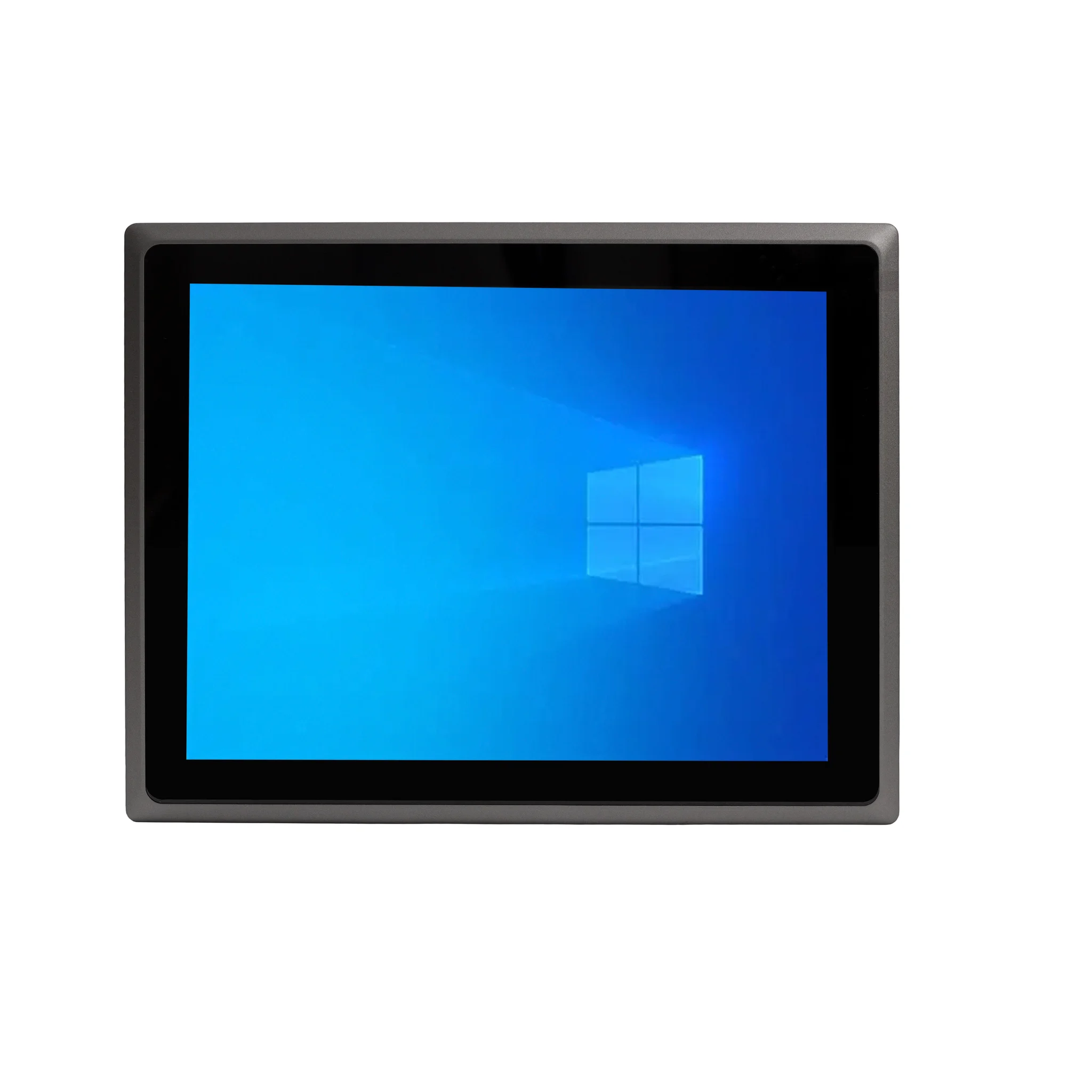
Industrial computers appear wherever a general-purpose PC would be the weakest link. On a production line they act as the operator terminal or HMI, reading from PLCs over serial or Ethernet and displaying live machine status. In logistics they run barcode and RFID stations, weighbridge terminals and conveyor control. In energy and utilities they serve as substation gateways, protocol converters and remote telemetry units. In retail and hospitality they drive self-service kiosks, digital signage and point-of-sale systems.
Other common deployments include machine vision inspection, CNC and motion control front ends, building management and access control, medical and laboratory instrumentation, and in-vehicle fleet computing. Many of these applications also demand specific I/O — multiple serial ports, isolated digital inputs and outputs, or dual displays — which is why industrial systems are usually chosen for their connector set as much as their processor.
Selecting the Right Industrial Computer
Start with the environment: temperature range, dust, vibration, and whether the unit will sit in a sealed cabinet or open air. Next, define the I/O the application actually needs — count the serial ports, Ethernet ports, USB ports and display outputs before choosing a CPU. Then size the processor and memory against the software stack, remembering that an operating system and application that idle comfortably today may