Industrial Computers, Mini PCs and Thin Clients
An industrial computer is a computing platform engineered to run continuously in environments where a standard office PC would struggle — factory floors, kiosks, control rooms, warehouses, laboratories and outdoor cabinets. The defining characteristics are fanless cooling, wide-temperature tolerance, dust and vibration resistance, long product lifecycles and a wide choice of I/O such as serial ports, dual Ethernet and multiple displays. Thinvent builds industrial PCs, mini PCs, thin clients and all-in-one computers for exactly these deployments.
Key specifications that matter
When selecting an industrial computer, the specification sheet should be read differently from a consumer PC. Processor choice determines how many virtual desktops, PLC connections or vision tasks the unit can handle; memory and storage determine how much local buffering and logging is possible; and the enclosure determines whether the system can be sealed against dust. The table below summarises the typical decision points.
| Specification | Typical options | Why it matters |
|---|---|---|
| Processor | Intel Celeron, N-series, Core i3, Core i5 | Balance of performance and power draw for 24x7 duty |
| Cores / threads | 4 to 12 cores | Parallel workloads: SCADA, virtualisation, multi-display |
| Memory | 4 GB to 64 GB DDR4/DDR5 | Headroom for databases, browsers, VMs |
| Storage | 128 GB to 1 TB SSD | Fast boot, silent operation, shock resistance |
| Cooling | Fanless passive heatsink | No dust ingress, no moving parts to fail |
| Networking | Gigabit Ethernet, optional dual ports | Redundancy and network segmentation |
| Serial I/O | RS-232 / RS-485 DB9 | Legacy PLCs, meters, controllers, POS peripherals |
| Operating system | Windows 11 Pro / IoT, Linux, DOS, no OS | Matches application stack and licensing needs |
Where industrial computers are used
Industrial PCs appear wherever a computer has to be treated as part of the machinery rather than as furniture. Common deployments include:
-
Factory automation and SCADA — HMI terminals, PLC programming stations and data concentrators on the shop floor.
-
Kiosks and self-service — ticketing, check-in, queue management and information terminals that run unattended for years.
-
Thin client and VDI estates — centralised desktops where a small, silent endpoint replaces a full desktop tower.
-
Retail and hospitality — POS controllers, digital signage players and back-office terminals.
-
Logistics and warehousing — rugged stations for WMS, barcode and label printing.
-
Healthcare and laboratories — instrument control, imaging review and sample tracking.
-
Edge and IoT gateways — local data collection, protocol conversion and store-and-forward to the cloud.
Mini PC, thin client, all-in-one or industrial PC?
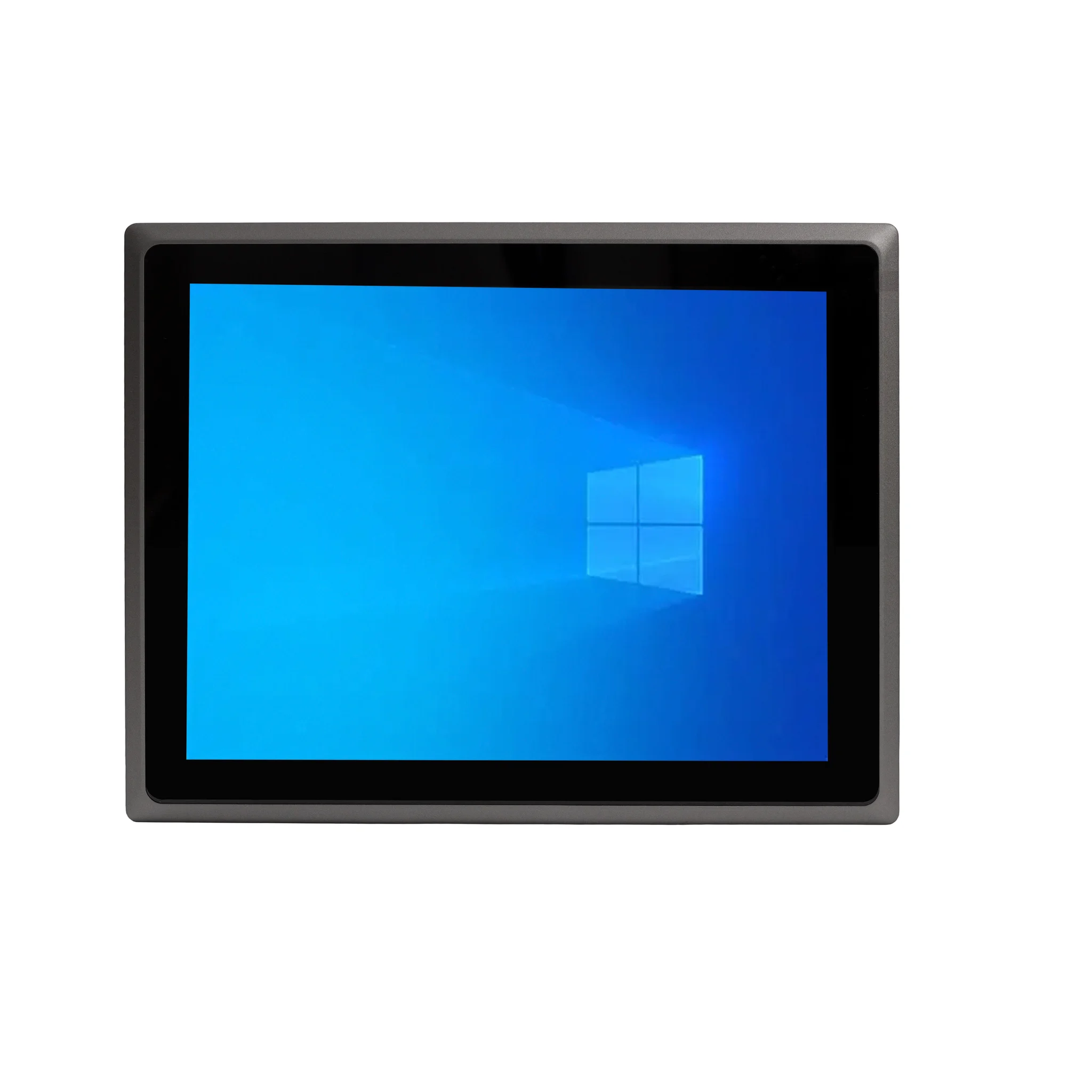
These categories overlap, but the intended use usually makes the choice obvious. A mini PC is a compact general-purpose computer for desks, meeting rooms and digital signage. A thin client is a low-power endpoint that connects to a remote desktop session, so all data and applications stay on the server. An all-in-one integrates the computer and display into a single panel, which suits space-constrained counters and kiosks. An industrial PC adds the rugged enclosure, wide input voltage, extended temperature range and industrial I/O needed for machinery and cabinets.
| Form factor | Best for | Typical mounting |
|---|---|---|
| Mini PC | Office, signage, light edge workloads | VESA behind a monitor |
| Thin client | VDI, RDP, cloud desktops | VESA or desk stand |
| All-in-one | Counters, kiosks, reception | Panel or stand |
| Industrial PC | Factory floor, cabinets, vehicles | DIN rail, wall, panel |
Choosing the right configuration
Start from the software, not the hardware. Confirm the operating system and its licence model, count the serial and USB devices that must be attached, and decide whether the machine needs one display or several. Then size the processor: Celeron and N-series chips are ideal for thin clients, signage and data collection, while Core i3 and i5 platforms handle virtualisation, multi-display control rooms and heavier local processing. Finally, choose memory and SSD capacity with room to grow — 8 GB and a 256 GB SSD is a sensible floor for Windows, while 16 GB or more suits multi-application industrial workloads. Fanless designs are strongly preferred in dusty or oily environments because there is no intake fan to clog.
Thinvent products featuring this technology
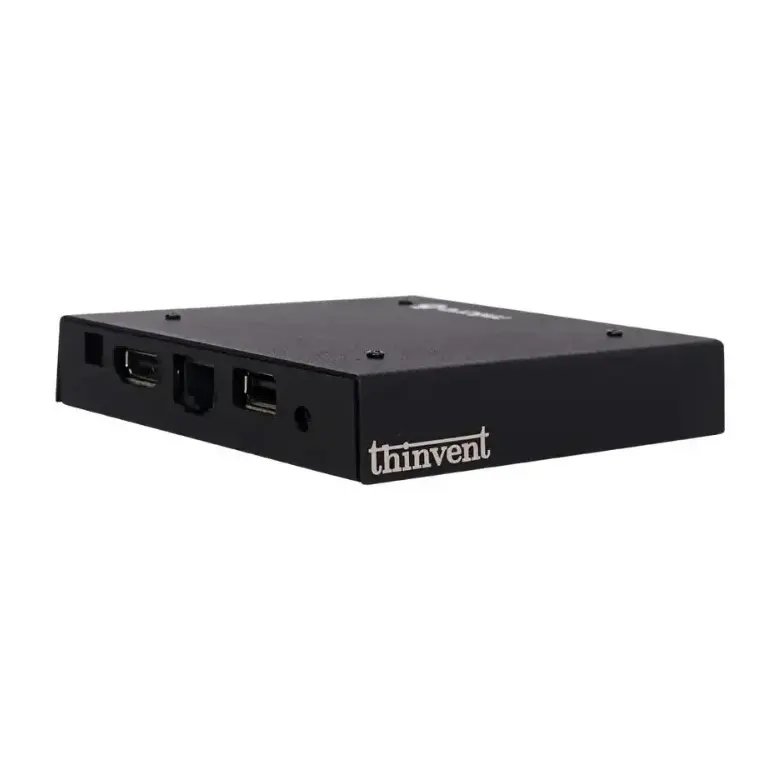
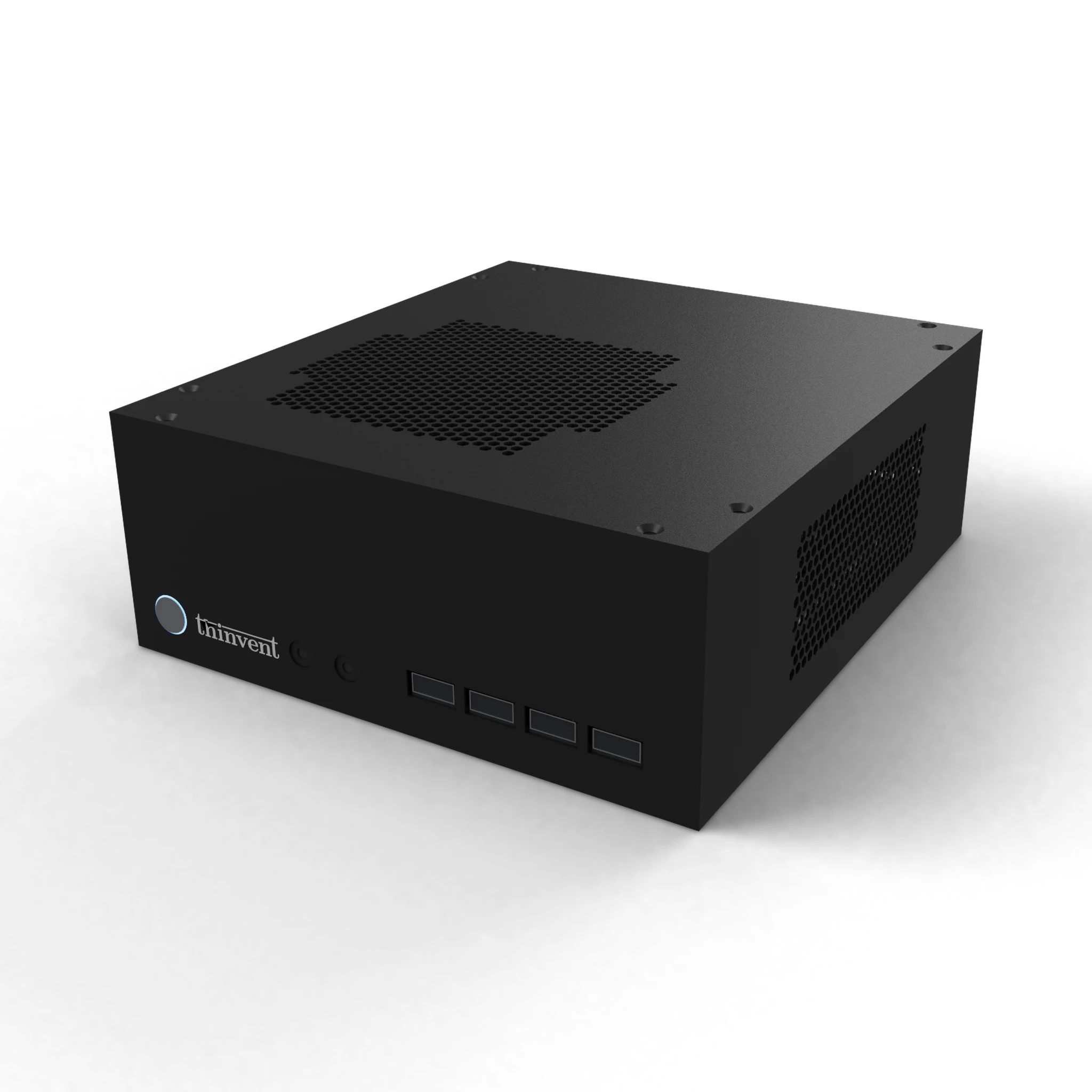
Thinvent manufactures a complete range of fanless computing hardware for industrial and commercial deployment. The IPC3 industrial PC pairs an Intel Core i3-1215U processor (6 cores, up to 4.4 GHz, 10 MB cache) with up to 16 GB DDR4 RAM and a 1 TB SSD, and is available with Windows 11 Pro, Windows 11 IoT, DOS, Thinux embedded Linux or no operating system — plus optional quad DB9 serial ports for legacy equipment. Alongside it, Thinvent offers compact mini PCs for signage and office use, thin clients for VDI and cloud desktop estates, and all-in-one computers that combine the system and display in one panel. Every platform is built for quiet, reliable, long-life operation with worldwide availability and support.