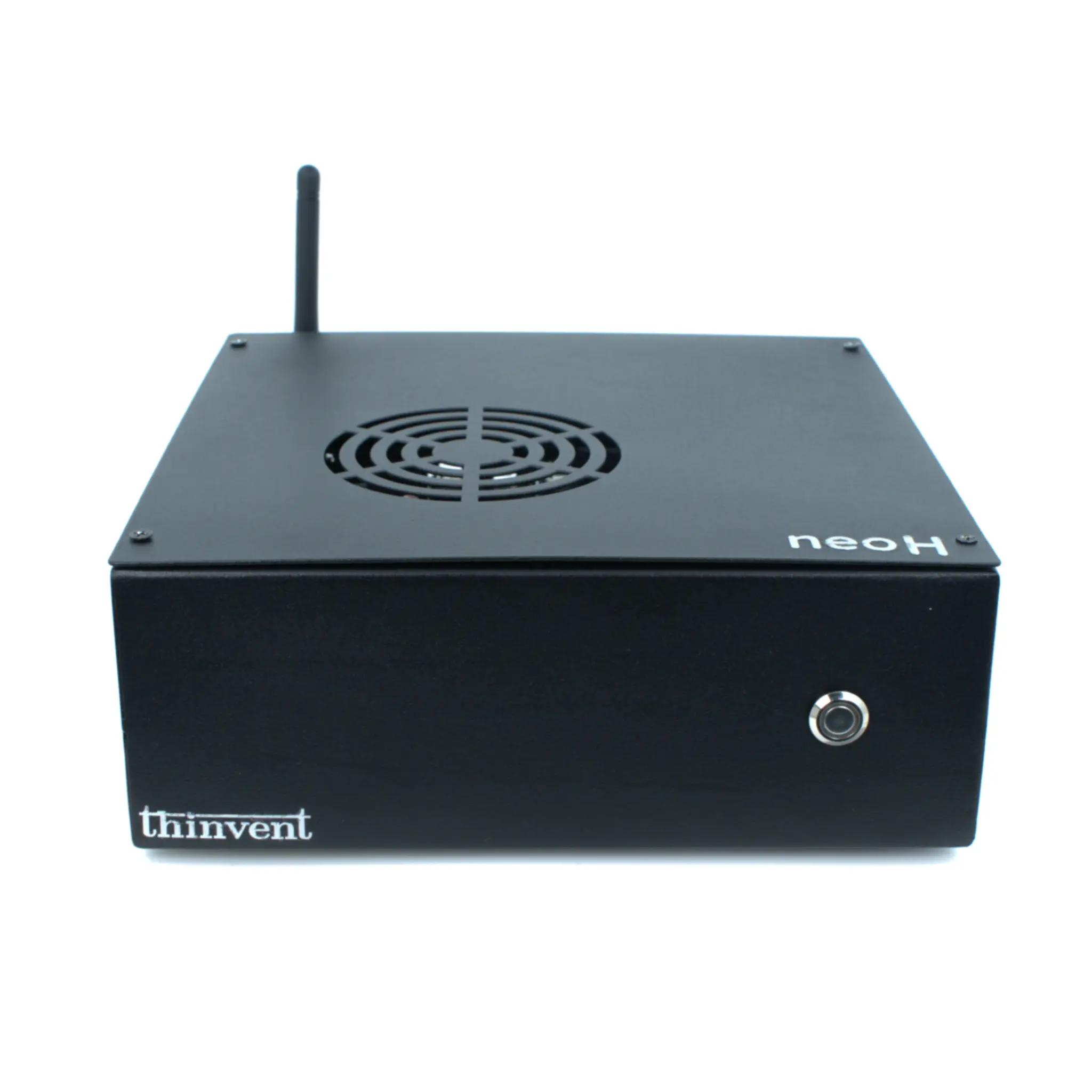
Laptop vs Desktop: Key Differences and Applications
The choice between a laptop and a desktop computer depends heavily on your primary needs: mobility versus sustained performance, reliability, and upgradeability. Laptops offer portability and an all-in-one solution with a built-in screen, battery, and keyboard. Traditional desktops provide superior cooling, easier component upgrades, and often better performance per dollar. However, modern compact desktop PCs, like industrial mini PCs, offer a compelling third option, blending the small footprint of a laptop with the robustness and thermal performance of a desktop.
Technical Specifications and Performance Considerations
Laptops use mobile-optimized, lower-power components to manage heat and battery life, which can limit peak and sustained performance. Desktops, including compact fanless models, can utilize more powerful processors with higher thermal design power (TDP) and better cooling solutions, allowing for consistent performance under heavy loads. Key specifications where desktops typically excel include:
-
Thermal Management: Fanless or actively cooled desktops dissipate heat more effectively than confined laptop chassis.
-
I/O and Expandability: Desktops offer more ports (USB, Ethernet, display outputs) and often support easier RAM and storage upgrades.
-
Durability: Industrial-grade desktops are built for 24/7 operation in harsh environments, a feat challenging for most laptops.
-
Total Cost of Ownership: Desktops generally have longer lifespans and lower repair costs.
Ideal Use Cases for Compact Desktop PCs
Compact industrial desktops are the superior choice for fixed-location applications where reliability, silence, and space savings are critical. They excel in:
-
Digital Signage & Kiosks: Reliable, fanless operation for public displays.
-
Thin Client & VDI Environments: Centralized computing with robust endpoint hardware.
-
Industrial Automation & Control: Operating in environments with dust, vibrations, or wide temperature ranges.
-
Office Workstations: Providing desktop performance with a minimal footprint, connected to preferred peripherals.
Comparison: Laptop, Traditional Desktop, and Compact Industrial PC
| Feature | Laptop | Traditional Desktop Tower | Compact Industrial PC (e.g., Mini PC) |
|---|---|---|---|
| Portability | High | Very Low | Low (Portable between fixed setups) |
| Performance Profile | Mobile-Optimized, Throttled under sustained load | High, Sustained | Ranges from efficient to high-performance, often sustained |
| Upgradeability | Very Limited | High | Moderate (RAM, Storage typically) |
| I/O Ports | Limited | Extensive | Extensive for size (multiple Ethernet, USB, display) |
| Durability & Lifespan | Consumer-grade | Consumer-grade | Industrial-grade, 24/7 operation |
| Cooling | Constrained, often fan-driven | Excellent, large fans | Excellent, often fanless or large passive heatsinks |
| Ideal For | Mobility, general office work on-the-go | Gaming, content creation, high-power computing | Embedded systems, space-constrained reliable computing |
Thinvent's Industrial-Grade Compact Computing Solutions
Thinvent specializes in robust, compact computing solutions that embody the strengths of the desktop form factor—reliability, performance, and connectivity—in ultra-small footprints. Our product range includes fanless Mini PCs, Thin Clients, and All-in-One panels designed for demanding commercial and industrial environments. Featuring Intel processors, multiple Ethernet ports, wide operating temperature ranges, and support for various operating systems, Thinvent devices provide a dependable and powerful alternative to both consumer laptops and bulky desktops for fixed-location deployments worldwide.