What an Industrial Computer Actually Is
An industrial computer (IPC) is a computing platform engineered for environments where a standard office desktop or consumer mini PC would fail. The difference is not only in the processor or the amount of RAM — it is in the mechanical design, the thermal strategy, the power input range, the mounting options and the long-term component availability. Industrial PCs are typically rated for continuous 24/7 operation, wide ambient temperature ranges, vibration, and the electrical noise found on factory floors and plant rooms.
The most common construction is a fanless, ventless aluminium chassis that uses the case itself as a heat sink. Removing the fan removes the single most failure-prone moving part in a small computer, and it also stops the chassis from pulling dust, metal filings and airborne oil mist inside. Storage is normally solid-state, so there are no spinning platters or read heads to shock-damage.
The Specifications That Matter
When specifying an industrial computer, the headline numbers are less important than the ones that govern reliability.
| Specification | Why It Matters on Site |
|---|---|
| Fanless, ventless chassis | No dust ingress, no bearing wear, silent operation |
| Wide DC input (e.g. 12V–24V) | Runs from industrial power rails and battery systems |
| Wide operating temperature | Survives unheated cabinets, roof spaces and plant rooms |
| Solid-state storage | Shock and vibration resistance, fast boot |
| Multiple serial (DB9/RS-232/485) ports | Legacy PLCs, scales, meters, barcode readers, CNC controls |
| Dual Gigabit Ethernet | Segmented networks, machine-to-machine links, redundancy |
| Long lifecycle availability | Spares and replacements stay identical for years |
| DIN-rail, VESA or wall mounting | Fits inside enclosures and control panels |
Modern processor families — Intel® Celeron®, the Intel® N-series, and Intel® Core™ i3, i5 and i7 chips — give a wide performance envelope. A low-power N-series part is ideal for a kiosk, gateway or HMI endpoint, while a Core™ i3 or i5 with 16 GB of DDR4 and a 512 GB or 1 TB SSD comfortably drives multi-application workloads such as SCADA clients, vision inspection front-ends and database-driven dispatch terminals.
Where Industrial Computers Are Used
Typical deployments include factory automation cells and PLC front-ends, SCADA and HMI stations, warehouse and logistics terminals, self-service kiosks, digital signage players, medical and laboratory instruments, CCTV and access-control management, and edge gateways that collect data from sensors before forwarding it to the cloud. In each case the machine has to keep running unattended — often in a locked cabinet with no operator nearby, and often for years between service visits.
Choosing the Right Form Factor
Industrial computers come in several physical shapes, and picking the wrong one is a common and expensive mistake.
| Form Factor | Best Suited To |
|---|---|
| Industrial PC | Control cabinets, DIN-rail or wall mount, serial-heavy applications |
| Mini PC | Desk-side, kiosk and signage installs with limited space |
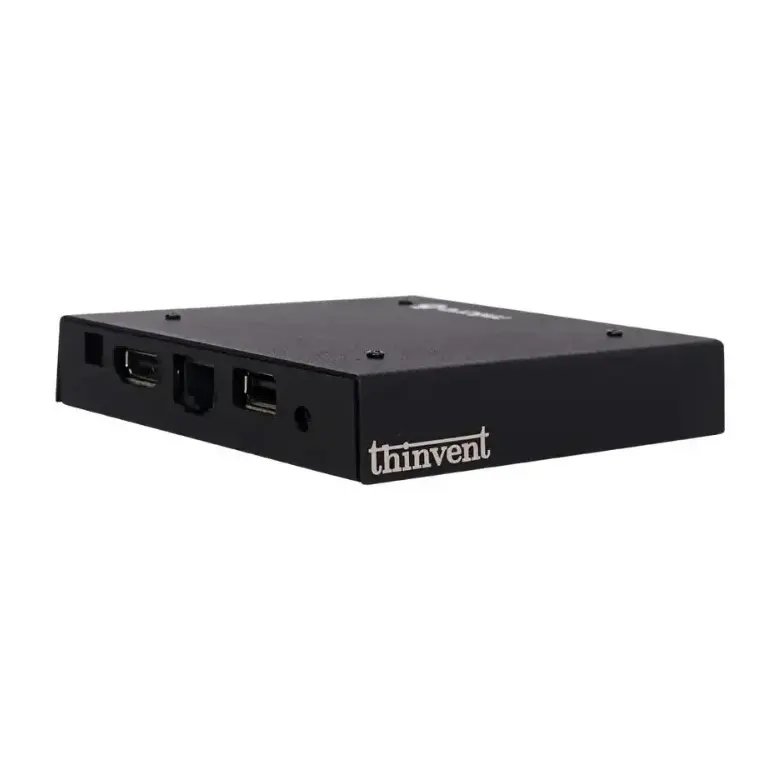
| Thin Client | Virtual desktop, RDP/Citrix or browser-based task workers |
| All-in-One PC | Shop-floor and reception stations needing a single-cable install |
A thin client or all-in-one makes sense when the heavy computing happens on a server and the local device only needs to render a session securely. A full industrial PC is the right answer when software must run locally, when serial or digital I/O