What is a Mini NAS PC?
A mini NAS PC (Network Attached Storage personal computer) is a compact, low-power computing device designed specifically to provide centralized file storage and sharing over a local network. Unlike traditional bulky NAS enclosures, mini NAS PCs combine the functionality of a small form factor computer with dedicated storage capabilities, offering greater flexibility for home labs, small offices, and media servers. These devices typically run lightweight operating systems like Linux or Windows and can be configured with multiple hard drives or SSDs for data redundancy and high-speed access.
Key Specifications and Technical Details
For a reliable mini NAS PC, several specifications are critical. Processor performance matters for handling file transfers, RAID calculations, and running additional services like Plex media transcoding. Intel N-series processors (e.g., N100) offer excellent power efficiency at 6W TDP, while Core i3/i5 models provide more horsepower for demanding tasks. RAM of at least 8GB is recommended, with 16GB+ for running virtual machines or Docker containers. Storage connectivity is paramount—look for devices with SATA ports (at least 2 for RAID 1), M.2 NVMe slots for cache, and USB 3.2 Gen 2 ports for external expansion. Network capabilities should include at least one Gigabit Ethernet port, with dual ports enabling link aggregation for improved throughput.
Use Cases and Applications
Mini NAS PCs excel in several scenarios. Home media servers can stream 4K content to multiple devices using Plex or Jellyfin, with Intel Quick Sync Video hardware transcoding ensuring smooth playback. Small business file servers provide centralized document storage, automated backups, and remote access via VPN. Surveillance NVRs can record from multiple IP cameras while running analytics software. Development environments benefit from running Git servers, CI/CD pipelines, and containerized applications on the same hardware that stores data. Personal cloud storage replaces subscription services with complete control over privacy and data.
Comparison: Mini NAS PC vs. Traditional NAS
| Feature | Mini NAS PC | Traditional NAS Enclosure |
|---|---|---|
| Processing Power | Full x86 CPU (Intel/AMD) | Often ARM or low-power x86 |
| Expandability | RAM, storage upgrades | Limited to vendor specs |
| Software Flexibility | Any OS (Windows, Linux, TrueNAS) | Vendor-specific OS only |
| Cost | $200-$600 (compact models) | $150-$800 (without drives) |
| Power Consumption | 10-35W typical | 15-50W typical |
| Best For | Multi-purpose + storage | Pure file storage |
Thinvent's Products Featuring Mini NAS PC Technology
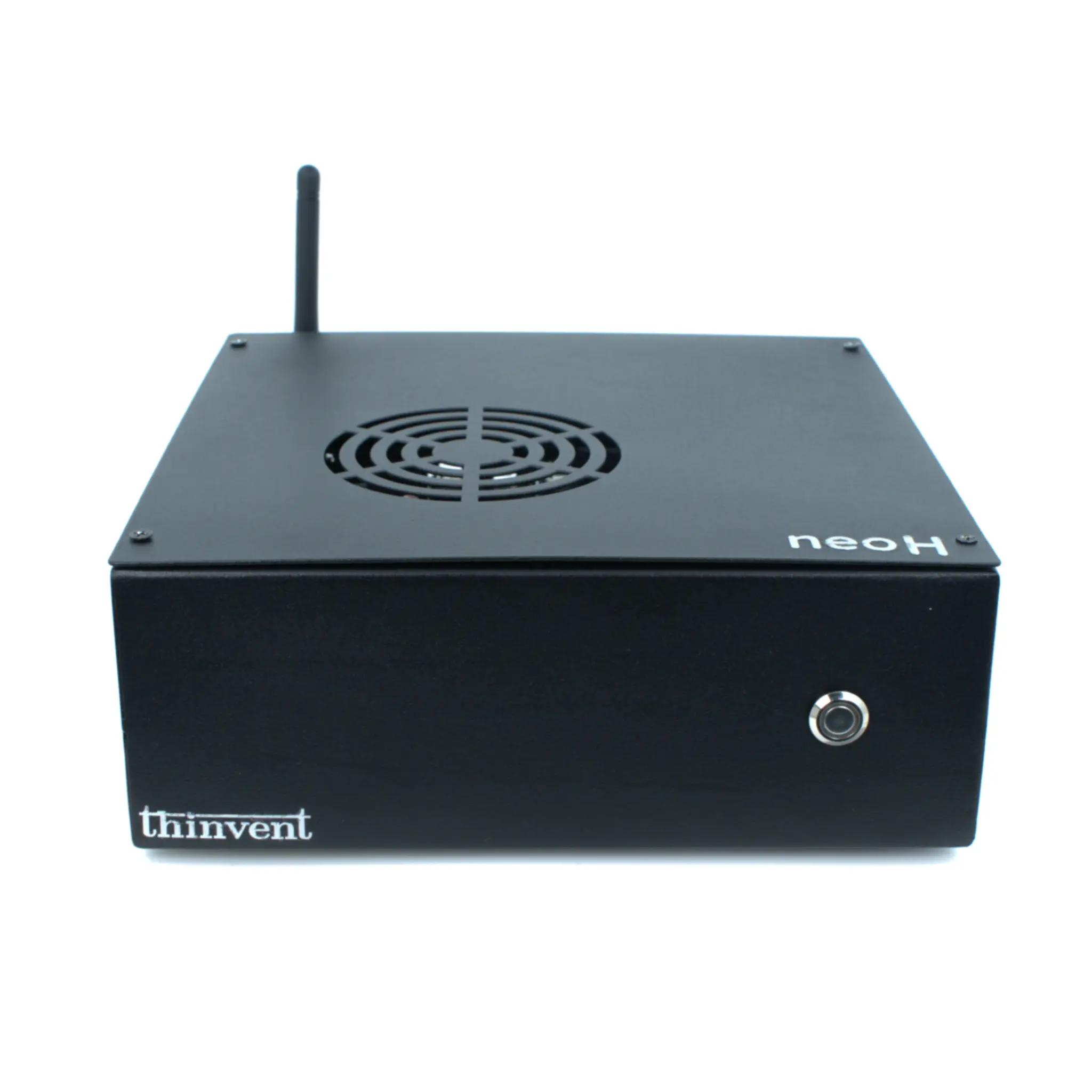
Thinvent offers several compact computing platforms ideal for building a mini NAS PC. The Thinvent® Treo Mini PC (N100) features an efficient Intel N100 processor (4 cores, 6W TDP), 4GB-32GB DDR4 RAM, and 128GB-256GB SSD—perfect for a low-power home NAS. For more demanding setups, the Thinvent® Aero Mini PC (i3-1215U) provides 6 cores and 8GB RAM for running multiple services alongside file storage. All models include Gigabit Ethernet and multiple USB ports for external drive expansion. Thinvent's fanless designs ensure silent 24/7 operation, while the compact form factor fits easily into any network cabinet or desk setup.