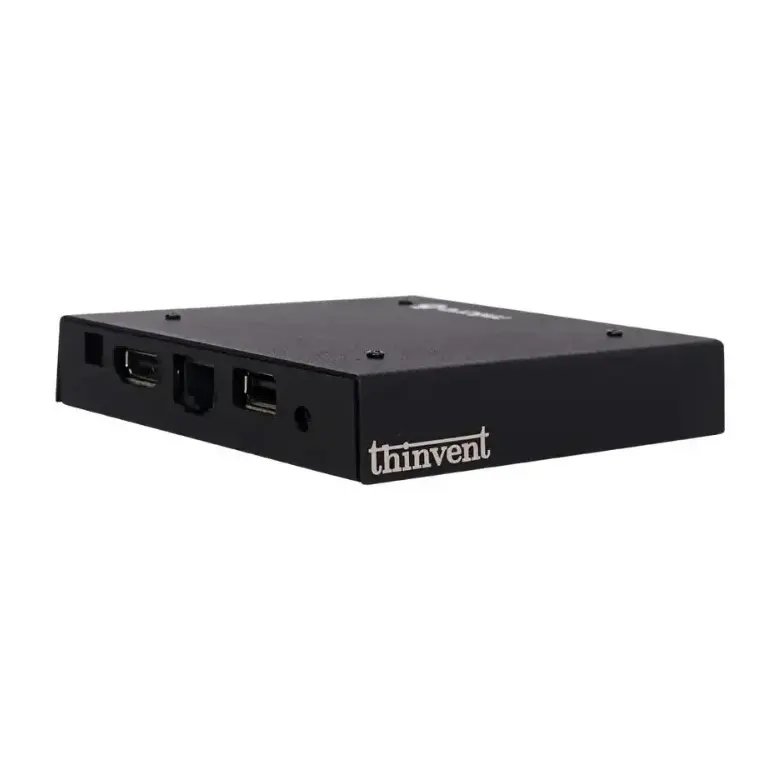
What Is a Mini Server for Home?
A mini server for home is a compact, low-power computer that stays on around the clock to handle tasks that would otherwise need a full-size desktop tower. Instead of a bulky chassis with noisy fans and a 500 W power supply, a home mini server typically measures just a few litres in volume, draws 15–30 W under load, and runs silently or near-silently. It is the practical middle ground between a power-hungry workstation and a limited single-purpose NAS box: you get a real operating system, standard desktop-class ports, and the flexibility to install whatever services your household needs.
The term "server" here is about role, not size. A mini server can serve files, stream media, host a personal website, run home automation, manage backups, or act as a small virtualization host — all from a box that sits on a shelf or hides behind a monitor.
Typical Specifications to Look For
Home server workloads are mostly about steady availability rather than peak speed, so the specification priorities differ from a gaming or CAD machine:
| Component | Typical Home Server Range | Why It Matters |
|---|---|---|
| Processor | Intel® Celeron®, Intel® N-series, or Core™ i3 | Low idle power, enough threads for file serving and light VMs |
| Cores | 4 to 10 | More cores help when running several containers at once |
| Memory | 8 GB to 16 GB DDR4 | 8 GB is fine for file/media serving; 16 GB suits VMs and databases |
| Storage | 128 GB to 512 GB SSD, plus external/network storage | SSD keeps the OS and services responsive |
| Ethernet | Gigabit (1000 Mbps), 2 ports preferred | A second port allows a separate LAN/WAN or a dedicated backup link |
| Display output | 1–2 × HDMI | Needed for setup, troubleshooting, and occasional desktop use |
| Operating system | Windows 11 Pro, Ubuntu Linux, or without OS | Linux and Windows 11 Pro both support remote management |
| Power | 12 V DC adapter, fanless chassis | Silent operation, low running cost, fewer moving parts to fail |
Common Home Server Use Cases
File and backup server. Central storage for photos, documents, and device backups. With gigabit Ethernet and an SSD system drive, a mini server can saturate a home network link, and scheduled backup jobs run unattended overnight.
Media server. Tools such as Jellyfin, Plex, or Emby run comfortably on a 4-core Intel® processor with 8–16 GB RAM. Direct play of most home media needs very little CPU; the processor handles transcoding of a small number of simultaneous streams.
Home automation and DNS. Home Assistant, Pi-hole, AdGuard Home, and similar lightweight services run with minimal resources and benefit enormously from an always-on, low-power host.
Personal cloud and development. Nextcloud, Git, Docker containers, and small databases are typical. 16 GB of RAM and a 256 GB or larger SSD give enough headroom for a handful of containers plus a virtual machine.
Remote desktop and thin-client hosting. A mini server can act as the central machine that lightweight thin clients connect to, which is useful for a home office or a small multi-desk setup.
Wired, Wireless, and Management Considerations
For a server, a wired gigabit connection is almost always preferable to Wi-Fi: it is faster, lower latency, and far more reliable for long-running services. Some deployments deliberately choose a model without built-in Wi-Fi and use a wired link or a USB Wi-Fi adapter only where needed. Remote administration matters too — Windows 11 Pro includes Remote Desktop host support, while Ubuntu Linux and similar distributions are managed over SSH. Choose an operating system you are comfortable maintaining, or select a unit without a preinstalled OS if you plan to install your own.
Cooling is another practical factor. Fanless designs remove the main mechanical failure point and the main source of noise, which matters when the machine lives in a living room, bedroom, or study. Industrial-grade enclosures and wide-temperature components further improve reliability in dusty or warm rooms.
Thinvent Mini PCs and Compact Systems for Home Servers
Thinvent builds fanless mini PCs, thin clients, industrial computers, and all-in-one PCs suited to always-on home server duty. The Thinvent® Aero Mini PC family, for example, pairs an Intel® processor with up to 16 GB DDR4 RAM and SSD storage in a compact, low-power chassis with a 12 V adapter — available with Windows 11 Pro, Windows 11 IoT, Linux, or without an operating system, so you can match the machine to the services you intend to run. For households that also want a display at the desk, Thinvent all-in-one PCs combine the server-capable internals with an integrated screen. Explore the range to find a configuration with the memory, storage, and operating system that fits your home setup.