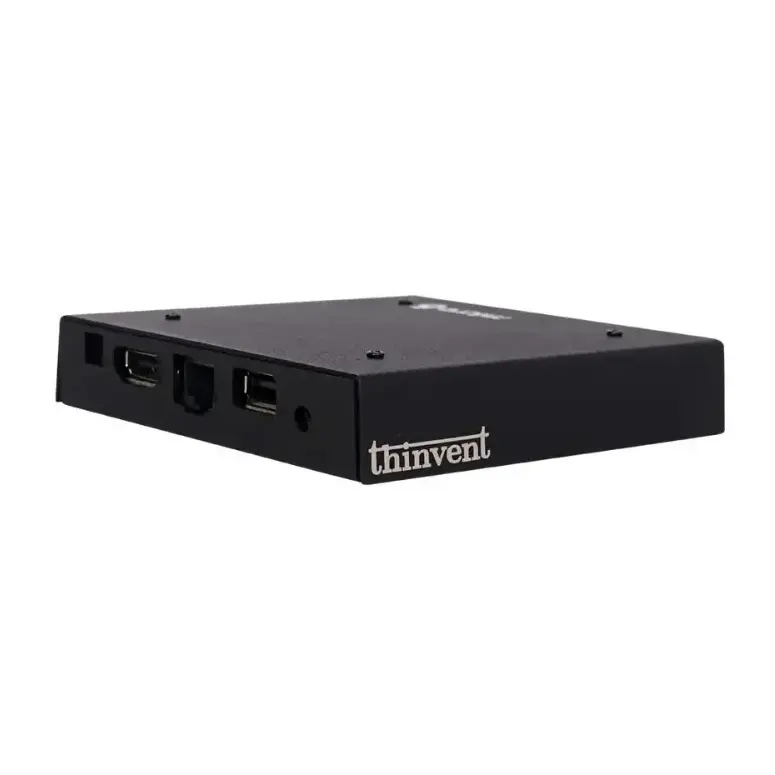
What Are Compact Mini PCs?
Compact Mini PCs are small-form-factor desktop computers designed for space-constrained environments where traditional towers are impractical. They offer a full desktop computing experience in a chassis often smaller than a standard book, making them ideal for mounting behind monitors, under desks, or in industrial control cabinets. These systems typically feature low-power, efficient processors, fanless cooling for silent operation, and a robust set of I/O ports for connectivity.
Key Specifications and Technical Details
Modern compact Mini PCs, like those powered by Intel's N-series processors, balance performance with energy efficiency. Key specifications often include:
-
Processor: Intel processors like the N100, featuring 4 cores, efficient performance, and integrated graphics.
-
Memory: Configurations typically range from 8GB to 16GB of DDR4 RAM for smooth multitasking.
-
Storage: Solid-state drives (SSD) from 128GB to 512GB provide fast boot times and application loading.
-
Connectivity: Multiple USB ports (including USB 3.2), HDMI outputs for dual displays, and Gigabit Ethernet are standard.
-
Form Factor: Extremely compact, often using external power adapters (e.g., 12V) to reduce internal heat and size.
-
Operating Systems: Support for Windows, Linux, and embedded OS options provides flexibility for different use cases.
Use Cases and Applications
The small size and reliable performance of compact Mini PCs make them suitable for a wide range of professional and industrial applications:
-
Digital Signage & Kiosks: Powering content on displays in retail, hospitality, and public spaces.
-
Office Productivity: As primary desktops for general office work, web browsing, and communication software.
-
Light Industrial Computing: In manufacturing or logistics for running HMIs (Human-Machine Interfaces), SCADA systems, or control software.
-
Thin Client / VDI Endpoints: Connecting to virtual desktop infrastructures in enterprise environments.
-
Home & SOHO Use: As media centers or compact workstations in home offices.
Comparison: Compact Mini PC vs. Traditional Desktop
| Feature | Compact Mini PC | Traditional Desktop Tower |
|---|---|---|
| Size & Footprint | Extremely small (often < 1L volume) | Large, requires significant desk/floor space |
| Cooling | Often fanless (silent) or low-noise fans | Typically uses multiple fans for cooling |
| Power Consumption | Low (e.g., 10-30W under load) | High (e.g., 65W+ for CPU alone) |
| Expandability | Limited; typically fixed RAM and storage | High; multiple slots for add-on cards, drives, and RAM |
| Deployment | Ideal for mounted, embedded, or space-sensitive uses | Best for stationary setups where size isn't a constraint |
| Typical Use Case | Digital signage, office work, industrial control | Gaming, high-end workstations, servers |
Thinvent Compact Mini PC Solutions
Thinvent offers a range of robust compact Mini PCs designed for demanding environments. Our Aero series, for example, features fanless designs with Intel N-series processors, ensuring reliable, silent operation 24/7. These systems are built with industrial-grade components to withstand continuous use in commercial and light industrial settings. With flexible operating system support—including Windows 11 Pro, IoT, and various Linux distributions—Thinvent Mini PCs can be tailored to your specific application, from digital signage and point-of-sale to factory floor monitoring and office productivity.