What Is SSD NAS Storage And Why Does Performance Matter?
An SSD NAS (Network Attached Storage) utilizes solid-state drives instead of traditional hard disk drives to deliver dramatically faster data access, lower latency, and higher IOPS (input/output operations per second). For businesses handling large file transfers, virtualization workloads, video editing, or database applications, an SSD-based NAS eliminates the mechanical bottlenecks of HDDs. Performance is measured not just by sequential read/write speeds but by random access performance—critical when multiple users or applications access storage simultaneously. A high-performance SSD NAS can deliver 500MB/s to over 10GB/s throughput depending on the network interface and SSD configuration.
Key Specifications For High-Performance SSD NAS
When evaluating SSD NAS solutions, focus on these critical specs:
-
Processor: A multi-core CPU (6-12 cores recommended) with high clock speeds (3.0 GHz+) ensures the NAS can handle parity calculations, encryption, and multiple concurrent connections without slowdowns. Intel Core i5 or i7 processors with AES-NI acceleration are ideal.
-
Memory: 8GB to 32GB RAM enables efficient caching and supports features like deduplication, snapshots, and virtualization. More RAM directly improves performance under heavy loads.
-
Network Connectivity: At least 2.5GbE or 10GbE ports are essential to avoid bottlenecking SSD speeds. Multiple Ethernet ports allow link aggregation for higher throughput.
-
Storage Interface: NVMe M.2 slots for cache drives or all-flash arrays provide the lowest latency. SATA SSDs are more affordable but cap at ~550MB/s per drive.
-
Operating System: A purpose-built NAS OS like TrueNAS (ZFS), Unraid, or enterprise-grade solutions from Synology/QNAP optimize SSD performance with features like TRIM support, SSD caching tiers, and wear leveling.
Use Cases And Applications
High-performance SSD NAS solutions excel in demanding environments:
| Use Case | Why SSD NAS Is Ideal | Recommended Specs |
|---|---|---|
| Video Editing | 4K/8K footage requires high sequential read/write speeds for smooth playback and rendering | 10GbE, 32GB RAM, NVMe cache |
| Virtualization | Multiple VMs need high IOPS and low latency for database and application servers | 12+ cores, 64GB RAM, All-flash |
| Database Hosting | Transactional databases benefit from random I/O performance | 6+ cores, 16GB RAM, RAID 10 SSDs |
| Backup Target | Fast backup windows with deduplication and compression | 2.5GbE, 8GB RAM, Large capacity SSDs |
Thinvent's High-Performance SSD NAS Solutions
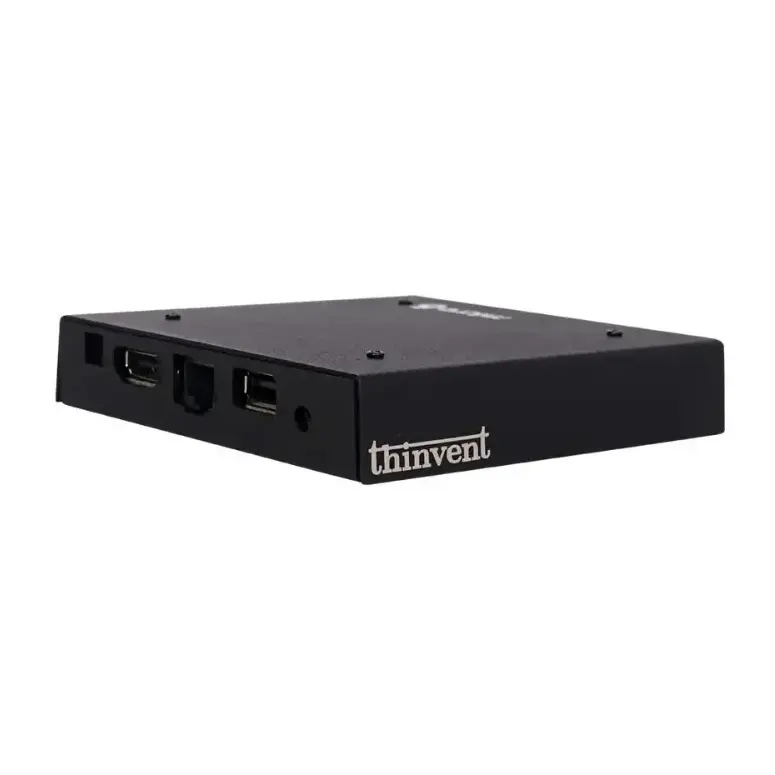
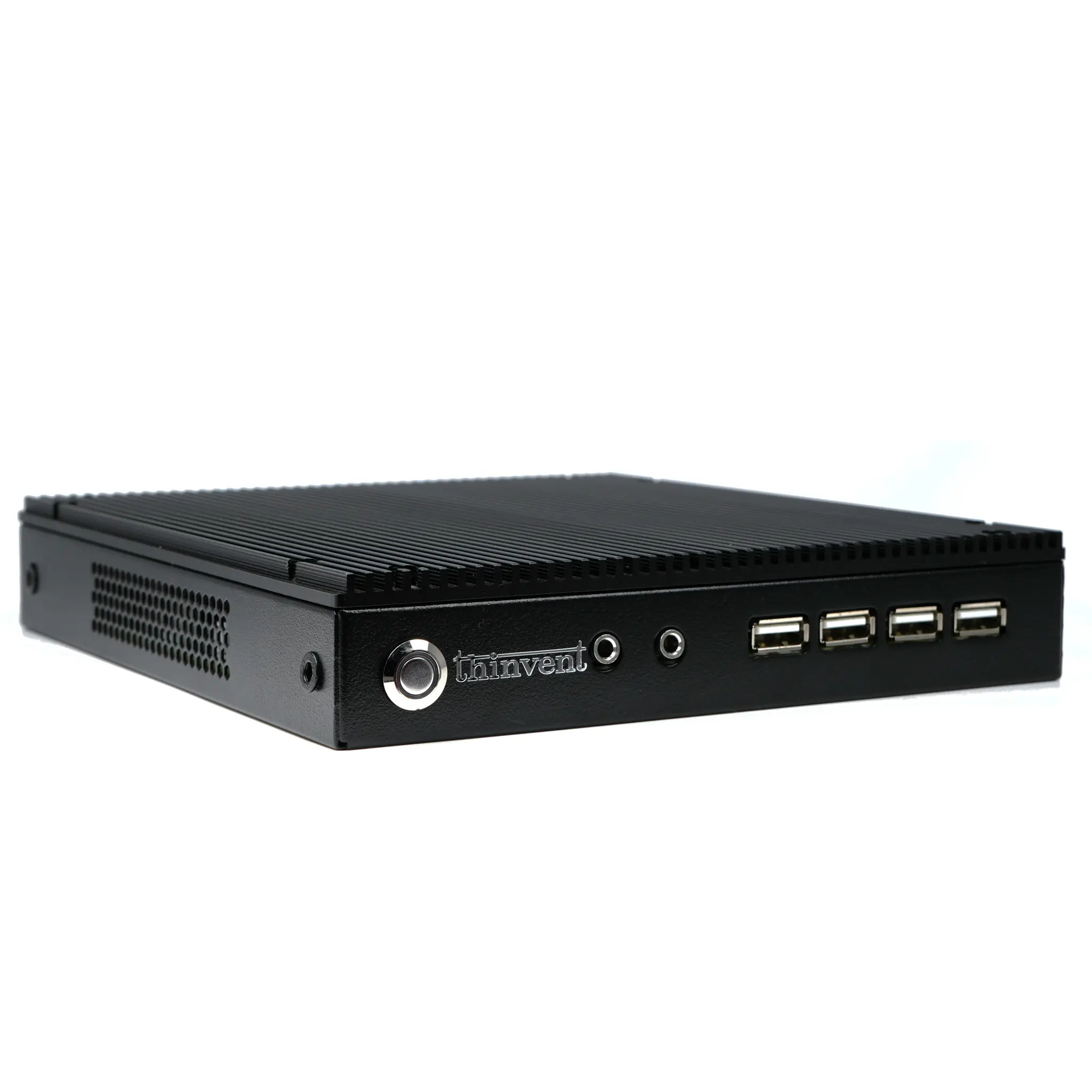
Thinvent manufactures industrial-grade computing platforms ideal for building custom SSD NAS appliances. Our Industrial PC IPC5 with Intel Core i5-1240P (12 cores, up to 4.4 GHz) and 16GB RAM provides the processing muscle for demanding NAS workloads. The Aero Mini PC series with Intel Core 5 120U (10 cores, up to 5.0 GHz) offers exceptional performance in a compact form factor suitable for home or small office NAS builds. For embedded or edge NAS applications, our ARM-based Micro 6 Pro with Cortex A55 processor delivers low-power operation while still supporting SSD storage. All Thinvent systems feature robust construction, wide temperature tolerance, and flexible I/O including multiple USB 3.2 and HDMI ports—ideal for connecting external SSD enclosures or building a dedicated NAS server.