What Is a Network Drive for Home?
A network drive for home is a centralized storage device connected to your home network, allowing multiple users and devices (PCs, laptops, smart TVs, tablets) to access and share files, media, and backups over Wi-Fi or Ethernet. Unlike a direct-attached USB drive, a network drive provides 24/7 accessibility without needing a dedicated host computer. For a home setup, you typically want a low-power, quiet, and reliable device that can run network-attached storage (NAS) software or be used as a file server.
Key Specifications for a Home Network Drive
The ideal network drive hardware should balance performance, power efficiency, and storage capacity. Key specs include:
-
Processor: An energy-efficient Intel N100 or N95 (4 cores, up to 3.4 GHz) is sufficient for basic file sharing and media streaming. For heavier tasks like Plex transcoding or multiple concurrent backups, consider an Intel Core i3 (e.g., i3-1215U, 6 cores) or i5 (e.g., i5-1240P, 12 cores).
-
Memory: At least 8GB of DDR4 RAM is recommended for smooth multitasking when running NAS applications. 16GB is ideal for more demanding setups.
-
Storage: A 256GB or 512GB SSD provides fast read/write speeds and quiet operation. For bulk media storage, you can add external USB hard drives.
-
Connectivity: Gigabit Ethernet (1000 Mbps) is essential for fast network transfers. Dual-band Wi-Fi is a plus for wireless access, but wired Ethernet ensures consistent performance. At least 2 USB ports allow connecting external drives for expanded storage.
-
Operating System: Linux-based OS (e.g., Ubuntu) or Windows 11 Pro can be used to install NAS software like TrueNAS, OpenMediaVault, or simply enable file sharing via SMB/CIFS.
Use Cases and Applications
A home network drive excels in several scenarios:
-
Media Server: Stream movies, music, and photos to smart TVs, game consoles, and mobile devices using Plex, Jellyfin, or Emby.
-
Centralized Backup: Automatically backup all family PCs and Macs to one location using tools like Time Machine, rsync, or Windows Backup.
-
File Sharing: Access documents, photos, and videos from any device in the home. Share files with guests via a simple web interface.
-
Home Automation: Store configuration files and logs for smart home hubs, security cameras, and IoT devices.
-
Remote Access: With proper setup, access your files from outside the home via VPN or cloud sync.
Comparison: Entry-Level vs. Performance Home Network Drive
| Feature | Entry-Level (Intel N100/N95) | Performance (Intel Core i3/i5) |
|---|---|---|
| Processor | 4 cores, up to 3.4 GHz | 6-12 cores, up to 4.4-5.0 GHz |
| RAM | 4-8 GB | 8-16 GB |
| Best For | Basic file sharing, light media streaming | Plex transcoding, heavy backups, multiple users |
| Power Consumption | ~6-15W | ~15-28W |
| Noise Level | Fanless or very quiet | Active cooling, still quiet |
Thinvent’s Products for Home Network Drives
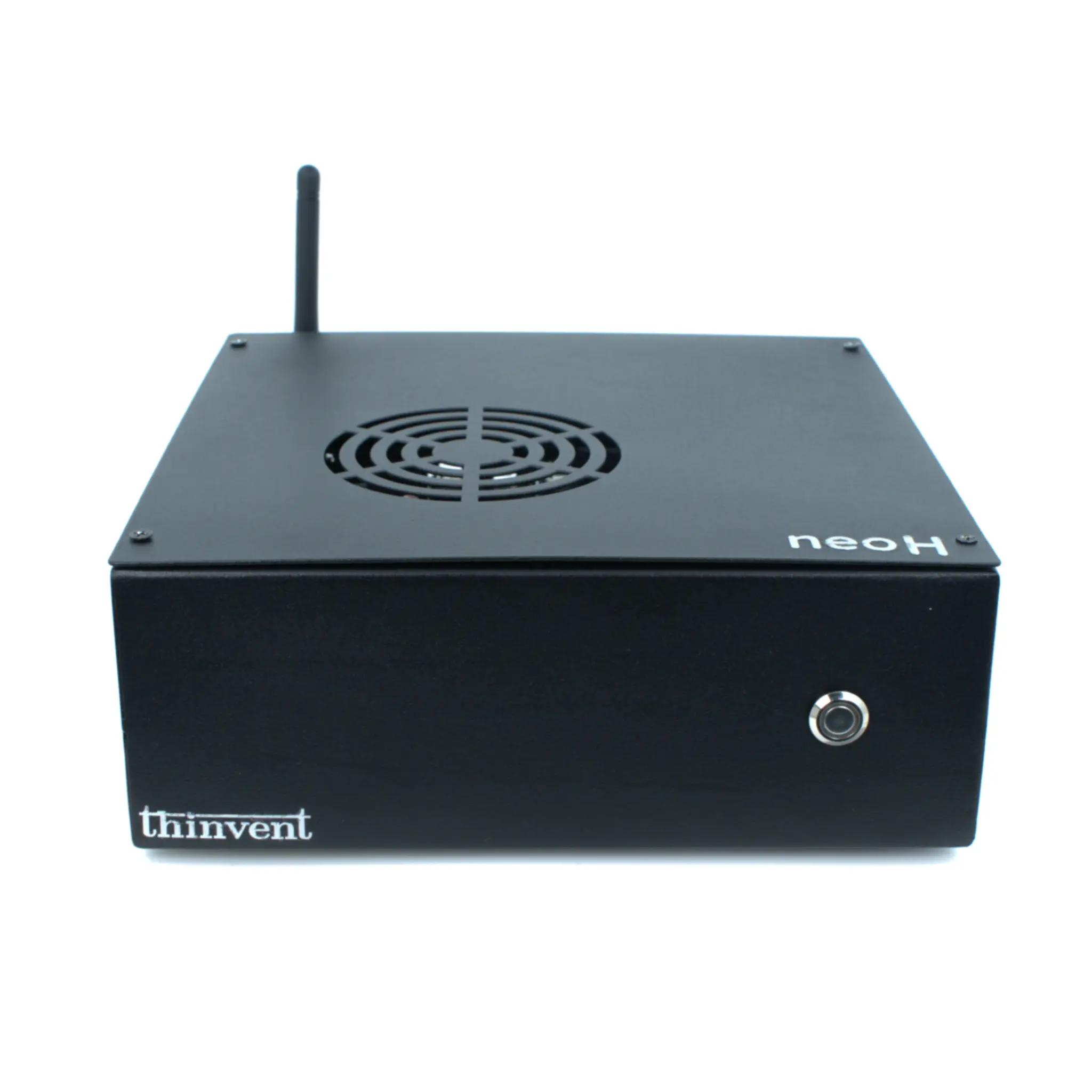
Thinvent offers a range of mini PCs and industrial PCs that are perfectly suited as home network drives. The Thinvent Treo Mini PC (Intel N100, 4GB RAM, 128GB SSD) provides an ultra-efficient, fanless foundation for a low-cost NAS. For more demanding setups, the Thinvent Aero Mini PC (Intel Core i3-1215U, 8GB RAM, 256GB SSD) or Thinvent Industrial PC IPC3 (same specs, rugged chassis) deliver the extra performance needed for transcoding and multiple concurrent streams. All models feature Gigabit Ethernet and multiple USB ports for storage expansion, and can run Ubuntu Linux or Windows 11 Pro for flexible NAS software installation.