What Makes an Industrial Computer Rugged for Harsh Environments?
Rugged industrial computers are purpose-built to operate reliably in extreme conditions that would damage standard commercial PCs. Unlike office desktops, these systems withstand wide temperature ranges (-20°C to 70°C or more), high shock and vibration, dust, moisture, and electromagnetic interference. They typically feature fanless cooling designs that eliminate moving parts, reducing failure points and enabling silent operation in dirty or humid environments. The chassis is often made from heavy-duty aluminum or steel with IP (Ingress Protection) ratings that guard against particle and liquid ingress.
Key Specifications and Technical Details
-
Fanless Thermal Design: Passive cooling via heatsinks ensures no internal fans that can clog with dust or fail mechanically. This is critical for continuous 24/7 operation in factories, warehouses, and outdoor installations.
-
Wide Temperature Range: Industrial PCs are rated for -20°C to 70°C ambient temperature, with some extended-range models supporting -40°C to 85°C. This guarantees stability in unheated environments or near hot machinery.
-
Shock and Vibration Resistance: MIL-STD-810G or similar standards certify resistance to drops, mechanical shocks (up to 50G), and continuous vibration (5-500Hz). This is vital for in-vehicle, oil rig, or conveyor-belt applications.
-
High Mean Time Between Failures (MTBF): Rugged systems often achieve MTBF exceeding 50,000 hours, ensuring long-term reliability without unexpected downtime.
-
Industrial I/O Ports: In addition to standard USB and HDMI, rugged PCs include COM ports (RS-232/422/485), GPIO, dual Gigabit Ethernet, and power over Ethernet (PoE) for connecting sensors, PLCs, cameras, and legacy equipment.
Use Cases and Applications
Rugged industrial computers are deployed across diverse sectors:
-
Manufacturing & Automation: Control and monitor production lines, robotic arms, and CNC machines on the factory floor, where dust, heat, and vibration are constant.
-
Transportation & Logistics: In-vehicle computing for fleet management, GPS tracking, and driver terminals in trucks, trains, and forklifts, requiring shock-proof and fanless designs.
-
Digital Signage & Kiosks: Outdoor digital displays and self-service kiosks must survive rain, sun, and temperature swings while running 24/7.
-
Energy & Utilities: Monitoring oil and gas pipelines, wind turbines, or solar farms in remote locations with extreme weather conditions.
-
Medical & Healthcare: In hospitals, fanless PCs reduce noise and are easier to disinfect, making them suitable for patient monitoring and diagnostic equipment.
Comparison: Rugged Industrial PC vs. Commercial Desktop
| Feature | Rugged Industrial PC | Commercial Desktop |
|---|---|---|
| Cooling | Fanless (passive) | Fans (active) |
| Operating Temp | -20°C to 70°C | 0°C to 35°C |
| Shock Resistance | 50G / 11ms | None |
| Vibration Resistance | 5-500Hz | None |
| MTBF | 50,000+ hours | 20,000-30,000 hours |
| IP Rating | IP40 to IP65 | IP20 |
| Lifespan | 5-10 years | 3-5 years |
Thinvent's Rugged Industrial Computer Solutions
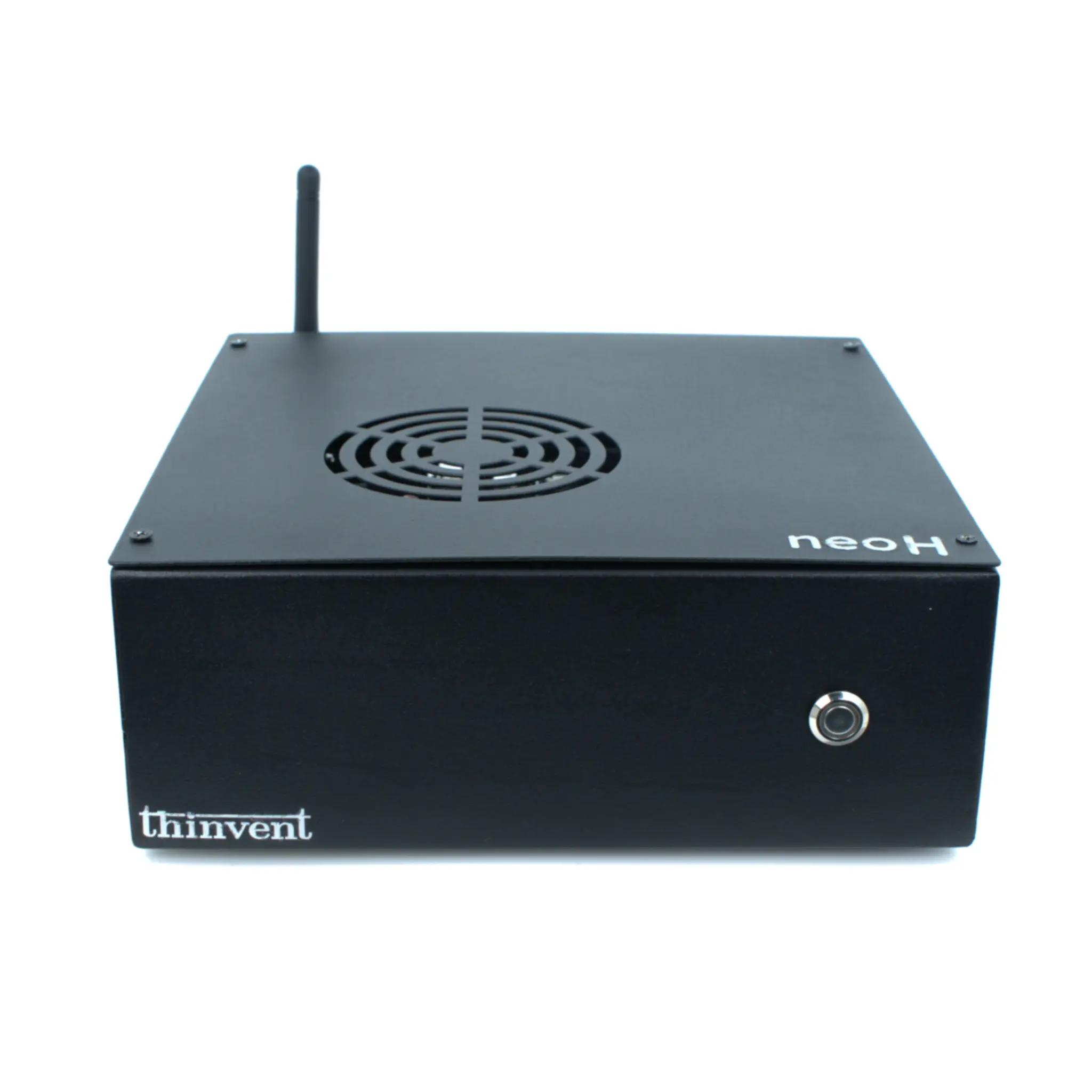
Thinvent offers a comprehensive range of rugged industrial PCs engineered for harsh environments. Our Industrial PC (IPC) series includes models like the IPC1 with Intel N100 processor and the IPC3 with Intel Core i3-1215U, featuring fanless designs, wide temperature support, and robust aluminum chassis. For more demanding applications, the IPC5 with Intel Core i5-1240P provides 12 cores of computing power for edge analytics and AI inference. All Thinvent industrial PCs come with industrial-grade I/O options and are tested for shock and vibration resistance, making them ideal for factory automation, smart logistics, and outdoor deployments. Our mini PCs and thin clients also offer ruggedized variants suitable for space-constrained environments that require reliability.