Industrial Computers Built for Demanding Environments
Industrial computers are ruggedized computing systems designed to operate reliably in environments where ordinary office PCs would fail — factory floors, outdoor cabinets, vehicles, warehouses and remote sites. They are engineered around three principles: continuous operation, wide operating temperature tolerance, and protection from dust, moisture and vibration. Unlike consumer desktops, industrial PCs typically use fanless cooling, wide-range DC power inputs, industrial-grade storage and I/O designed for machinery rather than peripherals.
Key Specifications and Technical Details
Industrial PCs differ from commercial desktops across several dimensions:
| Feature | Typical Industrial PC | Typical Office Desktop |
|---|---|---|
| Cooling | Fanless, passive heatsink | Active fan cooling |
| Operating temperature | Wide range, often -20°C to 60°C | Narrow, roughly 10°C to 35°C |
| Ingress protection | Sealed chassis, dust-resistant | Open vents, dust ingress |
| Power input | Wide-range DC (e.g. 12V, 9–36V) | Fixed AC mains |
| Mounting | DIN rail, VESA, wall, panel | Desk only |
| Serial/industrial I/O | Multiple RS-232/RS-485, GPIO | Rare or none |
| Lifecycle | Long-term supply, stable BOM | Short refresh cycles |
Fanless designs matter because fans are the single most common point of failure in a computer. Removing moving parts raises mean time between failures, eliminates the airflow path that pulls dust into the chassis, and allows operation in environments where airborne contaminants would quickly clog a conventional cooling system.
Use Cases and Applications
Industrial PCs are deployed wherever computing must sit close to the process it controls:
-
Factory automation and machine control — running HMI/SCADA software, PLC gateways and vision inspection at the line.
-
Edge computing and IoT gateways — aggregating sensor data and running analytics locally before sending summaries to the cloud.
-
Kiosks, ticketing and self-service terminals — always-on systems in public or semi-public spaces.
-
Digital signage and video walls — driving displays in retail, transport and hospitality.
-
Transportation and logistics — fleet, warehouse and yard systems exposed to vibration and temperature swings.
-
Laboratory and medical equipment — instrument control where a sealed, quiet chassis is an advantage.
-
Utility and telecom cabinets — monitoring and control in unheated outdoor enclosures.
Choosing the Right Industrial PC
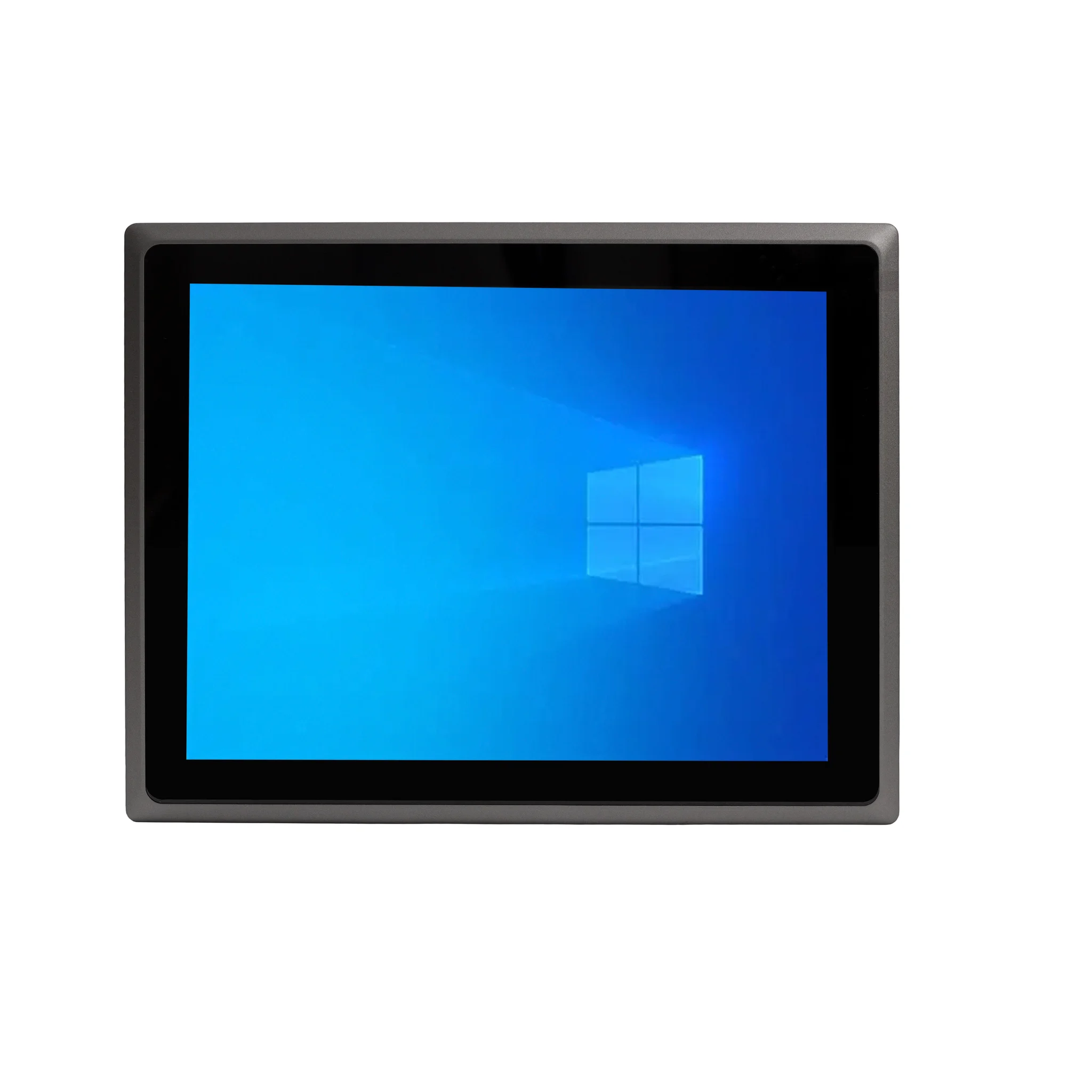
Start with the workload. Light tasks such as data logging, gateways and simple HMIs run comfortably on Intel Celeron or N-series processors with 4–8GB of memory. Machine vision, multi-display signage, virtualization and SCADA servers benefit from Intel Core i3 or i5 processors with 16GB or more, plus NVMe SSD storage for fast I/O. Next, match the I/O to the equipment: count the serial ports, Ethernet ports and display outputs you actually need, since industrial installations often require two or more network segments and multiple RS-232/RS-485 links. Finally, confirm the mechanical fit — DIN rail, VESA or wall mounting — and the power source available at the installation point. Operating system choice also matters: Windows 11 Pro for standard application compatibility, Windows 11 IoT for long-term servicing, or embedded Linux for locked-down appliances.
Thinvent Industrial Computers
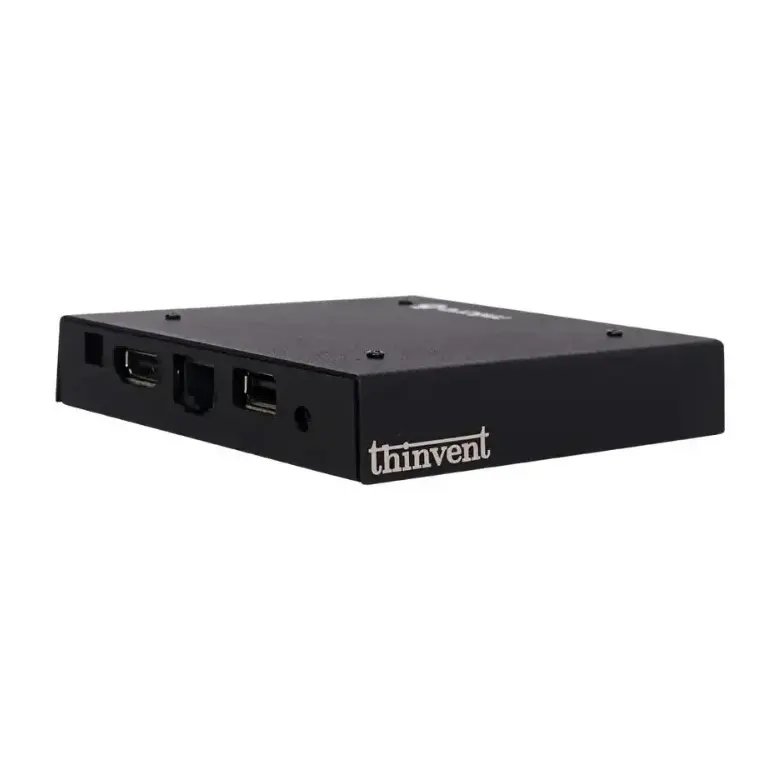
Thinvent builds fanless industrial computers, mini PCs, thin clients and all-in-one PCs for deployment worldwide. The Thinvent IPC3 series pairs 12th-generation Intel Core i3-1215U processors (6 cores, up to 4.4 GHz, 10 MB cache) with up to 16GB DDR4 memory and 1TB SSD storage in a sealed, fanless chassis. Configurations are available with quad DB9 serial ports for multi-device industrial connectivity, dual Ethernet and HDMI outputs, and a choice of Windows 11 Pro, Windows 11 IoT Value, Thinux Embedded Linux or DOS. A 12V 10A adapter supports stable operation in cabinets, kiosks and control panels where a conventional desktop cannot survive.