What is the P720? Understanding the Intel N100 Platform
The query "P720" likely refers to a specific model or product line built around the Intel Processor N100. This is a modern, efficient system-on-a-chip (SoC) designed for compact, low-power computing devices. The Intel N100 is a quad-core processor from Intel's 12th Generation (Alder Lake-N) series, featuring a maximum turbo frequency of 3.4 GHz, 6 MB of cache, and a remarkably low 6W base power. It represents a significant leap in performance-per-watt for entry-level computing, making it ideal for space-constrained and energy-conscious applications.
Key Specifications and Technical Details
The Intel Processor N100 is built on a hybrid architecture, though it utilizes only Efficient-cores (E-cores). Its key specifications include:
-
Cores/Threads: 4 cores, 4 threads.
-
Max Turbo Frequency: Up to 3.4 GHz.
-
Cache: 6 MB Intel Smart Cache.
-
Base Power (TDP): 6W.
-
Graphics: Intel UHD Graphics (based on Xe architecture) with 24 execution units, supporting up to 4K displays at 60Hz.
-
Memory Support: Supports up to 16GB of dual-channel DDR4 or LPDDR5 memory.
-
Connectivity: Integrated support for modern I/O including PCIe Gen 3, USB 3.2, and 2.5GbE networking.
This combination delivers reliable performance for everyday tasks while maintaining excellent thermal efficiency, often enabling completely fanless, silent operation.
Use Cases and Applications
Devices powered by the Intel N100, such as those in a P720 series, are versatile solutions for numerous professional and industrial environments:
-
Digital Signage & Kiosks: Reliable 24/7 operation with support for multiple high-definition displays.
-
Thin Clients & VDI: Perfect for virtual desktop infrastructure, offering a secure and manageable endpoint.
-
Office Productivity: Handles web browsing, office applications, email, and video conferencing with ease.
-
Light Edge Computing: Suitable for IoT gateways and light data processing at the network edge.
-
Home Theater PCs (HTPC): A quiet, compact media center capable of 4K video playback.
Comparison with Common Entry-Level Processors
| Feature | Intel Processor N100 | Intel Celeron J4125 | Intel Celeron N5095 |
|---|---|---|---|
| Generation | 12th Gen (Alder Lake-N) | Gemini Lake Refresh | Jasper Lake |
| Cores/Threads | 4C/4T | 4C/4T | 4C/4T |
| Max Frequency | 3.4 GHz | 2.7 GHz | 2.9 GHz |
| Graphics Architecture | Intel UHD (Xe-based) | Intel UHD 600 | Intel UHD (Jasper Lake) |
| Memory Support | DDR4 / LPDDR5 | DDR4 / LPDDR4 | DDR4 / LPDDR4x |
| Manufacturing Process | Intel 7 | 14nm | 10nm |
| Typical Use Case | Modern mini PCs, fanless systems | Legacy thin clients, basic systems | Budget mini PCs, entry-level boxes |
As shown, the N100 offers a more modern architecture, better graphics, and higher efficiency compared to previous-generation entry-level chips.
Thinvent Products Featuring Intel N100 Technology
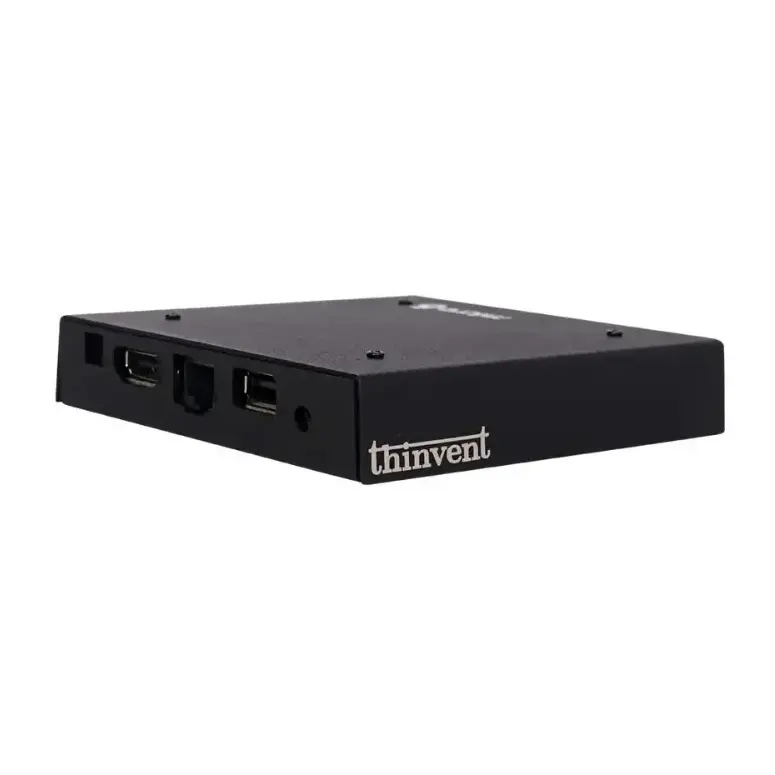
Thinvent leverages the efficiency of the Intel Processor N100 in its Aero Mini PC series. These compact, fanless systems are engineered for reliability in demanding environments. Thinvent's N100-based solutions come in various configurations, allowing you to select the right amount of RAM (typically 8GB or 16GB), SSD storage, and operating system (including Windows 11 IoT/Pro, Ubuntu Linux, or a lightweight embedded OS) to match your specific project requirements. Built for 24/7 operation, they are an excellent choice for digital signage, kiosks, thin clients, and space-constrained office workstations where silent, dependable performance is paramount.