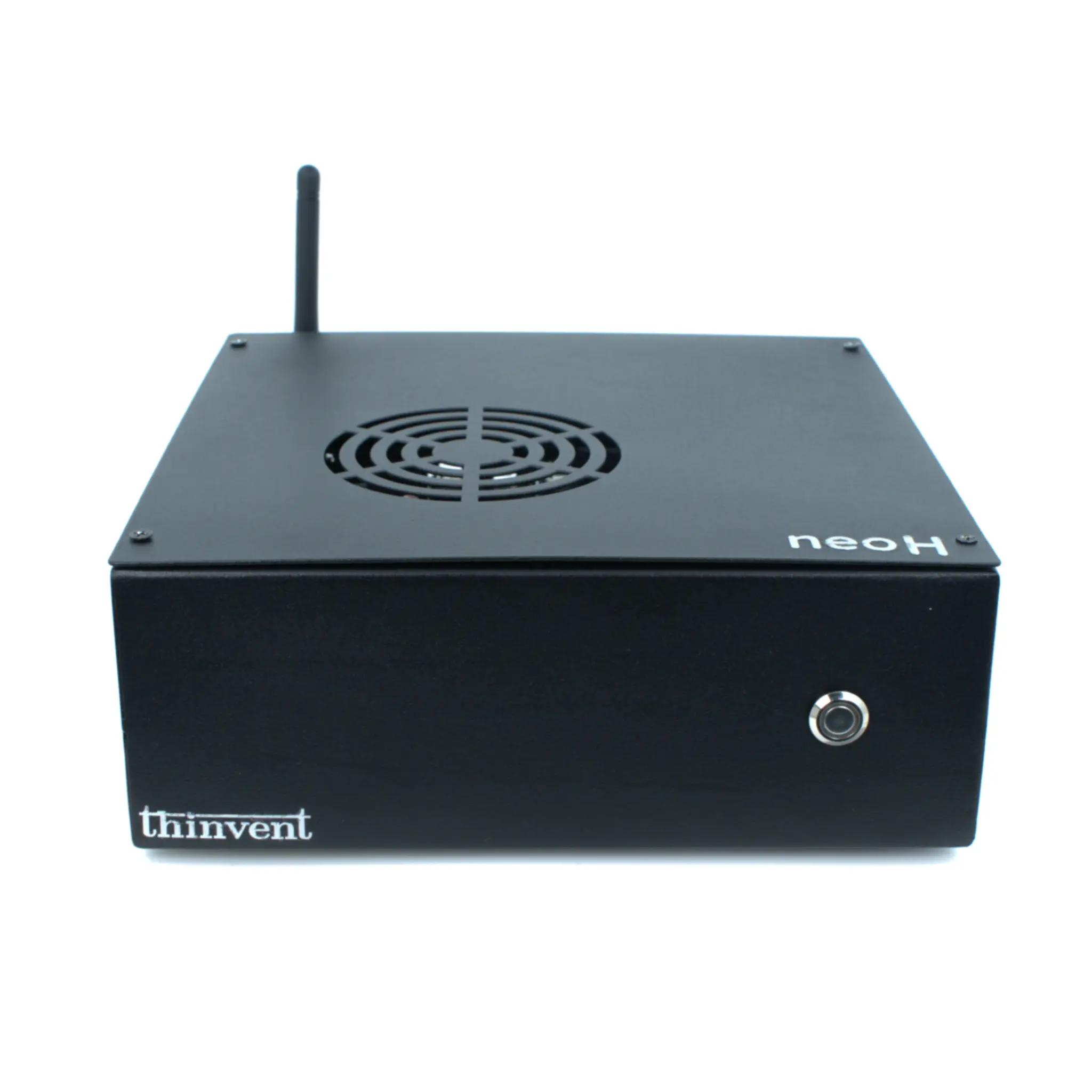
What Are Mini PCs?
A Mini PC is a compact, space-saving desktop computer that provides full computing functionality in a significantly smaller form factor than a traditional tower. These systems are designed for efficiency, low power consumption, and reliable operation in various environments, from office desktops to embedded industrial applications. They are ideal for users seeking a clutter-free workspace, energy savings, and a reliable computing solution for standard business tasks, digital signage, or light industrial control.
Key Specifications and Technical Details
Modern Mini PCs, like those powered by Intel's efficient processors, balance performance with minimal footprint. Key specifications to consider include:
-
Processor: Modern CPUs like the Intel N-series (e.g., N100) offer 4 cores, high efficiency, and integrated graphics, suitable for everyday computing.
-
Memory (RAM): Configurations typically range from 8GB to 16GB of DDR4 RAM, ensuring smooth multitasking for office applications and light workloads.
-
Storage: Solid State Drives (SSDs) from 128GB to 512GB provide fast boot times, quick application loading, and reliable data storage.
-
Connectivity: Standard features include Gigabit Ethernet for fast networking, multiple USB ports (including USB 3.2), HDMI outputs for dual displays, and often options for Wi-Fi.
-
Design: A hallmark of industrial-grade Mini PCs is fanless cooling, which eliminates moving parts for silent, dust-resistant, and highly reliable 24/7 operation.
Common Use Cases and Applications
The versatility of Mini PCs makes them suitable for a wide range of applications:
-
General Office Computing: Perfect as primary workstations for email, web browsing, document editing, and video conferencing.
-
Digital Signage & Kiosks: Their small size and reliability make them ideal for powering information displays, interactive kiosks, and menu boards in retail and public spaces.
-
Light Industrial & Embedded Systems: Used in manufacturing, logistics, and automation for machine control, data acquisition, and HMI (Human-Machine Interface) applications due to their ruggedness and wide operating temperature ranges.
-
Home & Entertainment: Can serve as a compact media center or a low-profile home desktop.
Comparison of Common Mini PC Configurations
| Feature | Entry-Level / Office Use | Balanced Performance | Industrial / Embedded Focus |
|---|---|---|---|
| Typical Processor | Intel N95 / N100 | Intel Core i3 / i5 (10th-13th Gen) | Intel Celeron / Atom (Fanless) |
| RAM | 8GB - 16GB | 16GB - 32GB | 8GB - 16GB (often soldered) |
| Storage | 128GB - 256GB SSD | 256GB - 1TB SSD | 128GB - 512GB SSD (industrial-grade) |
| Key Advantage | Cost-effective, ultra-low power | Stronger performance for multitasking | Fanless, wide temperature range, high reliability |
Thinvent Mini PC Solutions
Thinvent offers a robust range of industrial-grade Mini PCs designed for global deployment and demanding environments. Our product lines, such as the Aero series, feature efficient Intel processors, fanless designs for silent operation, and support for multiple operating systems including Windows, Linux, and embedded platforms. Built for reliability, these systems are an excellent choice for business computing, digital signage, and industrial automation projects worldwide, providing a compact yet powerful computing foundation.