What is DDR5 Memory in Industrial PCs?
DDR5 (Double Data Rate 5) is the latest generation of synchronous dynamic random-access memory (SDRAM) for computers. It represents a significant leap forward from DDR4, offering higher data transfer rates, improved power efficiency, and greater capacity. In the context of industrial PCs, DDR5 memory enables faster data processing, smoother multitasking, and enhanced reliability for demanding applications. This technology is crucial for systems requiring high bandwidth to handle complex computations, real-time data analytics, and intensive graphical workloads.
Key Specifications and Technical Advantages
DDR5 memory modules operate at higher base speeds, starting at 4800 MT/s (megatransfers per second), compared to DDR4's 3200 MT/s. They also feature a dual 32-bit channel architecture per module, which increases memory bandwidth and efficiency. A major technical improvement is the on-die ECC (Error-Correcting Code), which helps detect and correct data corruption, a critical feature for 24/7 industrial operations. Furthermore, DDR5 operates at a lower voltage (1.1V vs. DDR4's 1.2V), contributing to better power efficiency and thermal management in fanless and compact industrial designs.
Use Cases and Applications
Industrial PCs equipped with DDR5 memory are ideal for applications where speed, data integrity, and high throughput are non-negotiable. Key sectors include:
-
Industrial Automation & Control: For high-speed PLCs, machine vision systems, and robotics that process vast sensor data in real-time.
-
Edge Computing & AI: Accelerating inference at the edge for predictive maintenance, quality inspection, and autonomous systems.
-
Digital Signage & Media: Powering 4K/8K video walls and interactive kiosks with seamless playback and transitions.
-
Telecommunications & Networking: Handling high-bandwidth network functions and data packet processing.
-
Medical Imaging & Diagnostics: Enabling rapid processing of high-resolution medical scans and data.
Comparison: DDR5 vs. DDR4 for Industrial Use
| Feature | DDR5 | DDR4 | Industrial Impact |
|---|---|---|---|
| Speed | 4800 MT/s and higher | 1600 - 3200 MT/s | Faster data processing for real-time applications. |
| Channel Architecture | Dual 32-bit per module | Single 64-bit per module | Increased bandwidth for multi-threaded workloads. |
| Voltage | 1.1V | 1.2V | Improved power efficiency, crucial for embedded systems. |
| On-Die ECC | Yes (for some data) | No (relies on system-level ECC) | Enhanced data reliability and system stability. |
| Maximum Capacity | Higher per module | Lower per module | Supports memory-intensive applications like AI and large databases. |
Thinvent's DDR5-Enabled Industrial Solutions
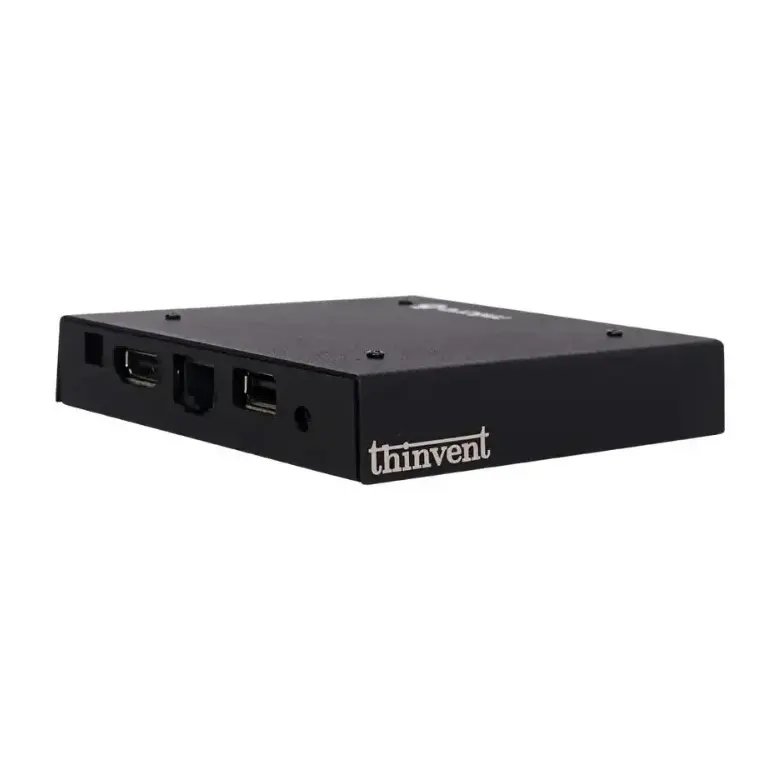
Thinvent integrates cutting-edge DDR5 memory technology into its robust industrial computing platforms. Our product range includes compact Mini PCs and powerful Industrial PCs designed to leverage the performance and reliability benefits of DDR5. These systems are built for harsh environments, featuring fanless cooling for silent, dust-resistant operation and wide operating temperature ranges. Whether for edge AI deployment, digital signage, or factory automation, Thinvent's DDR5-equipped computers provide the future-proof performance and stability required for mission-critical industrial tasks worldwide.