Why AutoCAD and Revit Demand High-Performance Workstations
AutoCAD and Revit are resource-intensive applications that require powerful hardware to run smoothly, especially when handling complex 2D drawings, 3D models, and building information modeling (BIM) data. For AutoCAD, single-threaded CPU performance is critical for commands like rendering and regeneration, while Revit benefits from multi-core processors for tasks such as view regeneration, rendering, and family editing. A balanced system with a fast processor, ample RAM, and a dedicated GPU (though integrated graphics can suffice for basic use) is essential to avoid lag, crashes, and productivity loss.
Key Specifications for AutoCAD and Revit Workstations
For a high-performance CAD workstation, prioritize an Intel Core i5 or i7 processor (12th Gen or newer) with high clock speeds (4.0 GHz or more) and at least 6 cores. Revit, in particular, scales well with multi-core CPUs, so processors with 8+ cores are recommended for large projects. RAM is equally critical: 16GB is the minimum for moderate use, but 32GB or 64GB is ideal for multi-tasking with large models, multiple open files, or rendering. Storage should be a fast NVMe SSD (512GB or higher) to reduce load times. While integrated Intel UHD or Iris Xe graphics can handle basic 2D and 3D work, a dedicated GPU (e.g., NVIDIA RTX series) is strongly recommended for complex 3D modeling, rendering, and real-time visualization in Revit.
Use Cases and Applications
These workstations are ideal for architects, civil engineers, interior designers, and construction professionals who rely on AutoCAD for drafting and Revit for BIM workflows. Typical tasks include creating detailed floor plans, sections, and elevations in AutoCAD, as well as developing parametric 3D models, generating construction documentation, and performing clash detection in Revit. High-performance systems also support rendering with tools like V-Ray or Enscape, enabling photorealistic visualizations without excessive wait times. For collaborative environments, a powerful workstation ensures smooth performance when working with linked models, point clouds, or large datasets.
Comparison Table: Recommended Configurations
| Component | Entry-Level (Basic 2D) | Mid-Range (3D & BIM) | High-End (Rendering & Complex Models) |
|---|---|---|---|
| Processor | Intel Core i5-1240P (12 cores) | Intel Core i5-1250P (12 cores) | Intel Core i7-13700H (14 cores) |
| RAM | 16GB DDR4 | 32GB DDR4 | 64GB DDR5 |
| Storage | 512GB NVMe SSD | 1TB NVMe SSD | 2TB NVMe SSD |
| Graphics | Integrated Intel Iris Xe | NVIDIA RTX 3050 | NVIDIA RTX 4060 or higher |
| Use Case | 2D drafting, small projects | 3D modeling, medium Revit projects | Large BIM models, rendering, real-time visualization |
Thinvent’s High-Performance CAD Workstations
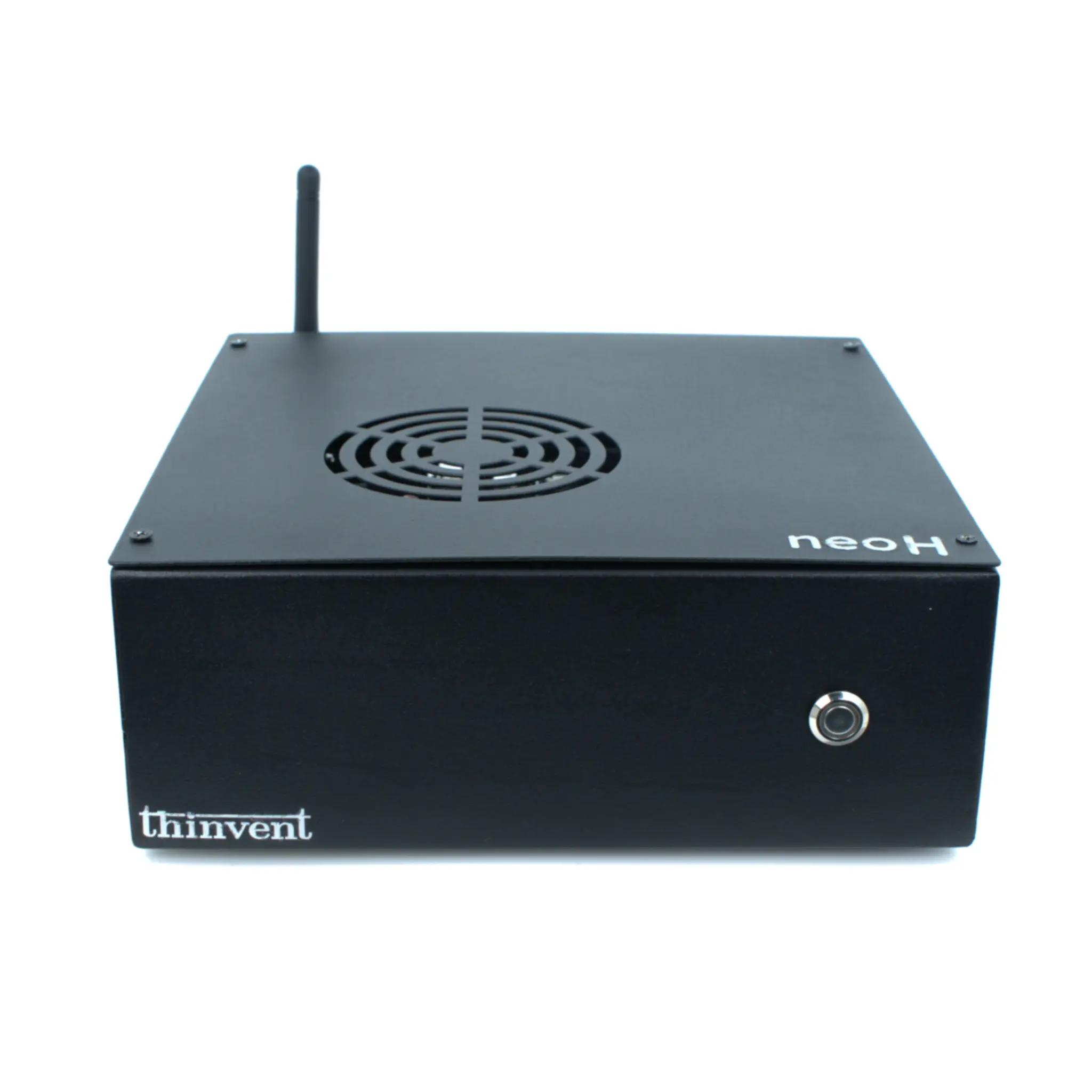
Thinvent offers a range of industrial PCs and mini PCs engineered for demanding CAD applications. Our Intel-based models, such as the Thinvent® Industrial PC IPC5 (Intel Core i5-1240P, 12 cores, 16GB RAM, 512GB SSD) and the Thinvent® Aero Mini PC (Intel Core 5 120U, 10 cores, up to 5.0 GHz, 16GB RAM, 512GB SSD), provide the processing power needed for AutoCAD and Revit. For users requiring maximum performance, we recommend configurations with 32GB RAM and a dedicated GPU. All systems are built with robust thermal management and industrial-grade reliability, ensuring stable operation during long rendering sessions or multi-tasking. Explore our catalog to customize a workstation tailored to your specific CAD workflow.