What "PC 工房" Means for Industrial Buyers
"PC 工房" (PC kobo) translates roughly to "PC workshop" or "PC builder's shop" — a place where computers are assembled, configured and tailored to a specific job rather than sold off the shelf. For industrial buyers, that idea matters: a machine on a factory floor, a kiosk, or a control cabinet is not a generic office desktop. It has to fit a fixed enclosure, run 24/7, tolerate dust and heat, and connect to legacy machinery. This page covers what to look for when sourcing a purpose-built industrial computer, and how Thinvent's IPC range fits that "workshop-built" philosophy.
What Defines an Industrial PC
Unlike a consumer desktop, an industrial PC (IPC) is engineered around continuous duty. Key characteristics include:
-
Fanless, ventless chassis — no moving parts to draw in dust or fail, and no airflow to clog in a greasy or fibrous environment.
-
Wide input power — typically a 12V DC adapter or 9–36V DC input, so the unit can run from a DIN-rail supply or battery backup.
-
Industrial I/O — multiple serial ports (RS-232/RS-485 via DB9), dual Gigabit Ethernet, and isolated digital I/O for PLCs, sensors and legacy equipment.
-
Mounting flexibility — VESA, DIN-rail or panel mount so the PC lives inside the machine cabinet, not on a desk.
-
Long lifecycle availability — industrial deployments run for years, so the same model and revision must remain orderable.
Typical Specifications
| Parameter | Common Industrial Range | Why It Matters |
|---|---|---|
| Processor | Intel Celeron / N-series / Core i3–i5 | Low-power fanless designs vs. higher-throughput control |
| Cores | 4–12 | Enough headroom for SCADA, HMI and edge software |
| Memory | 8–32 GB DDR4 | Multi-app HMI, databases, vision pre-processing |
| Storage | 128 GB – 1 TB SSD | Shock-resistant, no spinning platters |
| Ethernet | Dual Gigabit | Separate OT network and IT/uplink traffic |
| Serial | 2–4 × DB9 RS-232/485 | PLCs, weighbridges, barcode readers, CNC |
| Display out | 1–2 × HDMI | Panel display plus a service monitor |
| OS | Windows 11 Pro / IoT, Linux, DOS | Application and vendor-tool compatibility |
Where These Systems Are Used
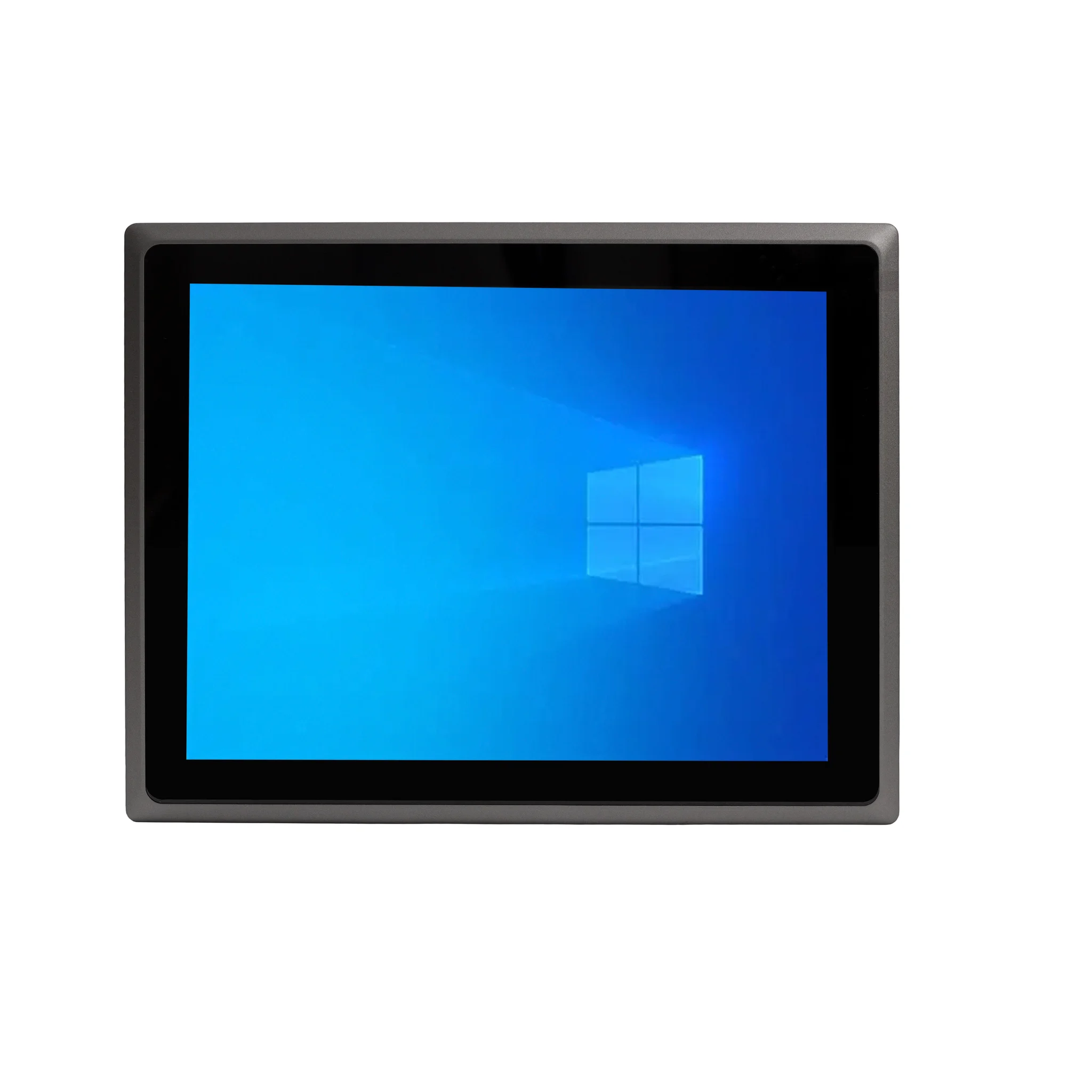
Industrial PCs built in this "workshop" model appear across manufacturing and infrastructure: CNC and machine-tool control, SCADA and HMI terminals, production-line data collection, vision inspection, warehouse and logistics terminals, building automation, KDS and digital signage, and edge gateways that push plant data to the cloud. In each case the PC is configured to the machine — serial port count, OS image, storage size and mounting — rather than the machine being adapted to a generic PC.
Choosing the Right Configuration
Start from the software, not the hardware. Confirm the OS and runtime your application vendor supports, then size the processor and memory for the number of concurrent tasks. Count your physical connections — every PLC, scale or reader needs a port — and decide whether you need dual Ethernet for network segmentation. Finally, check the environmental envelope: ambient temperature, dust, vibration and available power. A fanless unit with a ventless case and DC input is usually the safest choice for cabinet mounting.
Thinvent's Industrial PC Range
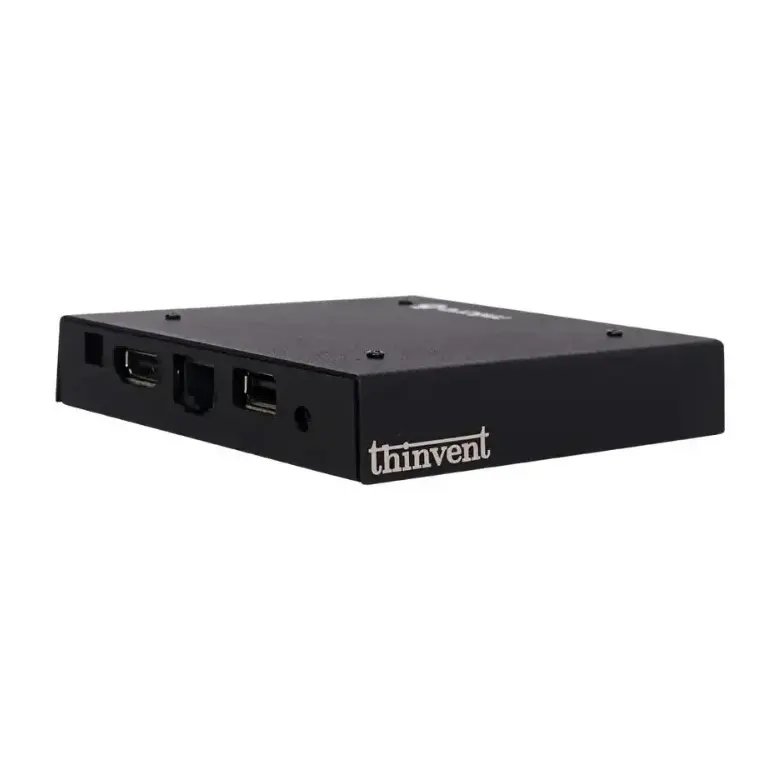
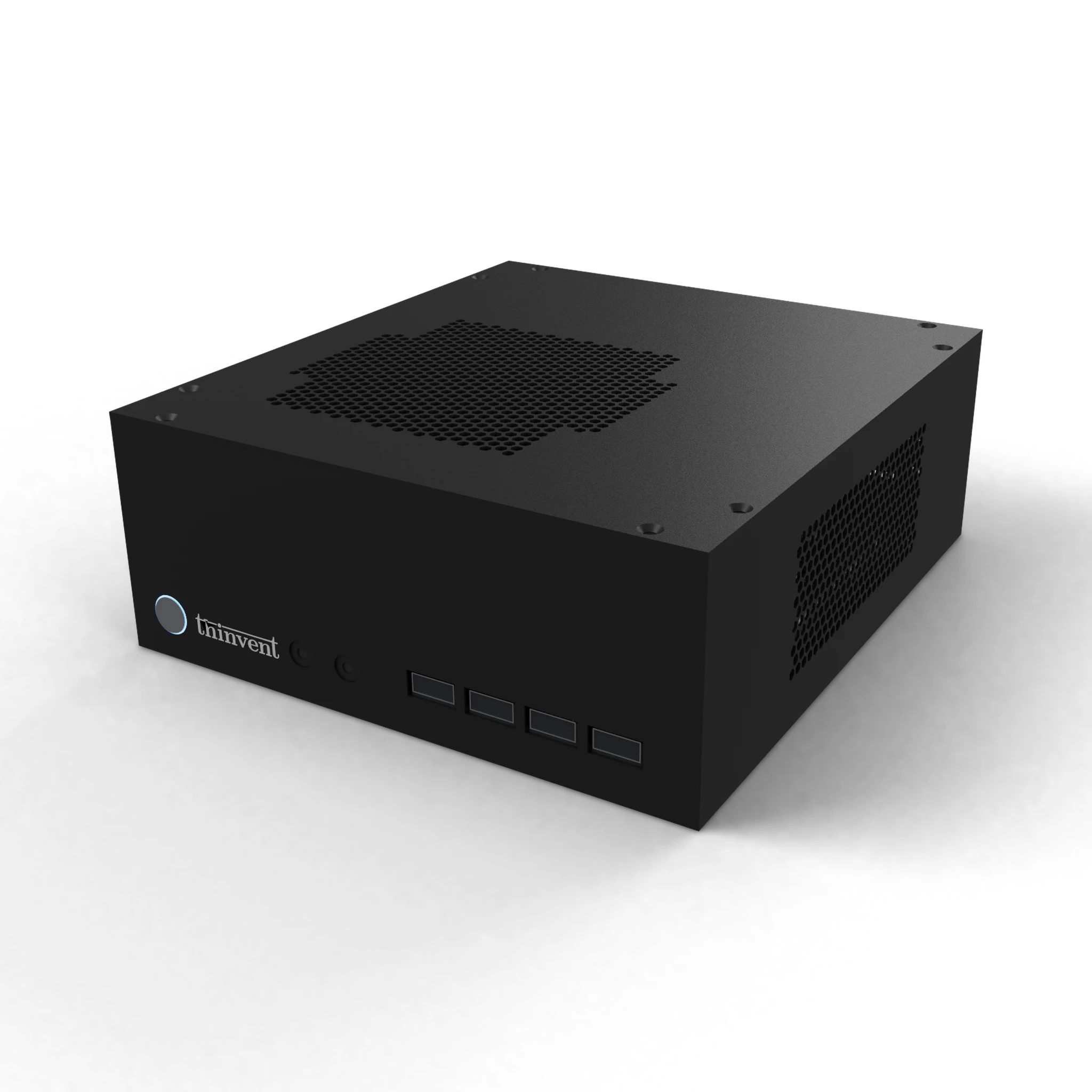
Thinvent manufactures fanless industrial computers, mini PCs, thin clients and all-in-one PCs designed for continuous operation in demanding environments. The IPC series pairs Intel Core i3 and N-series processors with configurable memory and SSD storage, dual Gigabit Ethernet, HDMI output and optional quad DB9 serial ports, and is available with Windows 11 Pro, Windows 11 IoT, Thinux™ embedded Linux, DOS or without an OS. Every unit is built to be configured to the job — the same principle behind any good PC workshop.