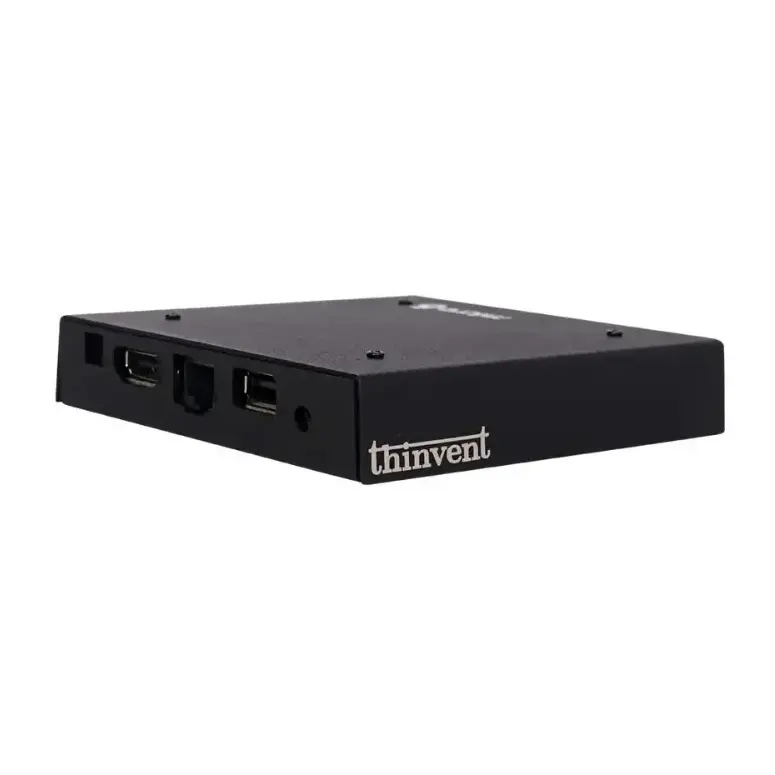
What is a Pico-ITX PC?
A Pico-ITX PC is an ultra-compact single-board computer (SBC) adhering to the Pico-ITX form factor standard, which measures just 100mm x 72mm (3.94" x 2.83"). This makes it approximately half the area of a Nano-ITX board and significantly smaller than the more common Mini-ITX. Despite its diminutive size, a Pico-ITX motherboard is designed to pack a surprising amount of functionality, including essential I/O ports like USB, HDMI, and Ethernet, making it ideal for deeply embedded and space-constrained industrial applications.
The Pico-ITX standard was developed to provide a highly compact, low-power computing solution that could be easily integrated into custom enclosures or embedded systems. Its small footprint allows system designers to create devices that are both powerful and portable, without the bulk of traditional desktop or even Mini-ITX systems. This form factor is particularly popular in scenarios where every millimeter of space counts, such as in digital signage, medical carts, and IoT gateways.
Key Specifications and Technical Details
Pico-ITX boards typically feature low-power processors from Intel's Atom or Celeron N-series, or ARM-based Cortex-A series chips. These processors are chosen for their balance of adequate performance for specific tasks and minimal heat generation, often allowing for fanless cooling—a critical feature for reliability in dusty or noisy industrial environments. Memory is frequently soldered (onboard) to save space, with capacities ranging from 2GB to 16GB of LPDDR4/LPDDR4x RAM. Storage is usually provided via eMMC (embedded MultiMediaCard) or M.2 SATA SSDs, with capacities from 16GB to 512GB.
Here is a comparison of typical Pico-ITX specs vs. other small form factors:
| Feature | Pico-ITX | Nano-ITX | Mini-ITX |
|---|---|---|---|
| Dimensions | 100mm x 72mm | 120mm x 120mm | 170mm x 170mm |
| Typical Processor | Intel Atom, Celeron N, ARM | Intel Atom, Celeron | Core i3/i5/i7, Celeron |
| Power Consumption | 5-15W | 10-25W | 15-65W+ |
| Cooling | Fanless (typically) | Fanless / Active | Active (often required) |
| Expansion | SUMIT, Mini-PCIe | Mini-PCIe, M.2 | PCIe x16, M.2, SATA |
Use Cases and Applications
The ultra-compact nature and low power consumption of Pico-ITX systems make them a perfect fit for a wide variety of embedded and industrial applications. Common use cases include:
-
Industrial Automation: As a controller for PLCs, HMIs, or edge computing devices on the factory floor.
-
Digital Signage: Powering displays in retail, transportation hubs, or corporate lobbies where space behind the screen is limited.
-
Medical Devices: Embedded inside medical carts, patient monitoring systems, or diagnostic equipment.
-
IoT Gateways: Collecting and processing data from sensors in smart buildings, agriculture, or logistics.
-
Robotics: Serving as the central computing unit for small autonomous robots or drones.
Thinvent’s Pico-ITX and Ultra-Compact Products
While Thinvent specializes in a wide range of industrial computing solutions, their product lineup includes several ultra-compact systems that are ideal for applications requiring a small footprint. For instance, the Thinvent® Micro series (Micro 5 and Micro 6 Pro) are ARM-based mini PCs that, while not strictly Pico-ITX motherboards, offer a similar level of ultra-compactness and low power consumption. These devices feature fanless designs, onboard RAM and eMMC storage, and are powered by a 5V adapter, making them perfect for embedded deployments where space and power are at a premium.
For higher performance needs in a compact form factor, Thinvent also offers industrial mini PCs like the Treo and Aero series, which utilize Intel N-series and Core i3/i5 processors. These systems provide a balance of power and size, suitable for more demanding edge computing tasks. All Thinvent industrial PCs are built for reliability, with robust chassis and support for various operating systems including Windows and Linux.