What is PiKVM?
PiKVM (Pi-based Keyboard-Video-Mouse) is an open-source hardware and software solution that allows for remote management of servers, workstations, and other computers over a network. It functions as an out-of-band (OOB) management tool, providing full remote control including BIOS/UEFI access, operating system installation, and troubleshooting, even when the target machine is powered off or has crashed. Unlike software-based remote access tools, PiKVM works at the hardware level by emulating a keyboard, mouse, and monitor, making it an essential tool for IT administrators, data centers, and remote labs.
Key Specifications for PiKVM Hardware
An effective PiKVM setup requires specific hardware capabilities to ensure reliable, low-latency performance. The core components include a capable single-board computer or mini PC with sufficient processing power, multiple USB ports for host control and optional accessories, and reliable network connectivity. Key technical considerations are:
-
Processor: A modern, efficient multi-core processor (like Intel's N-series) is ideal for handling video encoding and network traffic without overheating.
-
Connectivity: At least two USB ports are critical—one for the target host connection (often via USB-C or USB-A to emulate peripherals) and another for a webcam or HDMI capture card for video input. Gigabit Ethernet is preferred for stable network performance.
-
Form Factor: A compact, fanless mini PC is perfect for PiKVM, as it can be deployed in space-constrained server racks or attached directly to a monitor, ensuring silent and reliable 24/7 operation.
-
Operating System: Compatibility with lightweight Linux distributions (like the official PiKVM OS based on Arch Linux, or Ubuntu) is essential for easy software installation and maintenance.
Applications and Use Cases
PiKVM is invaluable in scenarios where physical access to equipment is impossible or impractical. Primary applications include:
-
Remote Data Center Management: Reboot, reinstall OS, or configure BIOS on servers located miles away.
-
Home Lab and Homelab Enthusiasts: Manage multiple physical machines or network devices from a single interface.
-
IT Support and MSPs: Provide hands-on remote support for client hardware issues without needing to be on-site.
-
Industrial and Embedded Systems: Monitor and control headless industrial PCs or kiosks in remote locations.
Recommended Hardware Comparison
When selecting hardware for your PiKVM, consider these key differentiators:
| Feature | Basic / DIY Setup | Recommended Industrial-Grade Solution |
|---|---|---|
| Core Hardware | Raspberry Pi + HATs/Add-ons | Integrated Fanless Mini PC |
| Reliability | Varies with DIY components | High, with industrial-grade components |
| Form Factor | Multiple components, cables | Single, compact, and rugged unit |
| Power Efficiency | Good | Excellent, optimized for 24/7 operation |
| Deployment Ease | Requires assembly and configuration | Pre-built, often ready for OS imaging |
| Ideal For | Hobbyists, prototyping | Professional, commercial, and production environments |
Thinvent Solutions for PiKVM
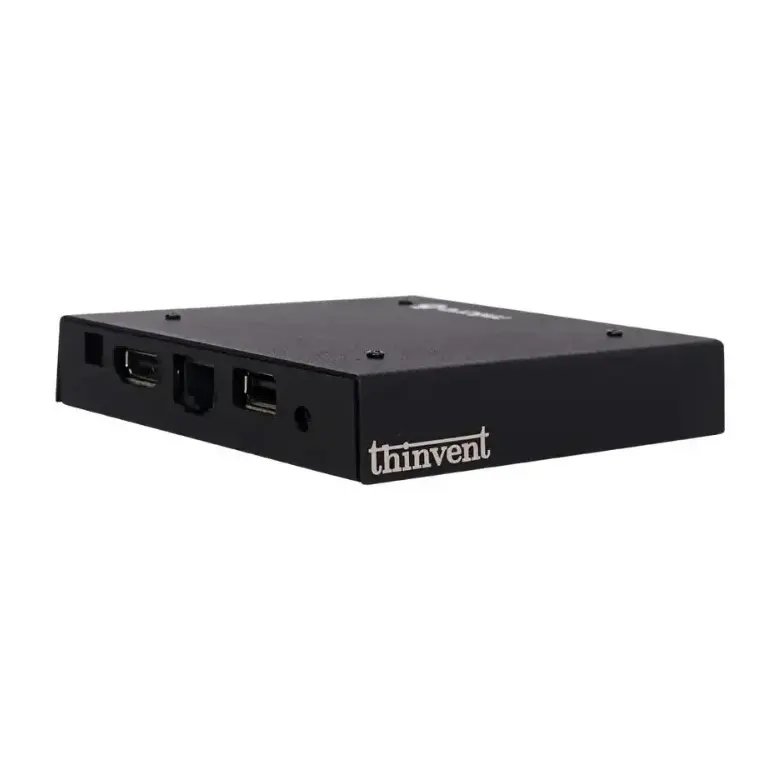
Thinvent's range of industrial mini PCs are perfectly suited to serve as robust, reliable hardware platforms for PiKVM implementations. Our fanless Aero Mini PC series, for example, features the efficient Intel Processor N100, providing ample performance for video capture and network tasks while operating silently and reliably. With multiple USB ports, Gigabit Ethernet, and support for various Linux distributions including Ubuntu, these compact computers eliminate the fragility and complexity of DIY setups. They offer a turnkey hardware foundation, allowing you to focus on deploying and using your PiKVM software for seamless remote management worldwide.