What is PiKVM and Remote Management Hardware?
PiKVM (Pi-based KVM over IP) is an open-source project that transforms a Raspberry Pi or compatible single-board computer into a full-featured KVM-over-IP device. It allows for complete remote management of servers, workstations, and network equipment from anywhere in the world. This includes BIOS-level access, virtual media mounting (like USB drives or ISO images over the network), and real-time video streaming of the target machine's display, even when the OS is unresponsive or powered off. A dedicated remote management hardware solution, like those built on the PiKVM concept, provides an out-of-band management tool that is independent of the host system's operating system, offering a critical lifeline for IT administrators, data center managers, and developers.
Key Specifications and Technical Advantages
A robust PiKVM solution requires stable, low-power, and compact hardware. Key specifications for an ideal host device include:
-
Reliable, Low-Power Processor: An efficient CPU like the Intel N100 ensures smooth video encoding and system operation without excessive heat or power draw.
-
Adequate RAM: Sufficient memory (e.g., 16GB) is crucial for handling the PiKVM software stack, video buffering, and web interface responsiveness.
-
Multiple Connectivity Options: Essential ports include HDMI input for video capture, USB for host control and virtual media, Ethernet for reliable network connectivity, and optionally serial console support.
-
Fanless, Industrial Design: A fanless, rugged chassis ensures silent, reliable operation in server closets, industrial environments, or embedded applications with minimal points of failure.
-
Flexible OS Support: The ability to run lightweight, stable operating systems like a custom embedded Linux is vital for a dedicated appliance.
Primary Use Cases and Applications
PiKVM hardware solutions are indispensable in several scenarios:
-
Data Center & Server Management: Remotely reboot, reinstall OSes, and troubleshoot physical servers located in remote or inaccessible data centers.
-
IT Infrastructure & Homelabs: Manage firewalls, routers, network-attached storage (NAS), and other headless devices without needing a monitor and keyboard on-site.
-
Software Development & Testing: Provide developers with remote access to bare-metal machines for testing different configurations, operating systems, or low-level software.
-
Industrial & Digital Signage Control: Remotely manage and recover industrial PCs or digital signage players that have frozen or require maintenance.
Thinvent Hardware for PiKVM Solutions
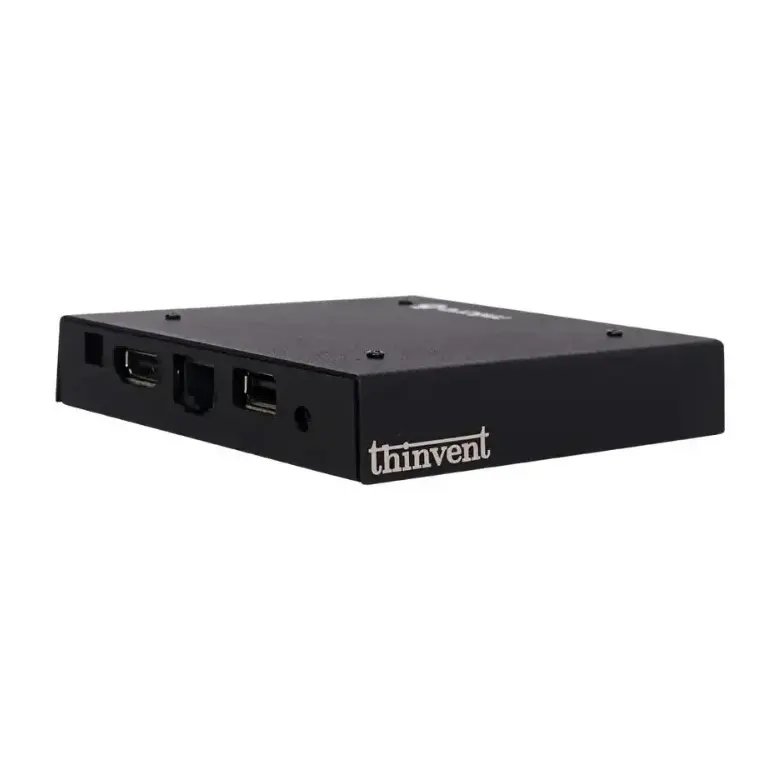
Thinvent's industrial-grade mini PCs provide an excellent, reliable hardware foundation for building dedicated PiKVM appliances or similar remote management tools. The Thinvent Aero Mini PC series, featuring the Intel N100 processor, aligns perfectly with the requirements for a remote management gateway.
Why the Thinvent Aero is Suitable:
-
Performance & Efficiency: The quad-core Intel N100 processor provides ample power for video encoding and the PiKVM software stack while maintaining very low power consumption.
-
Industrial Reliability: The fanless design ensures silent, maintenance-free operation 24/7, which is critical for a management device that must always be available.
-
Connectivity & Flexibility: With multiple USB ports, Gigabit Ethernet, and HDMI outputs, it can be easily configured. The option for Thinux™ Embedded Linux or Ubuntu provides a stable, minimal OS base to install and run PiKVM software.
-
Compact Form Factor: Its small size allows it to be mounted or placed conveniently alongside the equipment it is managing.
By utilizing a Thinvent Aero Mini PC as the hardware host, organizations can deploy a cost-effective, robust, and professional-grade remote management solution for their critical infrastructure.