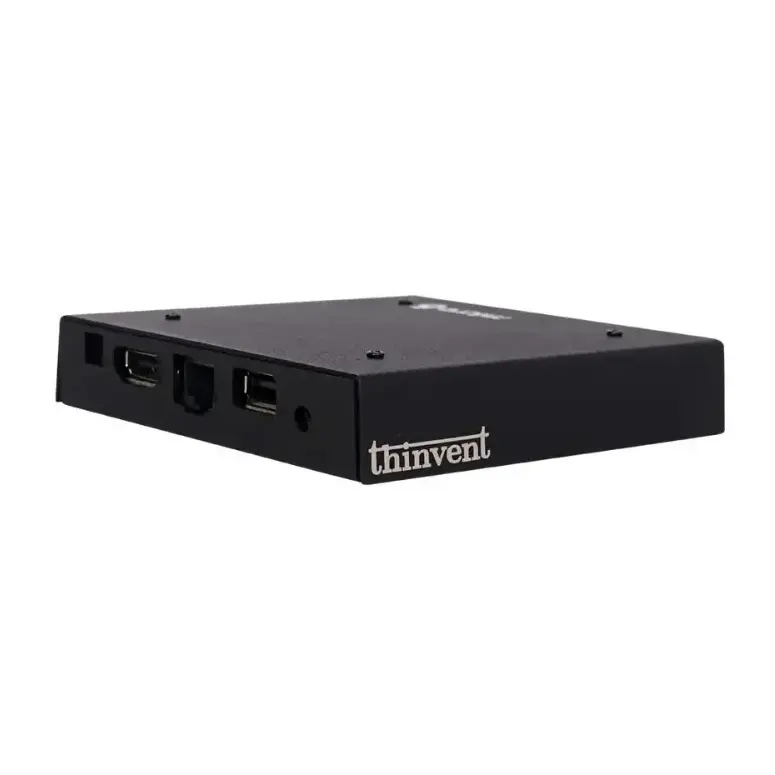
What is a Portable Desktop?
A portable desktop, often called a mini PC or compact desktop, is a fully functional computer system that offers the performance of a traditional desktop tower in a significantly smaller, lightweight, and easily transportable form factor. These devices are designed for users who need desktop-level computing power but require flexibility, space savings, or the ability to move their workstation between locations. They typically connect to standard peripherals like monitors, keyboards, and mice, but their compact size allows for mounting behind a monitor (VESA mount), placement in tight spaces, or simple transport in a bag.
Key Specifications and Technical Details
Modern portable desktops are engineered with efficient, low-power processors that deliver robust performance without generating excessive heat, enabling reliable fanless or near-silent operation. Key specifications to consider include the processor (Intel Core i-series, Celeron, or efficient N-series CPUs), RAM capacity (typically 8GB to 32GB), and solid-state storage (128GB to 1TB NVMe SSDs). They feature a comprehensive set of connectivity options, including multiple USB ports (USB 3.2, USB-C), HDMI/DisplayPort outputs for multi-monitor setups, Gigabit Ethernet, and often built-in Wi-Fi and Bluetooth. Their power consumption is low, often powered via a simple external power adapter.
Ideal Use Cases and Applications
The portability and versatility of these systems make them ideal for a wide range of applications. They are perfect for digital signage in retail or hospitality, point-of-sale (POS) systems, light office productivity, home theater PCs (HTPCs), and as compact workstations for general computing tasks. Their rugged, often fanless designs also make them suitable for industrial environments, kiosks, and embedded applications where reliability in varying temperatures and conditions is critical. For remote workers or professionals who travel, a portable desktop offers a consistent, powerful computing environment that can be set up anywhere with a monitor.
Comparison: Portable Desktop vs. Traditional Desktop vs. Laptop
| Feature | Portable Desktop (Mini PC) | Traditional Desktop Tower | Laptop |
|---|---|---|---|
| Size & Portability | Extremely compact, highly portable | Large, stationary | Integrated and portable |
| Performance | Desktop-class, efficient processors | High-performance, upgradeable | Mobile-optimized, varies |
| Upgradability | Limited (often RAM/SSD only) | Highly upgradeable | Very limited |
| Peripherals Required | Monitor, keyboard, mouse required | Monitor, keyboard, mouse required | All-in-one, built-in screen |
| Power Consumption | Very low | Moderate to high | Low to moderate |
| Ideal For | Space-saving, fixed installations with mobility needs | High-performance computing, gaming, upgrades | Mobility as primary need |
Thinvent Portable Desktop Solutions
Thinvent specializes in manufacturing robust and reliable portable desktop computers designed for commercial and industrial use. Our range includes fanless mini PCs built with Intel processors, offering silent operation and enhanced durability for 24/7 applications. Models like the Aero series provide a balance of efficient performance, comprehensive connectivity, and flexible mounting options. Thinvent portable desktops are pre-configured with various operating system choices, including Windows, Linux, and embedded OS options, and are built to withstand demanding environments, making them a trusted choice for global deployments in digital signage, automation, and enterprise workspaces.