Understanding Desktop Computer Processors
When selecting a processor for a desktop computer, the two main architectures dominate the market: Intel x86 and ARM. Intel processors are the traditional choice for desktop PCs, offering high performance with models ranging from entry-level Celeron and N-series (like the N100) to mid-range Core i3 and i5, and high-end Core i7 and i9. ARM processors, on the other hand, are known for their exceptional power efficiency and are commonly found in thin clients, embedded systems, and mobile devices. For desktop computing tasks like office work, browsing, and media consumption, both architectures can be suitable, but Intel remains the standard for full Windows compatibility and demanding applications.
Key Technical Specifications to Consider
The most critical specifications when evaluating a desktop processor include core count, clock speed, cache size, and thermal design power (TDP). Core count determines multitasking capability: 4-core processors (like the N100 or Cortex A55) handle basic productivity, while 6-core (i3-1215U), 10-core (Core 5 120U), and 12-core (i5-1240P) processors excel at multitasking and more intensive workloads. Clock speed, measured in GHz, indicates how fast each core operates, with boost speeds up to 5.0 GHz on newer Intel models. Cache memory (from 1 MB on ARM chips to 12 MB on Intel i5) improves data access speed. TDP affects cooling requirements and power consumption, with ARM chips typically under 10W and Intel desktop processors ranging from 15W to 28W.
Use Cases and Applications
For basic desktop tasks such as web browsing, email, document editing, and media playback, entry-level processors like the Intel N100 or ARM Cortex A55 provide adequate performance with minimal power consumption and silent fanless operation. These are ideal for thin clients, kiosks, and digital signage. Mid-range processors like the Intel Core i3-1215U (6 cores, up to 4.4 GHz) handle more demanding office applications, light photo editing, and multi-tab browsing. High-performance processors like the Intel Core i5-1240P (12 cores, up to 4.4 GHz) or Core 5 120U (10 cores, up to 5.0 GHz) are suitable for content creation, software development, data analysis, and industrial automation where responsiveness and parallel processing are critical.
Comparison of Processor Types
| Processor | Cores | Max Frequency | Cache | TDP | Best For |
|---|---|---|---|---|---|
| ARM Cortex A53 | 4 | 2.0 GHz | 1 MB | ~5W | Ultra-low power thin clients |
| ARM Cortex A55 | 4 | 1.9 GHz | 1 MB | ~5W | Embedded systems, IoT |
| Intel N100 | 4 | 3.4 GHz | 6 MB | 6W | Entry-level desktop, thin clients |
| Intel Core i3-1215U | 6 | 4.4 GHz | 10 MB | 15W | Office productivity |
| Intel Core 5 120U | 10 | 5.0 GHz | 12 MB | 15W | Mid-range performance |
| Intel Core i5-1240P | 12 | 4.4 GHz | 12 MB | 28W | High-performance computing |
Thinvent's Desktop Processor Solutions
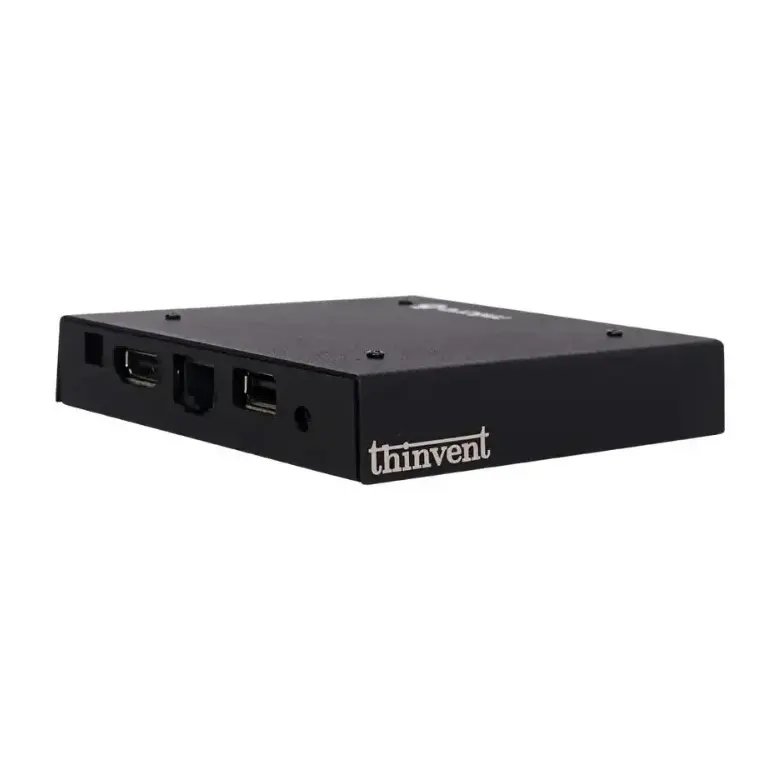
Thinvent offers a comprehensive range of desktop computers and industrial PCs powered by both Intel and ARM processors to suit various performance and efficiency requirements. Our product lineup includes the energy-efficient ARM-based Micro series thin clients (Micro 5, Micro 6 Pro) for low-power applications, the versatile Intel N100-powered Treo Mini PC and IPC1 for cost-effective desktop computing, the balanced Aero and IPC3 with Core i3 processors for office use, and the high-performance IPC5 with Core i5-1240P for demanding industrial and professional workloads. Each system is optimized for reliability, thermal management, and long-term deployment in commercial and industrial environments.