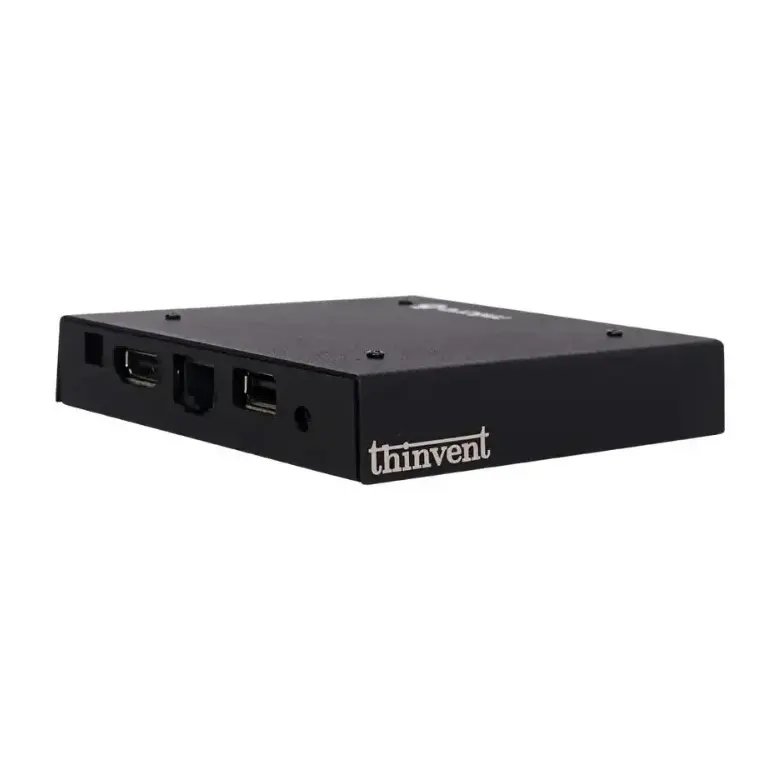
What is a Raspberry Pi Homelab?
A Raspberry Pi homelab typically refers to a small-scale, energy-efficient computing environment built for learning, experimentation, and running lightweight server applications. Common use cases include DNS ad-blocking (Pi-hole), personal cloud storage, Kubernetes clusters, web servers, home automation, and network monitoring. While traditional Raspberry Pis are popular for their low cost and low power draw, they have limitations in RAM, storage, and processing power that can be overcome by using a more capable mini PC or thin client.
Key Specifications for a Homelab Machine
When selecting a device for a Raspberry Pi-style homelab, prioritize:
-
Low power consumption – Ideally under 15W idle, comparable to a Raspberry Pi 5 (4–5W).
-
Adequate RAM – 4GB is the minimum for basic services; 8GB or more is recommended for containerized workloads like Docker or Kubernetes.
-
Fast storage – An SSD (SATA or NVMe) dramatically improves performance over microSD cards.
-
Quiet, fanless operation – Many homelabs run 24/7 in living spaces.
-
Multiple network ports – Useful for routing, firewalling, or VLAN experimentation.
-
Compatibility with Linux – Ubuntu, Debian, or Raspberry Pi OS-like distributions are ideal.
Comparison: Raspberry Pi vs. Thinvent Mini PC for Homelab
| Feature | Typical Raspberry Pi 4/5 | Thinvent Mini PC (e.g., Treo N100) |
|---|---|---|
| Processor | ARM Cortex-A72/A76 (4 cores) | Intel N100 (4 cores, x86) |
| RAM | 1–8 GB LPDDR4 | 4–32 GB DDR4/DDR5 |
| Storage | microSD or USB/NVMe HAT | Built-in M.2 SATA/NVMe SSD |
| Power Consumption | ~5–15W | ~6–15W |
| Operating System | Raspberry Pi OS (ARM) | Ubuntu, Windows, Thinux (x86) |
| Networking | Gigabit Ethernet (1 port) | Gigabit Ethernet (1–2 ports) |
| Price Range | $35–$80 (board only) | $150–$400 (complete system) |
Use Cases for a Thinvent Mini PC Homelab
-
Pi-hole + Unbound DNS – Network-wide ad blocking and recursive DNS.
-
Docker / Podman containers – Run services like Jellyfin, Home Assistant, Nextcloud, or Nginx.
-
Kubernetes (k3s) cluster – Use 3–4 nodes to learn orchestration.
-
NAS / file server – With USB or internal SATA storage.
-
VPN gateway – WireGuard or OpenVPN server.
-
Home automation hub – Home Assistant, Node-RED, or openHAB.
Thinvent Products for Homelab
Thinvent offers several compact, power-efficient mini PCs ideal for homelab use. The Treo and Aero series feature Intel N100 or Core i3/i5 processors, support up to 32GB RAM, and include M.2 SSD slots. They run Ubuntu Linux or Thinux Embedded Linux out of the box, and their fanless designs ensure silent 24/7 operation. For users seeking ARM-based alternatives, the Micro 5/6 thin clients provide Cortex A53/A55 processors with low power draw and integrated WiFi. All models are built for reliability and can be ordered with or without an operating system.