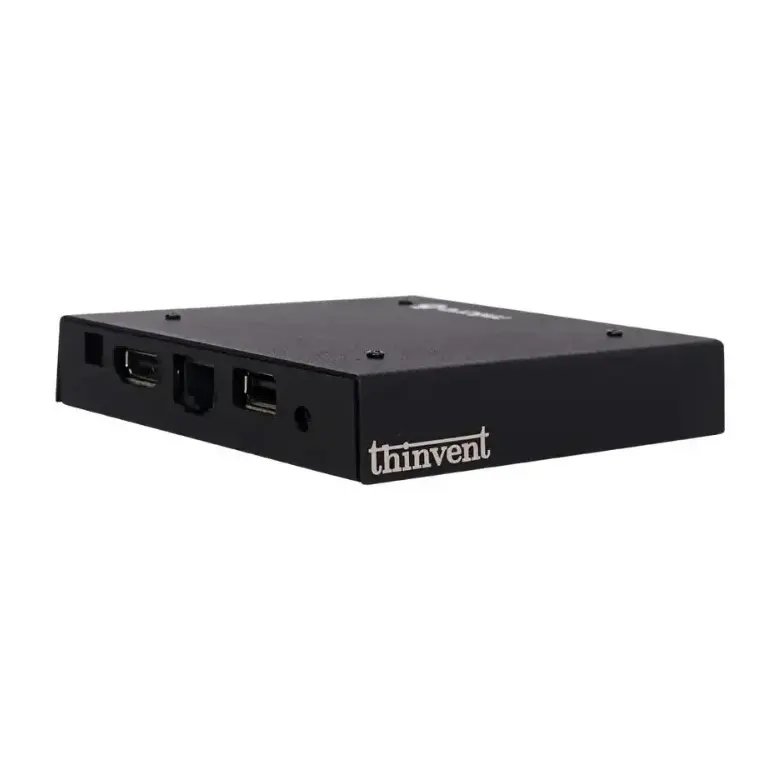
What Are RDP Workstations?
RDP (Remote Desktop Protocol) workstations are specialized computing devices optimized for connecting to and interacting with a remote server or desktop environment. They are designed to handle the encoding/decoding of display data and network traffic efficiently, providing a smooth and responsive user experience even over standard internet connections. Unlike general-purpose PCs, these systems prioritize reliable network connectivity, stable performance under continuous load, and often feature fanless designs for silent, maintenance-free operation in shared or industrial spaces.
Key Specifications for Optimal RDP Performance
For a seamless remote desktop experience, specific hardware components are critical. A modern multi-core processor (like Intel's N-series or Core i3/i5) ensures smooth session rendering. Sufficient RAM (8GB minimum, 16GB recommended) prevents slowdowns when switching between applications on the remote host. Fast and reliable wired Ethernet (Gigabit) is essential for low latency, while solid-state storage (SSD) ensures quick boot times and responsive local operations. Many RDP workstations also feature multiple display outputs (HDMI) to mirror a multi-monitor setup from the remote server.
Primary Use Cases and Applications
RDP workstations are deployed across various sectors for centralized computing. In corporate and enterprise environments, they enable secure access to virtual desktops (VDI) and centralized applications, simplifying IT management and enhancing data security. Educational institutions use them in computer labs to provide consistent software access from low-cost, durable terminals. In industrial and retail settings, such as digital signage, kiosks, and control rooms, they offer a reliable interface to backend systems. They are also ideal for call centers and thin client setups, where space, noise, and power efficiency are paramount.
Choosing the Right RDP Workstation
The ideal configuration depends on your remote workload. For basic office applications and light browsing, an efficient quad-core processor like the Intel N100 with 8GB RAM is sufficient. For more demanding tasks like accessing graphic-intensive applications or multiple simultaneous sessions, a workstation with an Intel Core i5 processor, 16GB+ RAM, and faster storage is recommended.
| Use Case | Recommended Processor | Recommended RAM | Key Features |
|---|---|---|---|
| Basic Office / Web Access | Intel N100 / N95 | 8 GB | Fanless, Gigabit Ethernet, Compact |
| General Business / VDI | Intel i3 / i5 (10th+ Gen) | 16 GB | Multiple Displays, Fast SSD, Windows 11 Pro |
| Industrial / Digital Signage | Intel Celeron / N-series | 8 GB | Fanless, Wide Temp Range, Robust I/O |
Thinvent RDP Workstation Solutions
Thinvent offers a comprehensive range of industrial-grade computers perfectly suited for RDP workloads. Our Aero Mini PC series, featuring efficient Intel processors like the N100, provides a compact, fanless, and power-efficient solution for standard remote desktop access. For more performance-intensive environments, our industrial PCs equipped with higher-generation Intel Core i3, i5, and i7 processors deliver the necessary power for multiple high-resolution sessions and complex applications. All Thinvent systems are built for 24/7 reliability, feature Gigabit Ethernet for stable connections, and support a variety of operating systems including Windows, Linux, and Thinvent's own embedded Thinux™ platform for maximum flexibility in deployment.