What is the Intel N100 Processor?
The Intel Processor N100 is a low-power, quad-core CPU from Intel's 12th Generation (Alder Lake-N) series, designed for entry-level computing and embedded applications. It features 4 efficient cores (E-cores), a base frequency of up to 3.4 GHz, and a 6 MB Intel Smart Cache. Built on an efficient 10nm process, it offers a balance of performance and power efficiency, typically operating within a 6W Thermal Design Power (TDP) range. This makes it an ideal choice for fanless, compact systems that require reliable operation in space-constrained or harsh environments.
Key Specifications and Technical Details
The N100 processor provides modern computing capabilities suitable for a wide range of industrial tasks. Key specifications include:
-
Architecture: Intel 7 (10nm) process, Alder Lake-N
-
Cores/Threads: 4 Cores / 4 Threads
-
Max Turbo Frequency: Up to 3.4 GHz
-
Cache: 6 MB Intel Smart Cache
-
Integrated Graphics: Intel UHD Graphics (based on Xe architecture)
-
Memory Support: Supports up to 16 GB of DDR4 or LPDDR5 memory
-
TDP: 6W (configurable down to lower power states)
-
Connectivity: Supports modern I/O including USB 3.2, PCIe Gen 3, and Gigabit Ethernet.
Its low thermal output enables completely fanless designs, eliminating moving parts that are common points of failure. This results in silent operation, improved dust and contaminant resistance, and higher long-term reliability—critical factors for 24/7 industrial deployments.
Use Cases and Applications
Systems powered by the Intel N100 are versatile and excel in several demanding scenarios:
-
Digital Signage & Kiosks: Reliable media playback and content management for public displays.
-
Thin Clients & VDI: Efficient endpoints for virtual desktop infrastructure, handling office productivity and remote applications.
-
Edge Computing & IoT Gateways: Data aggregation and light processing at the network edge in smart factories and retail.
-
Industrial Automation: Controlling HMIs (Human-Machine Interfaces), PLCs, and light monitoring systems.
-
Embedded Systems: Deployments in transportation, healthcare, and retail where small size, low power, and reliability are paramount.
Comparison with Common Industrial Processors
| Feature | Intel N100 | Intel Celeron J4125 | Intel i3-1215U |
|---|---|---|---|
| Generation | 12th Gen (Alder Lake-N) | Gemini Lake Refresh | 12th Gen (Alder Lake) |
| Cores/Threads | 4C / 4T | 4C / 4T | 6C (2P+4E) / 8T |
| Max Frequency | Up to 3.4 GHz | Up to 2.7 GHz | Up to 4.4 GHz |
| TDP | 6W | 10W | 15W |
| Ideal For | Fanless, low-power embedded systems | Legacy low-power systems | Higher-performance compact workstations |
The N100 offers a significant performance-per-watt improvement over older Celeron platforms like the J4125, while the i3-1215U provides higher performance for more intensive tasks at a slightly higher power budget.
Thinvent Products Featuring Intel N100 Technology
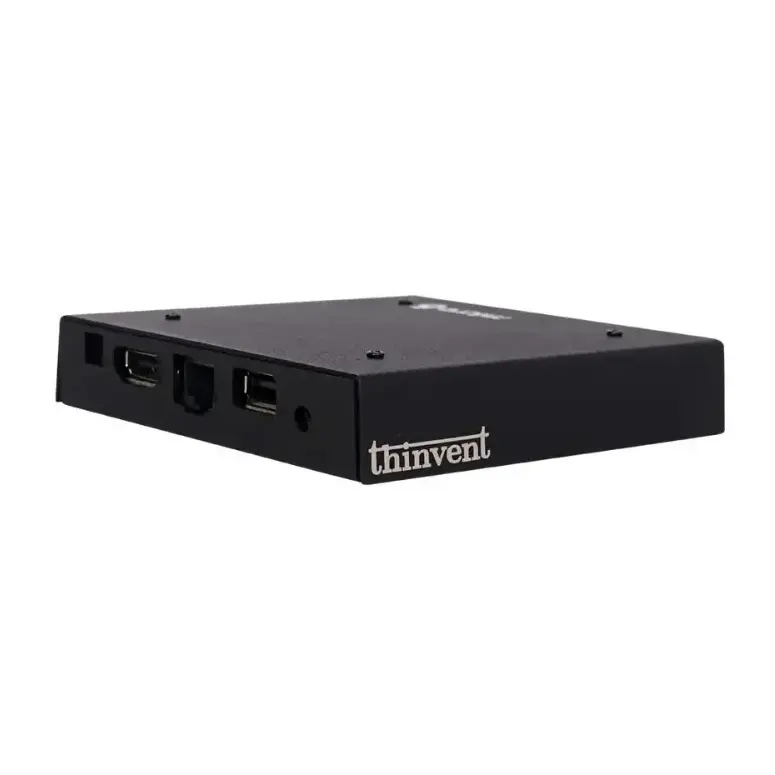
Thinvent leverages the efficiency of the Intel N100 processor in its Aero series of industrial mini PCs. These systems are engineered for durability and continuous operation in challenging conditions. Key features of Thinvent's N100-based solutions include robust metal chassis for passive cooling, wide-range DC power input (9-36V typical), support for multiple operating systems (Windows, Linux variants), and rich I/O connectivity including multiple display outputs, USB ports, and Gigabit Ethernet. They are pre-configured solutions ready for deployment in digital signage, automation, and edge computing projects worldwide, offering a reliable and cost-effective computing foundation.