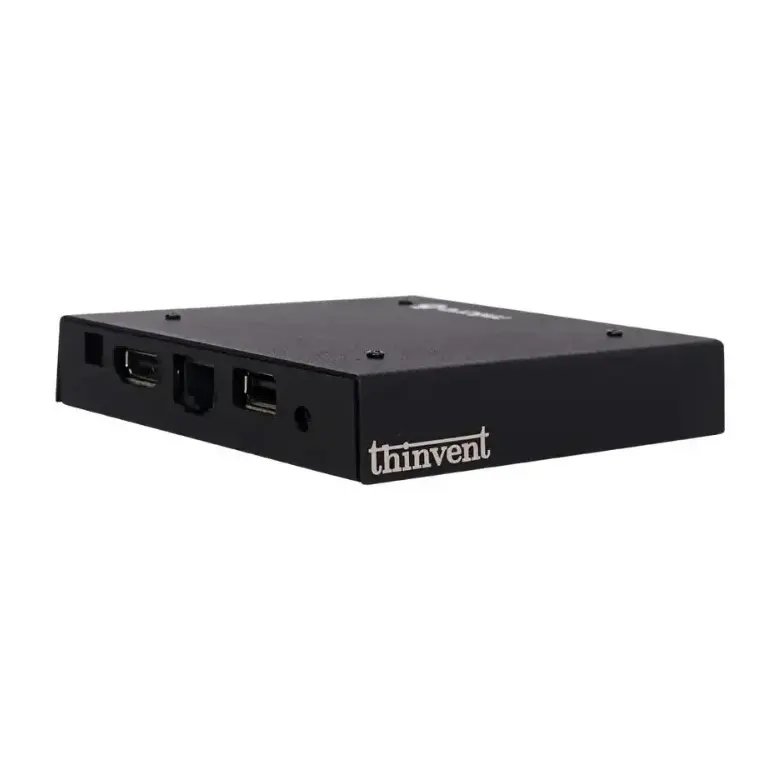
What Is a Rockchip SoM?
A Rockchip SoM (System-on-Module) is a compact, board-level computing module built around a Rockchip ARM processor. Rather than designing a full carrier board from scratch, embedded engineers mount the SoM onto a custom or off-the-shelf baseboard that supplies power, I/O connectors and application-specific interfaces. This modular approach shortens development time, simplifies hardware revisions and lets a single module be reused across multiple product variants.
Rockchip SoMs typically pair a multi-core ARM CPU with an integrated GPU, memory (LPDDR4/LPDDR4X), eMMC flash storage and a power management IC on one small PCB. Because the high-speed memory and power circuitry are already validated on the module, designers focus their effort on the carrier board and enclosure rather than on signal integrity challenges.
Typical Rockchip SoC Families
| SoC Family | CPU Configuration | Typical Role |
|---|---|---|
| RK3288 | Quad-core Cortex-A17 | Legacy industrial HMI, kiosks |
| RK3399 | Dual Cortex-A72 + Quad Cortex-A53 (hexa-core) | Digital signage, edge gateways, vision |
| RK3568 | Quad Cortex-A55 | Industrial control, networking, NAS |
| RK3588 | Quad Cortex-A76 + Quad Cortex-A55 (octa-core) | Edge AI, multi-display, machine vision |
These processors integrate graphics, video encode/decode engines and a range of interfaces such as PCIe, USB 3.0, Gigabit Ethernet, MIPI-CSI/DSI and multiple UARTs. The RK3588 in particular adds an NPU for on-device inference, which makes it popular for camera analytics and AI gateways.
Where Rockchip SoMs Are Used
Embedded computing with Rockchip modules suits applications where low power draw, fanless operation and long-term availability matter more than raw x86 throughput. Common deployments include industrial HMI panels, digital signage players, point-of-sale terminals, medical monitors, robotics controllers, IoT gateways and edge AI boxes. Many of these systems run Linux, Android or a real-time-capable kernel, and benefit from the wide software ecosystem Rockchip maintains around its SoCs.
Choosing Between ARM SoM and x86 Platforms
ARM SoMs based on Rockchip silicon excel at energy efficiency, compact size and cost at volume. x86 platforms, by contrast, offer broad compatibility with Windows applications, mature virtualisation and easier migration of existing desktop software. Many industrial projects therefore use both: ARM modules for dedicated, always-on embedded functions, and x86 industrial PCs where standard Windows tooling or heavier compute is required.
| Consideration | Rockchip ARM SoM | x86 Industrial PC |
|---|---|---|
| Power efficiency | Very high | Moderate |
| Windows compatibility | Limited | Full |
| Fanless design | Common | Common |
| Edge AI acceleration | Integrated NPU on some SoCs | Requires discrete accelerator |
| Software ecosystem | Linux / Android | Windows / Linux |
Thinvent's Products for Embedded and Industrial Computing
Thinvent builds industrial computers, mini PCs, thin clients and all-in-one PCs engineered for continuous operation in demanding environments. For embedded and industrial deployments, Thinvent's IPC range delivers fanless, dust-tolerant x86 platforms with Intel® Core™ processors, dual Gigabit Ethernet, multiple serial ports and flexible storage — a strong complement to ARM-based SoM designs when a project needs Windows compatibility or higher single-thread performance. Thinvent systems ship with Windows 11 Pro, Windows 11 IoT, Linux or DOS options, making them straightforward to integrate alongside Rockchip-based modules in mixed-architecture installations.