Can a Computer Replace a Router with a USB Port for an External Hard Drive?
If you want to attach an external hard drive and share it across a network, a small fanless computer is often a better answer than a consumer router with a USB port. Routers with USB storage ports typically run limited file-sharing services, cap transfer speeds, and offer little control over permissions, backups or drive health. A compact industrial PC or mini PC running Windows or Linux gives you full USB 3.2 connectivity, gigabit Ethernet, proper file-sharing protocols (SMB, NFS, FTP) and the ability to run backup, media server or surveillance software alongside.
USB Storage on a Router vs. a Dedicated Small Computer
| Feature | Router USB Port | Fanless Mini / Industrial PC |
|---|---|---|
| USB standard | Often USB 2.0 or shared USB 3.0 | USB 3.2 Gen 2 (up to 10 Gbps) |
| File protocols | Basic SMB/FTP, limited users | SMB, NFS, FTP, WebDAV, rsync |
| Drive capacity | Frequently capped by firmware | Limited only by the drive and filesystem |
| Software | Fixed firmware | Any OS: Windows 11 Pro, Ubuntu, embedded Linux |
| Uptime | Consumer-grade, warm-running | Fanless, dust-tolerant, 24x7 rated |
| Extra roles | None | NAS, backup target, media server, NVR |
Key Technical Considerations
When choosing a machine to host external storage, look for USB 3.2 Gen 2 ports (10 Gbps) so a fast SSD is not bottlenecked, and gigabit Ethernet so network transfers keep pace. A dual-Ethernet port configuration lets one machine act as both a storage host and a network gateway or firewall, effectively replacing the router entirely. Memory matters too: 8 GB is comfortable for file sharing, while 16 GB or more suits virtualisation, media transcoding or camera recording. Fanless designs are preferable in dusty or hot locations because there is no fan to clog or fail.
Typical Use Cases
-
Home and small-office NAS: share documents, photos and backups across every device on the LAN.
-
Surveillance storage: record IP camera streams to an attached drive without a separate NVR.
-
Media library: serve video and music to TVs, phones and computers over SMB or DLNA.
-
Field and industrial data logging: collect machine or sensor data onto removable USB storage.
-
Backup target: run scheduled image or file backups to an external drive with full control.
Choosing the Right Hardware
Match the processor to the workload. Intel N-series chips such as the N100 and N150 handle file serving and light media duties with very low power draw, while Core i3 models like the 1215U offer six cores and up to 4.4 GHz for heavier multitasking, virtualisation or transcoding. Storage should be sized to your dataset, and an SSD makes the system responsive even when the bulk data lives on the external drive. If the machine must also route traffic, choose a model with two gigabit Ethernet ports.
Thinvent Products for External Drive Storage
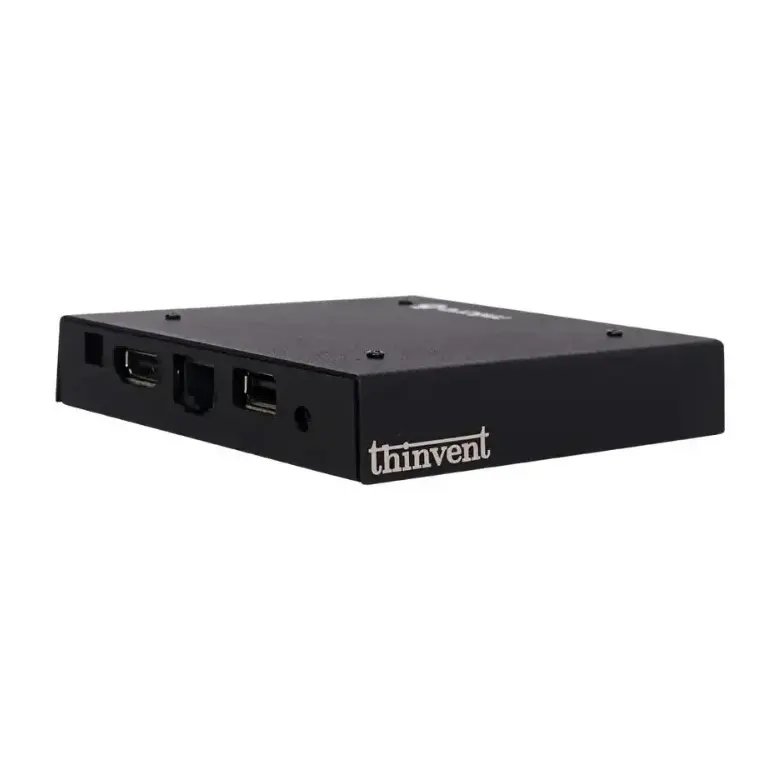
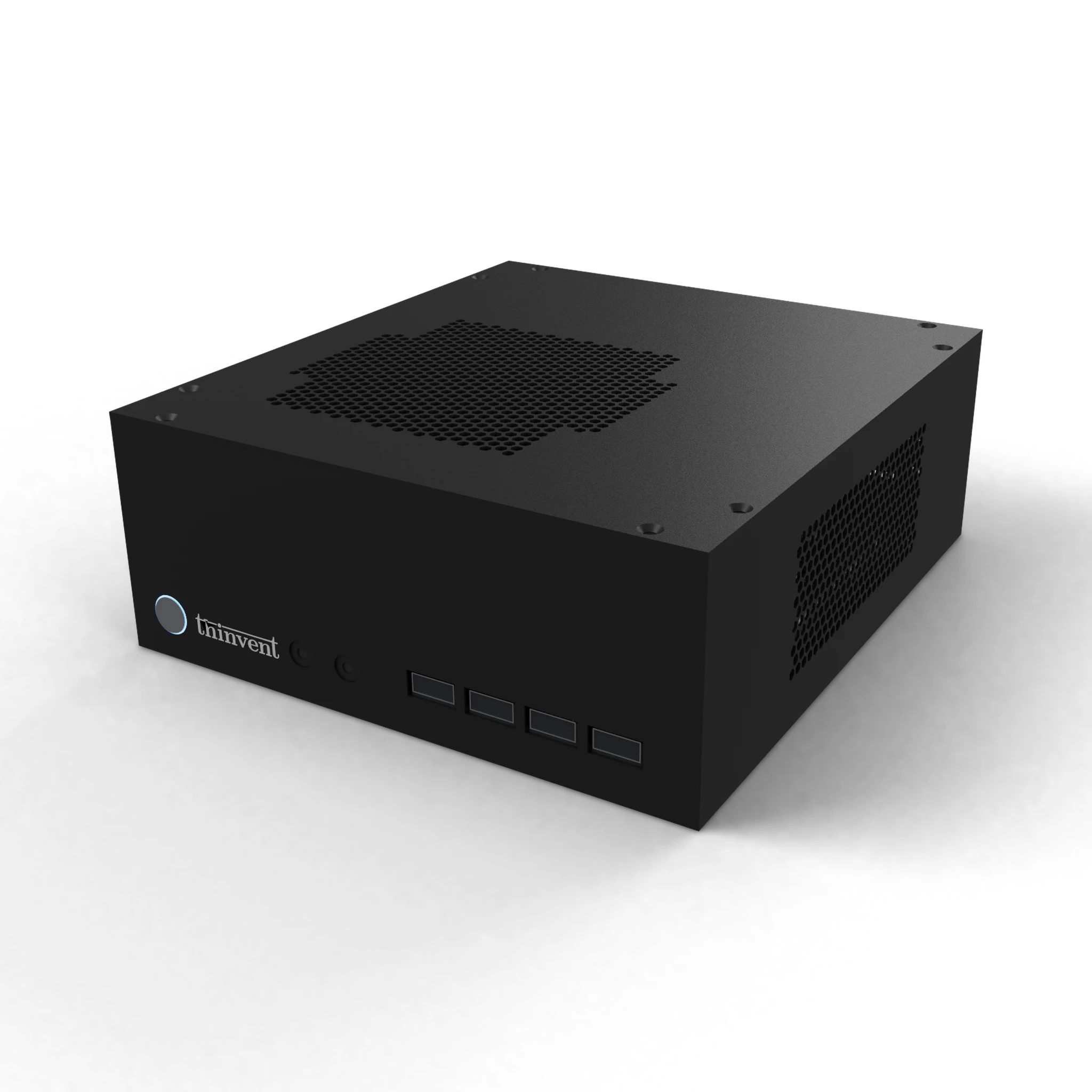
Thinvent builds fanless mini PCs, industrial computers, thin clients and all-in-one PCs designed for continuous operation in demanding environments. Configurations range from power-efficient Intel N-series mini PCs to six-core Intel Core i3 systems with USB 3.2 Gen 2, gigabit Ethernet and generous DDR4 memory, so you can attach an external hard drive and run file sharing, backup or media services reliably around the clock.