What is the Intel N100 Processor?
The Intel Processor N100 is a modern, energy-efficient quad-core CPU designed for entry-level computing and embedded systems. Part of Intel's 12th Generation Alder Lake-N series, it features a hybrid architecture with four efficient Gracemont cores, a base frequency of up to 3.4 GHz, and a 6 MB Intel Smart Cache. Built on a 10nm process, it offers a balance of performance and low power consumption, typically operating within a 6W Thermal Design Power (TDP) range. This makes it ideal for fanless, compact designs that require reliable operation in various environments.
Key Specifications and Technical Details
The N100 processor is engineered for always-on, low-power applications. Key specifications include:
-
Cores/Threads: 4 cores / 4 threads.
-
Max Turbo Frequency: Up to 3.4 GHz.
-
Cache: 6 MB Intel Smart Cache.
-
Graphics: Integrated Intel UHD Graphics (based on Xe architecture) with 24 execution units.
-
Memory Support: Supports up to 16 GB of dual-channel LPDDR5 or DDR4/LPDDR4x memory.
-
TDP: 6W, configurable down to lower power states.
-
Connectivity: Integrated support for modern I/O including PCIe Gen 3, USB 3.2, and SATA.
Its low thermal output enables completely fanless cooling solutions, which are critical for industrial settings where dust, vibration, and noise are concerns. The integrated graphics are capable of driving multiple 4K displays, making it suitable for digital signage and control panel interfaces.
Use Cases and Applications
The efficiency and reliability of systems powered by the Intel N100 make them perfect for a wide range of embedded and industrial applications:
-
Digital Signage & Kiosks: For powering 4K displays in retail, hospitality, and public information systems.
-
Thin Clients & VDI: As an endpoint for virtual desktop infrastructure, offering a secure and manageable computing experience.
-
Edge Computing & IoT Gateways: Processing data locally in smart factories, retail, and building automation.
-
Light Industrial Automation: Controlling HMIs (Human-Machine Interfaces), basic PLC functions, and monitoring systems.
-
Office & Productivity: Handling everyday tasks like web browsing, document editing, and video conferencing efficiently.
Comparison with Similar Processors
For context, here is a comparison of the Intel N100 with other common processors in the entry-level and industrial segment:
| Processor | Cores/Threads | Max Frequency | Cache | TDP | Typical Use Case |
|---|---|---|---|---|---|
| Intel N100 | 4 / 4 | 3.4 GHz | 6 MB | 6W | Modern fanless mini PCs, industrial IoT |
| Intel N95 | 4 / 4 | 3.4 GHz | 6 MB | 15W | Higher-performance budget mini PCs |
| Intel J4125 | 4 / 4 | 2.7 GHz | 4 MB | 10W | Legacy fanless systems, embedded applications |
| Intel Celeron 7305 | 5 / 5 | 1.1 GHz (P-core) | 8 MB | 15W | Mobile/ultra-portable laptops |
The N100 stands out for its modern architecture and very low power draw, offering better performance-per-watt than its predecessors.
Thinvent Products Featuring Intel N100 Technology
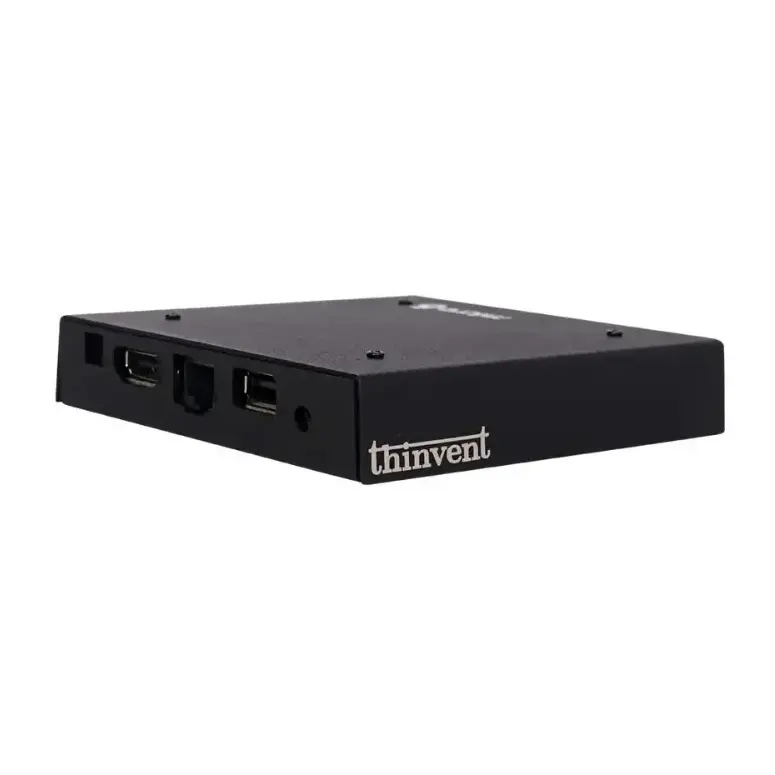
Thinvent leverages the Intel N100 processor in its Aero series of industrial mini PCs. These systems are built for durability and continuous operation in demanding environments. Key features of Thinvent's N100-based solutions include fanless aluminum alloy chassis for superior heat dissipation, support for multiple operating systems (Windows, Linux variants), and a range of connectivity options including Gigabit Ethernet and multiple USB ports. They are pre-configured with robust memory and storage, such as 16GB DDR4 RAM and 128GB SSD, providing a reliable and ready-to-deploy platform for your industrial computing needs.