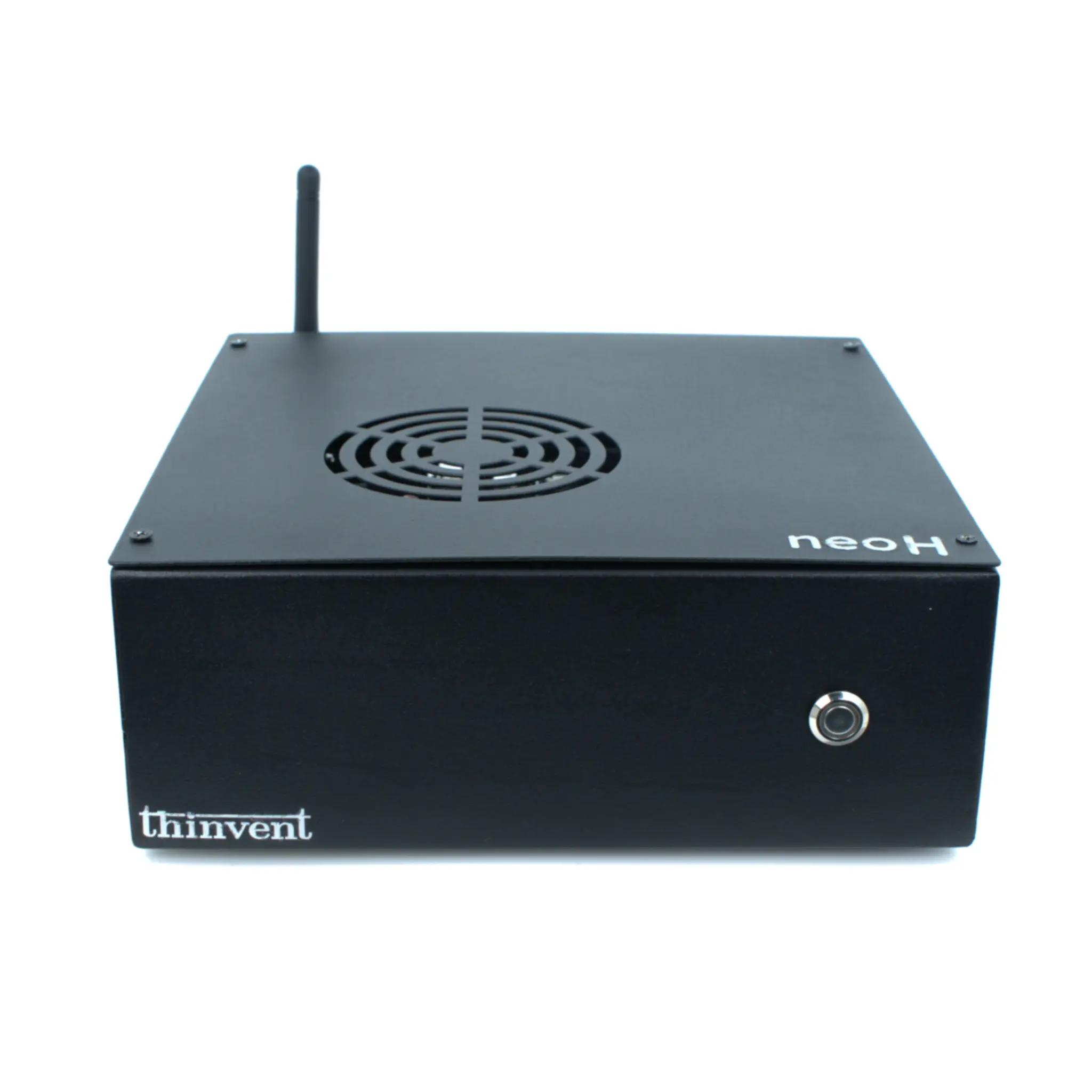
Industrial computers for server technology applications are specialized computing platforms designed to operate reliably in demanding environments where standard servers would fail. These systems are engineered for 24/7 operation, offering enhanced durability, extended temperature ranges, and robust connectivity to manage critical infrastructure, data acquisition, and edge computing tasks. Unlike consumer-grade hardware, they prioritize long-term stability, remote management, and resistance to dust, vibration, and electrical noise.
Key Specifications and Technical Details
These computers are defined by several critical features. They utilize industrial-grade components, including wide-temperature-range CPUs (from Intel Core i-series to efficient ARM processors), soldered or industrial-grade memory, and reliable SSD storage. A hallmark is their fanless, sealed design for silent and dustproof operation, crucial for sensitive environments. They offer extensive I/O, including multiple Gigabit Ethernet ports for network redundancy, serial ports (RS-232/485) for legacy industrial equipment, and robust power supplies with wide voltage input (9-36V DC) to handle power fluctuations. Operating systems are typically industrial Linux distributions or Windows IoT Enterprise for long-term support and security.
Applications and Use Cases
Industrial server computers are deployed at the network edge and in harsh operational technology (OT) environments. Common applications include:
-
Industrial IoT Gateways: Aggregating and preprocessing data from sensors and PLCs before sending it to the cloud.
-
Edge Computing Servers: Running analytics, machine learning inference, or SCADA software locally to reduce latency and bandwidth.
-
Digital Signage & Kiosk Management: Centralized control of media playback across multiple displays in retail or public spaces.
-
Network Appliances: Serving as firewalls, routers, or VPN concentrators in industrial networks.
-
Machine Vision Controllers: Processing image data from cameras for quality inspection on production lines.
Comparison: ARM vs. x86 for Industrial Servers
| Feature | ARM-based Industrial Computers | x86-based Industrial Computers |
|---|---|---|
| Core Strength | Ultra-low power, fanless, cost-effective | High performance, broad software compatibility |
| Typical Use Case | Lightweight gateway, thin client, simple control | Data-intensive edge computing, virtualization, complex analytics |
| Power Consumption | Very Low (often <10W) | Moderate to High (15W-65W+) |
| Software Ecosystem | Linux-centric, embedded OS | Full Windows/Linux support, vast application library |
| I/O & Expandability | Often limited | Typically greater, with more PCIe and expansion options |
Thinvent Industrial Computers for Server Technology
Thinvent offers a comprehensive range of industrial computing solutions built for server technology applications. Our product lines, including the robust Industrial PC (IPC) series and compact Aero mini PCs, are engineered for reliability. They feature fanless aluminum chassis for superior heat dissipation, wide-voltage DC input, and support for industrial operating systems. Whether you need the efficient processing of an Intel N-series for a gateway, the multi-core power of a 12th Gen Core i5 for edge analytics, or the ultra-reliable simplicity of an ARM-based system, Thinvent provides scalable, durable hardware designed for continuous operation in challenging environments.