What Is a SIM Car?
"SIM car" most commonly refers to a vehicle that relies on cellular connectivity through a SIM card for telematics, tracking, fleet management, or in-vehicle computing. In some contexts it also refers to simulation vehicles — driving simulators, training rigs, and hardware-in-the-loop (HIL) test benches — where a computer generates and controls the simulated environment. Both use cases share the same underlying requirement: a compact, rugged computer that runs reliably in a vehicle or on a test floor, tolerates vibration, dust, and wide temperature swings, and stays connected over cellular or serial networks.
Why a Standard Desktop Won't Do
A vehicle-mounted or simulator-host computer faces conditions a desk-bound PC never sees: constant vibration, ignition-related power fluctuations, dust, and heat with no air conditioning. Fanless industrial PCs are the usual answer. With no moving parts, no fan intake to clog, and a wide-input DC power stage, they survive where consumer desktops fail. Key specifications to look for include:
| Requirement | Typical Specification |
|---|---|
| Cooling | Fanless, aluminium heatsink chassis |
| Power input | 12V DC (9–36V wide input on many models) |
| Operating temperature | 0°C to 50°C or wider |
| Serial ports | RS-232/RS-485 DB9 for telemetry and vehicle bus |
| Networking | Gigabit Ethernet, optional cellular/Wi-Fi module |
| Mounting | DIN rail or VESA, vibration-tolerant |
| Storage | Industrial SSD, 128GB to 1TB |
Use Cases in SIM Car and Vehicle Applications
In connected-vehicle fleets, the onboard computer logs GPS and sensor data, relays it over a cellular link, and runs dispatch or driver-monitoring software. In telematics gateways, dual Ethernet and multiple DB9 serial ports let the PC bridge vehicle ECUs, cameras, and radio equipment. On the simulation side, a fanless industrial PC drives driving-simulator visuals, HIL test rigs, and operator-training consoles, where low latency and 24/7 uptime matter more than raw clock speed. Common deployments include:
-
Fleet telematics and GPS tracking units
-
In-vehicle infotainment and dispatch terminals
-
Driving simulators and operator training rigs
-
Hardware-in-the-loop and automation test benches
-
Mobile surveillance and ANPR systems in vehicles
Choosing the Right Configuration
For most SIM car and simulator roles, a 12th-generation Intel Core i3 processor with 6 cores, 16GB of DDR4 memory, and a 1TB SSD provides ample headroom for data logging, video, and multi-application workloads. Where the vehicle bus or legacy equipment requires serial communication, choose a model with quad DB9 serial ports. Operating system choice matters too: Windows 11 Pro for commercial fleet software, Windows 11 IoT for locked-down kiosk deployments, or an embedded Linux build for telematics gateways. Fanless construction keeps dust out of the enclosure, which is critical in agricultural, mining, and construction vehicles where airborne particles are constant.
Thinvent Products for SIM Car and Vehicle Computing
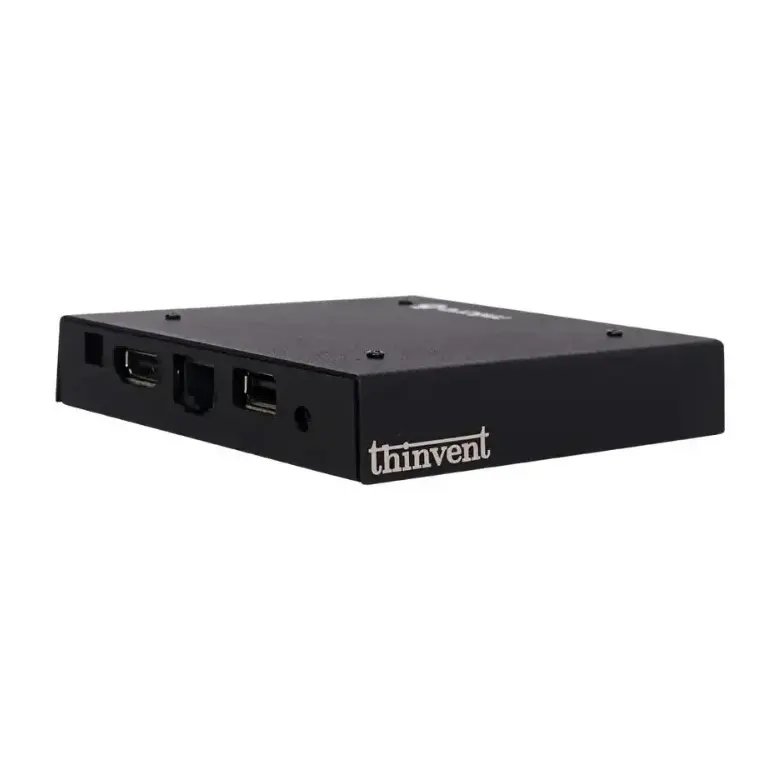
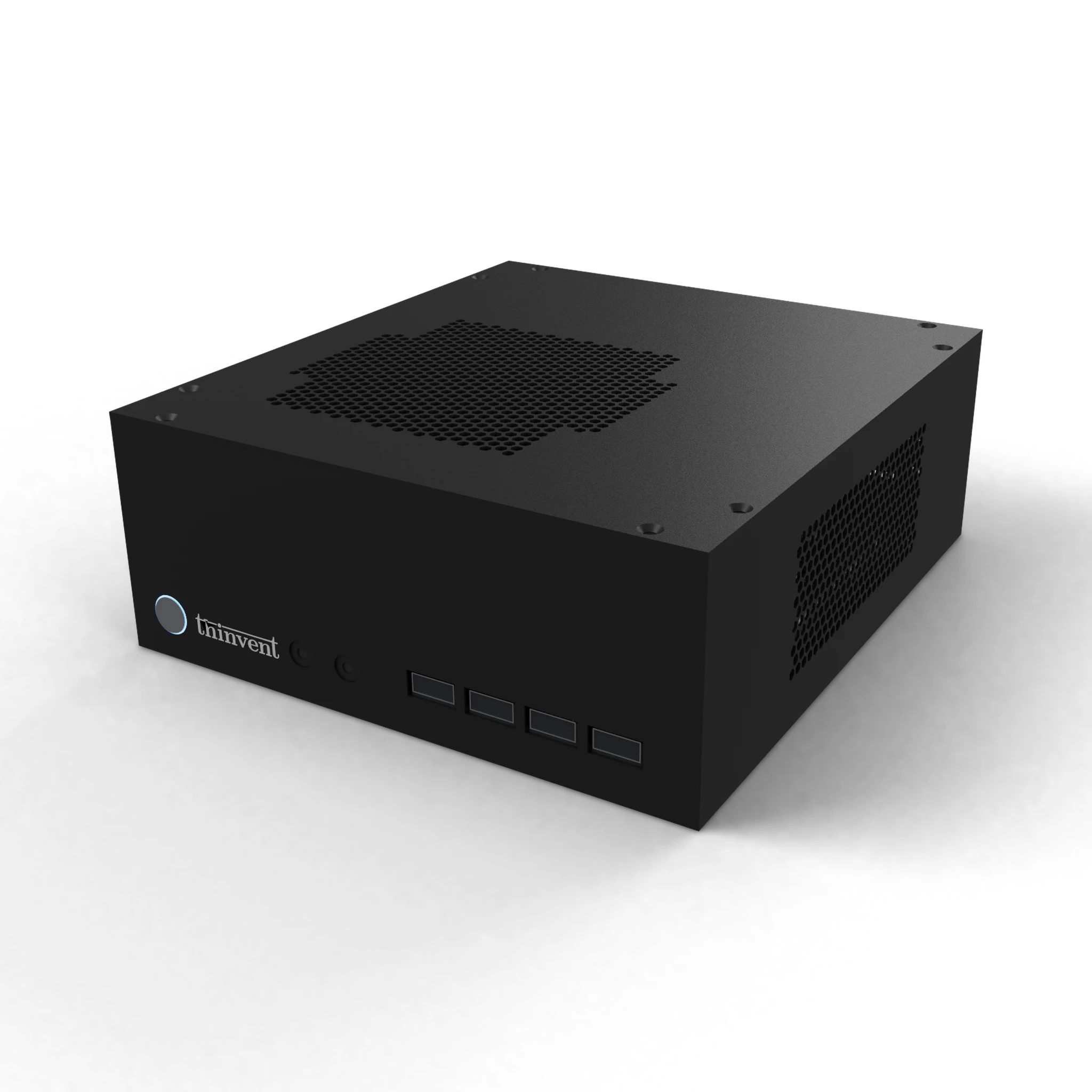
Thinvent's industrial PC range is built for exactly these environments. The IPC3 series pairs a fanless chassis with the Intel Core i3-1215U processor (6 cores, up to 4.4 GHz, 10 MB cache), 16GB DDR4 RAM, and a 1TB SSD, powered from a 12V 10A adapter. Variants are available with quad DB9 serial ports for telemetry and vehicle-bus integration, and with a choice of Windows 11 Professional, Windows 11 IoT Value, DOS, or Thinux Embedded Linux. For lighter telematics gateways, Thinvent's fanless mini PCs and thin clients offer the same rugged, no-moving-parts reliability in a smaller footprint.