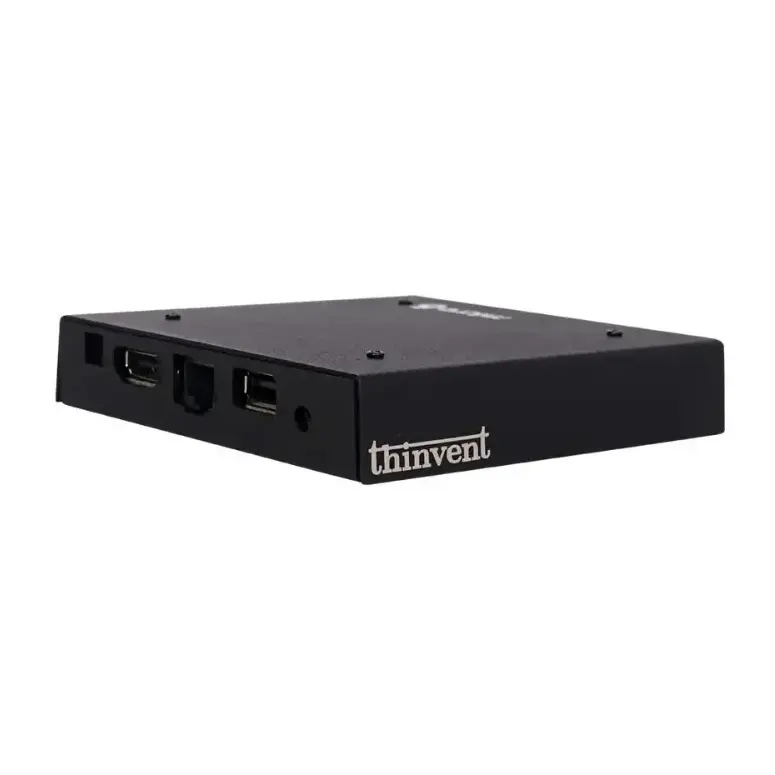
What is a Single Desktop Computer?
A single desktop computer refers to a complete, standalone computing system designed for individual use in professional, commercial, or industrial environments. Unlike traditional bulky towers, modern single desktops often leverage compact, fanless form factors like Mini PCs. These systems integrate the processor, memory, storage, and connectivity into a single, robust unit, offering a reliable and space-saving solution for dedicated computing tasks. They are engineered for 24/7 operation, low power consumption, and deployment in diverse settings where reliability is paramount.
Key Specifications and Technical Details
Modern industrial single desktops prioritize efficiency and durability. Core specifications typically include energy-efficient Intel processors (like the N-series), ample DDR4 RAM (commonly 8GB to 16GB), and fast SSD storage (128GB and up). A defining feature is fanless cooling, which uses advanced heat dissipation designs to eliminate moving parts. This results in silent operation, improved reliability by preventing dust ingress, and zero risk of fan failure. Standard connectivity includes multiple USB ports (including USB 3.2), HDMI outputs for dual displays, and Gigabit Ethernet for stable network connections. They support a range of operating systems, from Windows and Linux to embedded OS options.
Ideal Use Cases and Applications
These compact desktops are versatile workhorses suited for numerous applications:
-
Digital Signage & Kiosks: Powering interactive displays, menu boards, and information points in retail, hospitality, and public spaces.
-
Office & Administrative Work: Providing a quiet, efficient workstation for general office productivity, CRM software, and web-based applications.
-
Industrial Automation: Serving as a robust controller or HMI (Human-Machine Interface) in manufacturing, logistics, and factory environments.
-
Thin Client & VDI Endpoints: Acting as a reliable endpoint for virtual desktop infrastructure, centralizing management and security.
-
Edge Computing: Processing data locally in IoT deployments, surveillance systems, and smart city applications.
Comparison: Mini PC vs. Traditional Desktop
| Feature | Industrial Mini PC (Single Desktop) | Traditional Tower Desktop |
|---|---|---|
| Form Factor | Ultra-compact, space-saving | Large, requires significant desk/floor space |
| Cooling | Fanless, silent, dust-resistant | Active fan cooling, can be noisy, draws in dust |
| Power Consumption | Very low (often 10W-30W) | Moderate to High (65W+ for CPU alone) |
| Durability | Designed for 24/7 operation, wide temperature ranges | For general consumer use, not for harsh environments |
| Deployment | Easy to mount (VESA), deploy in confined spaces | Stationary, not easily relocated or mounted |
| Typical Use | Embedded, commercial, industrial, office | Gaming, high-end creative work, general home/office |
Thinvent Single Desktop Solutions
Thinvent offers a comprehensive range of reliable, fanless single desktop computers designed for demanding professional use. Our Aero Mini PC series, exemplified by the models on this page, features the efficient Intel N100 processor, 16GB of RAM, and SSD storage in a rugged, silent chassis. These systems are pre-configured with your choice of operating system—including Windows 11 Pro, IoT editions, Ubuntu Linux, or a lightweight embedded OS—providing flexibility for any project. Built for longevity and stability, Thinvent desktops are the ideal choice for businesses seeking a powerful, compact, and maintenance-free computing foundation.