A "smart computer" is simply a compact, reliable computing device built to handle everyday and specialised workloads without the bulk of a traditional desktop tower. Whether you need a fanless industrial PC for a factory floor, a mini PC for a retail counter, or a thin client for a lab, the right choice depends on the environment, the software you run, and how long the system must stay in service. Modern designs pair efficient Intel® processors with solid-state storage and sealed, dust-resistant enclosures, so they keep running quietly through heat, dust, and long operating hours.
What Makes a Computer "Smart" and Industrial-Ready
Industrial and commercial mini PCs differ from consumer desktops in a few important ways. They are typically fanless, using the chassis itself to dissipate heat, which removes a common point of failure and keeps dust out of the internals. They run on low-voltage DC power (commonly 12V), support wide operating temperature ranges, and offer legacy and modern I/O side by side — serial ports for older machinery, plus HDMI and USB for current peripherals. Storage is solid-state, so there are no moving parts to wear out, and memory is soldered or socketed depending on the model.
Key Specifications to Look For
When comparing systems, focus on the processor generation and core count, memory, storage, connectivity, and operating system support. A 12th-generation Intel® Core™ i3 processor such as the i3-1215U offers 6 cores, speeds up to 4.4 GHz, and 10 MB of cache — enough for multi-tasking point-of-sale, digital signage, or light industrial control. Pair that with 16 GB of DDR4 RAM and a 1 TB SSD and you have a machine that stays responsive for years.
| Feature | Typical Industrial Mini PC | Typical Consumer Desktop |
|---|---|---|
| Cooling | Fanless, passive heatsink | Active fan |
| Power | 12V DC adapter | Internal ATX PSU |
| Storage | SSD only | HDD or SSD |
| Serial ports | Often included (DB9) | Rare |
| Mounting | DIN rail / VESA / wall | Desk only |
| Operating temp | Wider range | Narrow range |
Common Use Cases
These systems appear in more places than most people realise. Retail shops use them as billing and point-of-sale terminals. Factories use them for machine control, data logging, and connecting to legacy equipment over serial ports. Clinics and labs use them for sample tracking and imaging workstations. Offices deploy them as thin clients connecting to central servers, which reduces per-desk cost and simplifies management. Digital signage, kiosks, and CCTV recording are other frequent roles.
Choosing the Right Operating System
The operating system should match the job. Windows 11 Pro suits business applications and remote management. Windows 11 IoT Value targets fixed-function devices that need long-term servicing. Embedded Linux builds are ideal for kiosks, controllers, and appliances where stability and low overhead matter most. Some deployments ship without an OS so that integrators can install their own image.
Thinvent's Products Featuring This Technology
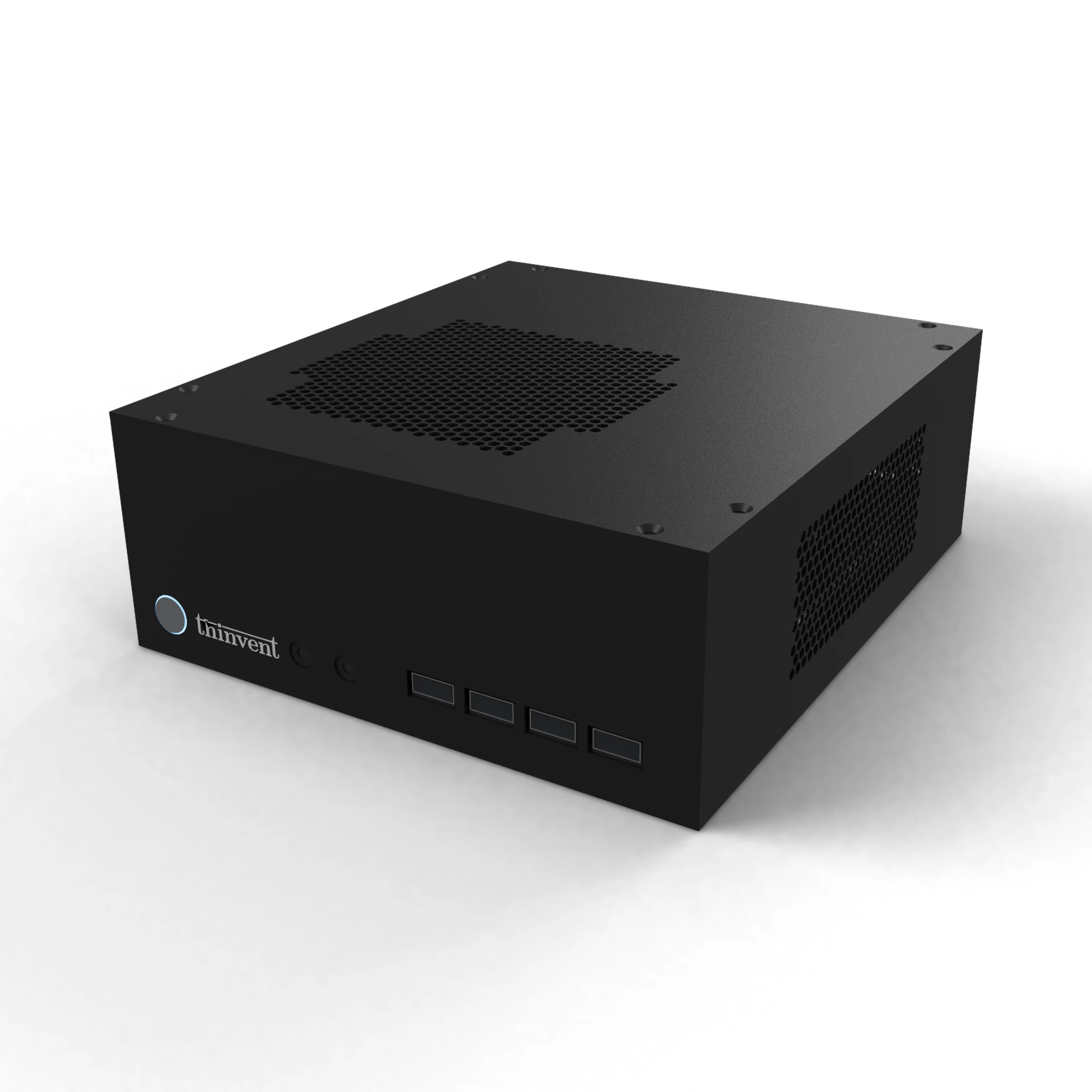
Thinvent manufactures industrial computers, mini PCs, thin clients, and all-in-one PCs designed for continuous operation in demanding settings. The IPC3 industrial PC, for example, is built around the Intel® Core™ i3-1215U processor with 16 GB DDR4 RAM and a 1 TB SSD, and is available with Windows 11 Pro, Windows 11 IoT Value, DOS, or Thinux™ Embedded Linux. Options include quad DB9 serial ports for connecting legacy industrial equipment. Every Thinvent system is engineered for fanless reliability, low power draw, and long service life, and is shipped to customers worldwide.