Understanding Storage for Industrial Computers
The term "storage for CPU" typically refers to the primary storage device (like an SSD) that works directly with the computer's central processing unit (CPU) to store the operating system, applications, and data. In industrial computing, this storage is critical for system reliability, boot speed, and data integrity in demanding environments. Unlike consumer-grade storage, industrial storage solutions are designed for 24/7 operation, wide temperature ranges, and resistance to shock and vibration.
Key Specifications and Technical Details
Industrial storage is defined by its interface, form factor, capacity, and endurance. The most common interface is SATA III, while NVMe (Non-Volatile Memory Express) over M.2 or PCIe offers significantly higher speeds for data-intensive tasks. Form factors include 2.5-inch SATA SSDs and the compact M.2 2280 cards. Key specifications to consider are:
-
Capacity: Ranges from 128GB for basic OS and applications to 1TB+ for large data logging.
-
Type: SATA SSDs offer a balance of speed and cost, while NVMe SSDs provide ultra-fast read/write speeds.
-
Endurance (TBW): Measured in Terabytes Written, this indicates the drive's lifespan under constant write cycles, crucial for industrial applications.
-
Operating Temperature: Industrial SSDs often support a wider range (e.g., -40°C to 85°C) compared to commercial drives.
Use Cases and Applications
The right storage solution depends entirely on the application:
-
Digital Signage & Kiosks: Requires reliable, moderate-capacity SATA SSDs (128GB-256GB) for consistent boot-up and media playback.
-
Factory Automation & Machine Vision: Demands high-speed NVMe storage (512GB+) for fast processing of large image files and real-time data.
-
Thin Clients & Embedded Systems: Often uses smaller capacity, robust M.2 SSDs (128GB) for the host OS in space-constrained designs.
-
Transportation & Edge Computing: Needs industrial-grade SSDs with high endurance and wide temperature tolerance for logging and processing data in harsh conditions.
Storage Comparison for Industrial PCs
| Feature | SATA III SSD | NVMe SSD (PCIe) |
|---|---|---|
| Interface | SATA III (6 Gb/s) | PCIe Gen 3/4 (Multiple Lanes) |
| Max Sequential Read | ~550 MB/s | ~3,500 MB/s (Gen3) / ~7,000 MB/s (Gen4) |
| Best For | Cost-effective bulk storage, general computing | High-performance computing, data analytics, AI |
| Typical Form Factor | 2.5-inch | M.2 2280 |
| Power Consumption | Moderate | Low to Moderate |
Thinvent Products with Configurable Storage
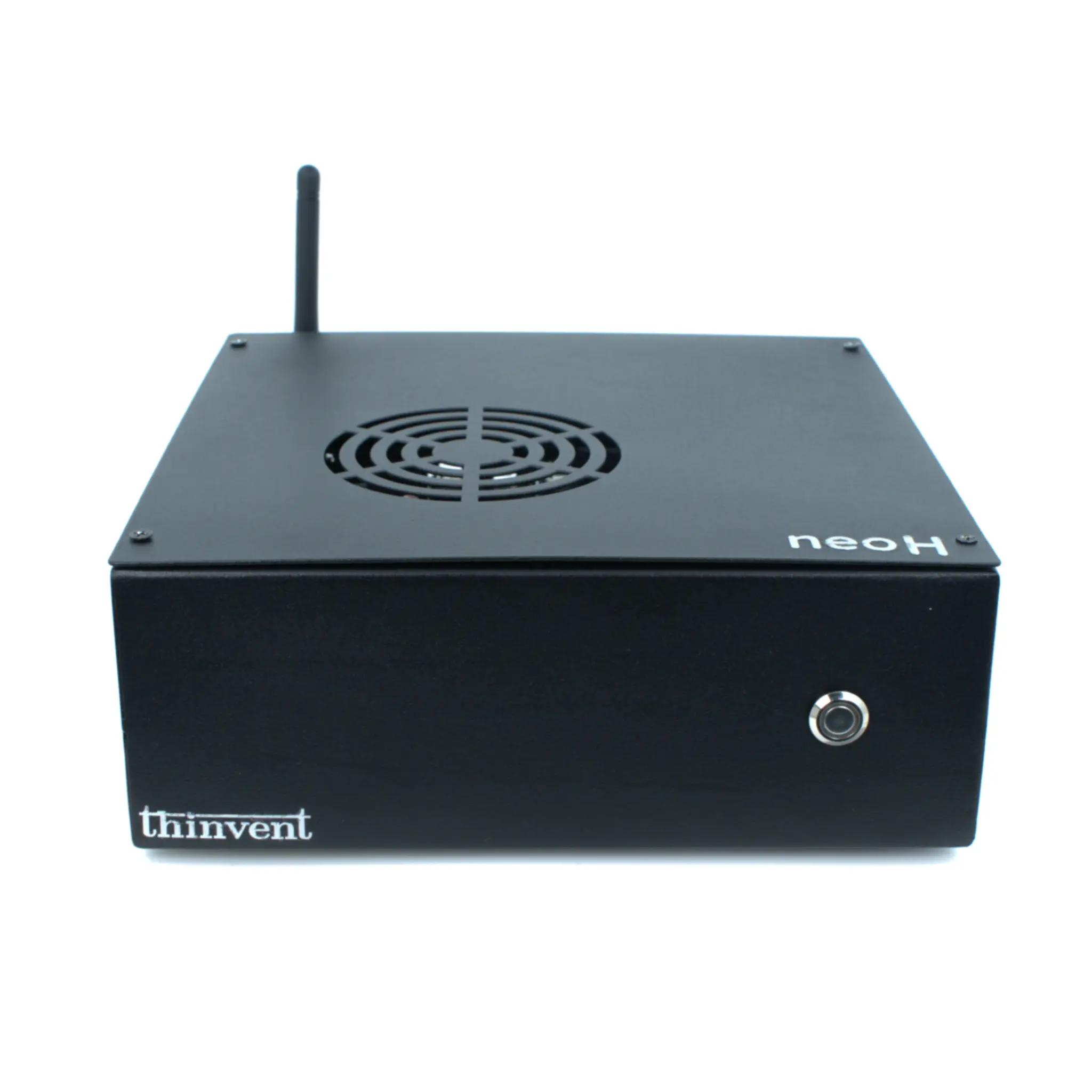
Thinvent's range of industrial computers, from compact Mini PCs to powerful Industrial PCs, feature configurable storage options to match your application's demands. Our systems support both SATA and NVMe M.2 SSDs from leading manufacturers, ensuring compatibility, reliability, and performance. Whether you need a 128GB drive for a simple kiosk or a 1TB NVMe SSD for intensive data acquisition, Thinvent provides flexible BTO (Build-To-Order) configurations. Our engineering team can also advise on the optimal storage solution based on your specific workload, environment, and longevity requirements.