What Are System Requirements?
System requirements are the minimum and recommended hardware and software specifications a computer must meet to run an operating system, application, or workload reliably. They define the processor, memory, storage, graphics, connectivity, and OS needed for a given task. For industrial and commercial deployments, requirements go beyond the basics — they also cover thermal range, power input, mounting, and long-term availability, because these systems often run continuously in factories, kiosks, and control rooms.
Typical Hardware Baselines
Modern operating systems and industrial software set clear floors. Windows 11 Pro and Windows 11 IoT require a 64-bit processor with 2 or more cores, 4 GB RAM minimum (8 GB recommended), and 64 GB or more of storage. Linux distributions such as Ubuntu 24.04 LTS are lighter, running comfortably on 4 GB RAM and modest storage. Industrial applications — SCADA, HMIs, machine vision, and edge analytics — typically recommend more headroom. The table below summarises common baselines.
| Workload | Processor | Memory | Storage | OS |
|---|---|---|---|---|
| Thin client / kiosk | Dual or quad-core | 4 GB | 128 GB | Windows 11 IoT, Linux |
| Office / POS | Quad-core | 8 GB | 256 GB | Windows 11 Pro |
| SCADA / HMI | Quad to hexa-core | 8–16 GB | 256–512 GB | Windows 11 Pro, Linux |
| Edge analytics / vision | Hexa-core or higher | 16–32 GB | 512 GB–1 TB | Windows 11 Pro, Ubuntu |
Beyond the Spec Sheet
Industrial deployments add requirements that consumer PCs ignore: wide operating temperature, fanless cooling to survive dust and vibration, 12V or 24V DC power, DIN-rail or VESA mounting, and multiple serial (DB9/RS-232/RS-485) ports for legacy equipment. Reliability over years of continuous operation matters more than peak benchmark scores. Choosing a platform with margin above the minimum — extra RAM, a faster SSD, more I/O — avoids costly upgrades later.
Matching Requirements to Hardware
The right approach is to size hardware to the heaviest workload it will run, then add headroom. A system that only meets minimum requirements today will struggle as software updates arrive. Look for processors with strong single-thread performance and integrated graphics, memory that can be expanded, and storage that supports fast NVMe SSDs. Connectivity — dual Gigabit Ethernet, multiple HDMI, USB 3.2 Gen 2, and USB-C — should match the peripherals and network topology in use.
Thinvent Products for These Requirements
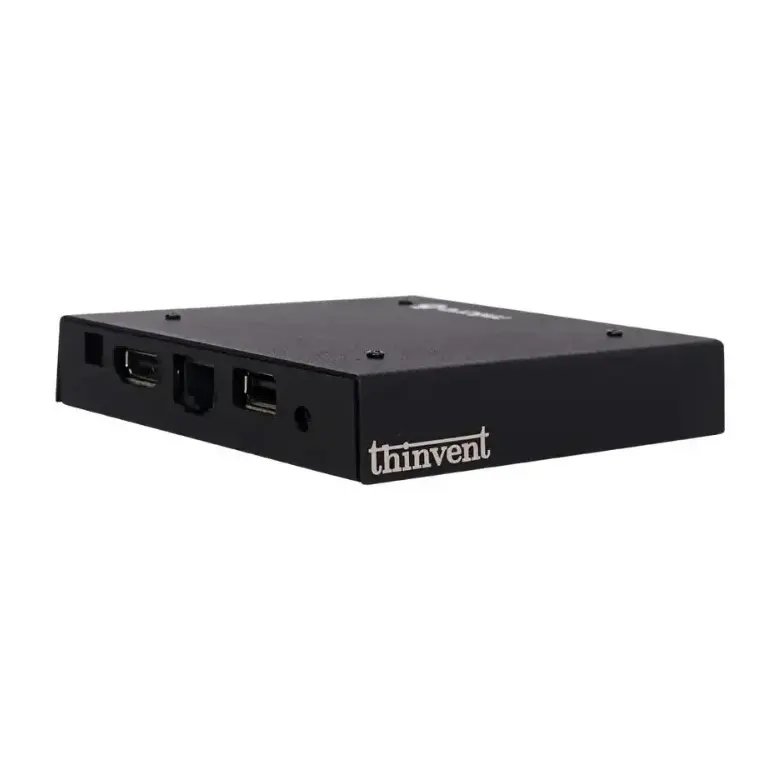
Thinvent builds industrial computers, mini PCs, thin clients, and all-in-one PCs designed to meet demanding system requirements worldwide. Our Industrial PC IPC3 series pairs Intel® Core™ i3-1215U processors (6 cores, up to 4.4 GHz, 10 MB cache) with 16 GB DDR4 RAM and 1 TB SSD, and is available with Windows 11 Pro, Windows 11 IoT Value, DOS, or Thinux™ Embedded Linux. Options include Quad DB9 serial for industrial equipment. Whether you need a fanless mini PC for a kiosk or a robust industrial PC for SCADA, Thinvent offers configurations with the performance, I/O, and reliability your application requires.