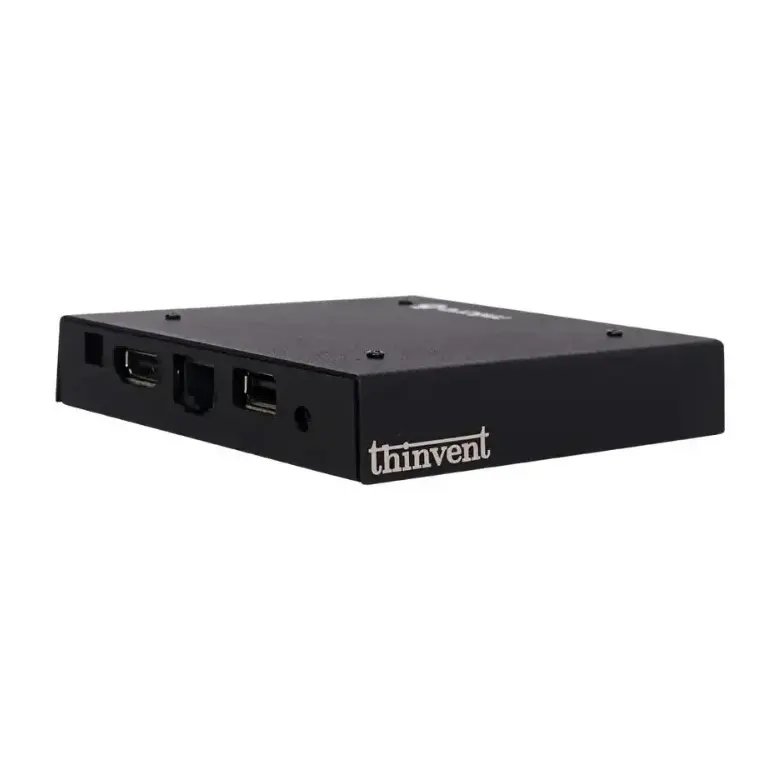
What Are Compact Fanless Mini PCs?
Compact fanless mini PCs are small-form-factor computers designed for industrial and embedded applications where reliability, space constraints, and silent operation are critical. These systems eliminate moving parts like fans, using passive cooling solutions such as heat sinks and chassis design to dissipate heat. This makes them ideal for environments with dust, debris, or vibration, where traditional computers might fail. They typically feature low-power processors, multiple connectivity options, and ruggedized designs to ensure continuous operation in demanding settings.
Key Specifications and Technical Details
A standard compact fanless mini PC, like those based on the Intel® N100 processor, offers a balance of efficiency and performance. Key specifications often include:
-
Processor: Intel® N-series (e.g., N100) with 4 cores, efficient thermal design power (TDP).
-
Memory: 8GB to 16GB of DDR4 RAM for smooth multitasking.
-
Storage: Solid-state drives (SSD) from 128GB to 512GB for fast boot times and data access.
-
Cooling: Completely fanless design for silent, maintenance-free operation.
-
Connectivity: Multiple USB ports (including USB 3.2), Gigabit Ethernet, HDMI/DisplayPort outputs, and optional Wi-Fi.
-
Power: Low-voltage DC input (e.g., 12V), enhancing energy efficiency and compatibility with industrial power systems.
-
Operating System: Support for Windows IoT, Windows 11 Pro, Linux distributions (Ubuntu, Thinux™), or FreeDOS.
Use Cases and Applications
These robust computers are deployed across various industries due to their durability and small footprint.
-
Digital Signage & Kiosks: Powering interactive displays in retail, hospitality, and public spaces.
-
Industrial Automation: Acting as controllers for PLCs, HMIs, and monitoring systems on the factory floor.
-
Thin Clients & VDI: Providing secure, centralized desktop access for office and call center environments.
-
Edge Computing: Processing data locally in IoT networks for smart cities, agriculture, and transportation.
-
Healthcare: Running medical imaging devices or patient information systems where silence and reliability are paramount.
Comparison of Common Processor Options
| Processor Model | Cores/Threads | Max Frequency | Typical Use Case |
|---|---|---|---|
| Intel® N100 | 4 / 4 | Up to 3.4 GHz | General-purpose industrial computing, digital signage, basic edge nodes. |
| Intel® N95 | 4 / 4 | Up to 3.4 GHz | Entry-level kiosks, thin clients, lightweight control systems. |
| Intel® J4125 | 4 / 4 | Up to 2.7 GHz | Legacy fanless systems, low-power embedded applications. |
| Intel® 1215U | 6 (2P+4E) / 8 | Up to 4.4 GHz | High-performance industrial workstations, advanced edge analytics. |
Thinvent's Range of Fanless Mini PCs
Thinvent offers a comprehensive portfolio of compact, fanless industrial computers designed for global deployment. Our Aero Mini PC series exemplifies this commitment, featuring the efficient Intel® N100 processor in a rugged, silent chassis. These systems come configured with various memory, storage, and operating system options—including Windows 11 IoT, Windows 11 Pro, Ubuntu Linux, and our proprietary Thinux™ Embedded Linux—to match specific project requirements. Built for 24/7 operation, Thinvent mini PCs are trusted solutions for automation, digital signage, thin client, and edge computing applications worldwide.