What Makes the Best Editing Computer?
The best editing computer for video, photo, and audio work balances four things: a fast multi-core processor, enough RAM to hold large timelines and high-resolution assets in memory, fast SSD storage for smooth scrubbing and quick exports, and reliable cooling so performance stays consistent through long renders. Editing software such as Adobe Premiere Pro, DaVinci Resolve, Photoshop, and Audacity is heavily multi-threaded, so core count and sustained clock speed matter as much as peak burst speed.
Key Specifications to Look For
For smooth 1080p and entry-level 4K editing, a modern 6-core processor with a high turbo frequency is a strong baseline. 16 GB of DDR4 RAM handles most HD timelines comfortably, while 32 GB or more helps with multi-cam 4K projects and heavy effects. Storage matters too: a 512 GB to 1 TB SSD keeps project files, cache, and exports fast to access. A stable wired Gigabit Ethernet connection is useful for shared media libraries and NAS-based workflows.
| Component | Recommended for editing | Why it matters |
|---|---|---|
| Processor | 6+ cores, high turbo (e.g. Intel Core i3-1215U, 6 core, up to 4.4 GHz) | Fast timeline scrubbing and quicker exports |
| Memory | 16 GB DDR4 (32 GB+ for 4K multi-cam) | Holds large assets and effects in memory |
| Storage | 512 GB–1 TB SSD | Fast project load, cache, and render output |
| Networking | Gigabit Ethernet | Reliable access to shared/NAS media |
| Cooling | Fanless or industrial-grade thermal design | Sustained performance without throttling |
Use Cases and Applications
Editing computers are used across many workflows: video editing and colour grading, photo retouching, podcast and audio post-production, motion graphics, and streaming content creation. In professional and industrial settings, editing stations often sit on factory floors, in studios, or in control rooms where dust, heat, and continuous operation are normal. In those environments, a rugged, fanless industrial PC can be a better fit than a consumer desktop, because there are no fans to clog with dust and no moving parts to fail.
Choosing Between a Mini PC and a Full Desktop
A compact mini PC or industrial PC is often enough for HD and 4K editing when configured with the right processor, memory, and SSD. It draws less power, runs quietly, and fits into tight spaces. For very heavy 8K or GPU-accelerated workloads, a larger workstation with a discrete graphics card may still be preferable. The right choice depends on your resolution, codec, and whether your editing station needs to survive a demanding physical environment.
Thinvent Products for Editing Workloads
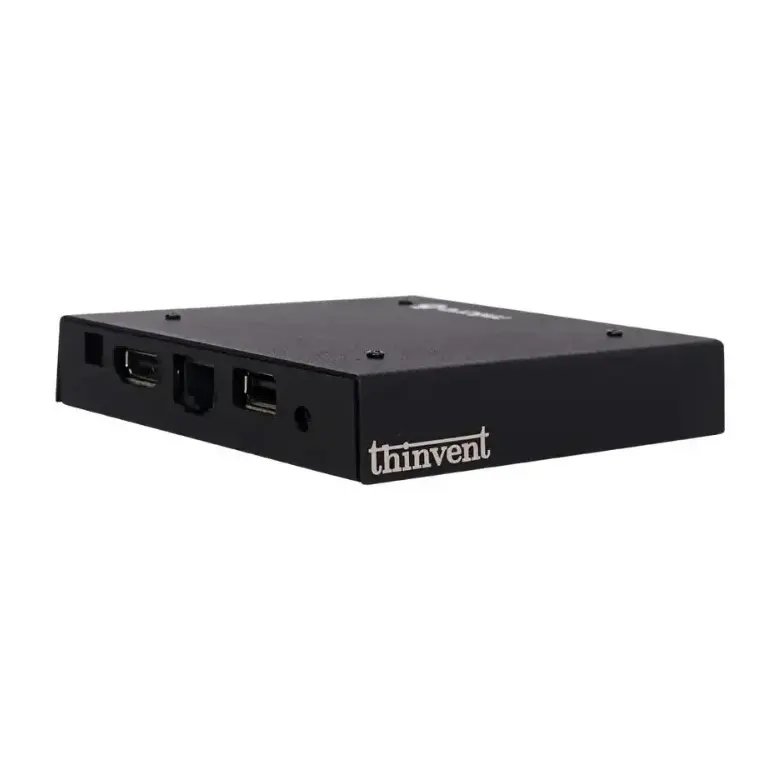
Thinvent's industrial PCs and mini PCs are built for reliable, long-running operation. Configurations such as the IPC3 with an Intel Core i3-1215U processor (6 core, up to 4.4 GHz, 10 MB cache), 16 GB DDR4 RAM, and 1 TB SSD provide a solid foundation for HD and 4K editing, photo work, and audio production. With fanless thermal designs, Gigabit Ethernet, and a choice of Windows 11 Pro, Windows 11 IoT, or Linux, Thinvent systems are suited to studios, edit bays, and industrial media workflows where uptime and durability matter.