What Are Top-End CPUs in Industrial Computing?
A top-end CPU in the context of industrial computing refers to a processor that delivers maximum performance, reliability, and efficiency for demanding applications. Unlike consumer-grade CPUs, these industrial-grade processors are engineered for 24/7 operation, extended temperature ranges, and long-term availability. They feature higher core counts, larger cache sizes, and advanced instruction sets to handle complex computational tasks, real-time data processing, and multi-threaded workloads without compromising stability.
Key Specifications and Technical Details
Top-end industrial CPUs are characterized by several critical specifications. Core count is paramount, with modern processors offering 10, 12, or more cores to manage parallel processing efficiently. High clock speeds, often turbo-boosting above 4.0 GHz, ensure swift single-threaded performance. A large cache (e.g., 18MB or 24MB Intel Smart Cache) reduces latency by storing frequently accessed data close to the cores. These processors are typically from the latest generations (e.g., Intel's 13th or 14th Gen Core i5/i7 series), featuring improved architectures for better performance-per-watt. They also support substantial amounts of high-speed DDR4 or DDR5 RAM (32GB, 64GB, or more) and PCIe Gen 4/5 interfaces for fast storage and expansion.
Use Cases and Applications
Industrial computers equipped with top-end CPUs are essential for scenarios requiring uncompromised computational power. Key applications include:
-
Industrial Automation & Control: Running complex PLCs, SCADA systems, and machine vision algorithms for robotics and assembly lines.
-
Edge AI and Machine Learning: Processing vast sensor data locally for predictive maintenance, quality inspection, and autonomous systems.
-
Digital Signage & Media Servers: Driving multiple 4K/8K displays in transportation hubs, retail environments, and control rooms.
-
High-Frequency Trading & Financial Modeling: Executing algorithms with ultra-low latency.
-
Scientific Research & Simulation: Performing data-intensive modeling and analysis in laboratories.
Processor Comparison for Industrial Workloads
| Feature | Entry-Level (e.g., Intel N-Series) | Mid-Range (e.g., Intel Core i3) | Top-End (e.g., Intel Core i5/i7) |
|---|---|---|---|
| Typical Cores/Threads | 4 Cores / 4 Threads | 4-6 Cores / 8 Threads | 10-14+ Cores / 16+ Threads |
| Max Clock Speed | Up to ~3.4 GHz | Up to ~4.3 GHz | Up to ~5.0+ GHz |
| Cache Size | ~6 MB | ~12 MB | 18-24+ MB |
| Ideal For | Digital signage, thin clients, basic kiosks | Light automation, POS systems, network appliances | AI inference, complex automation, simulation, high-performance computing |
Thinvent's High-Performance Industrial Solutions
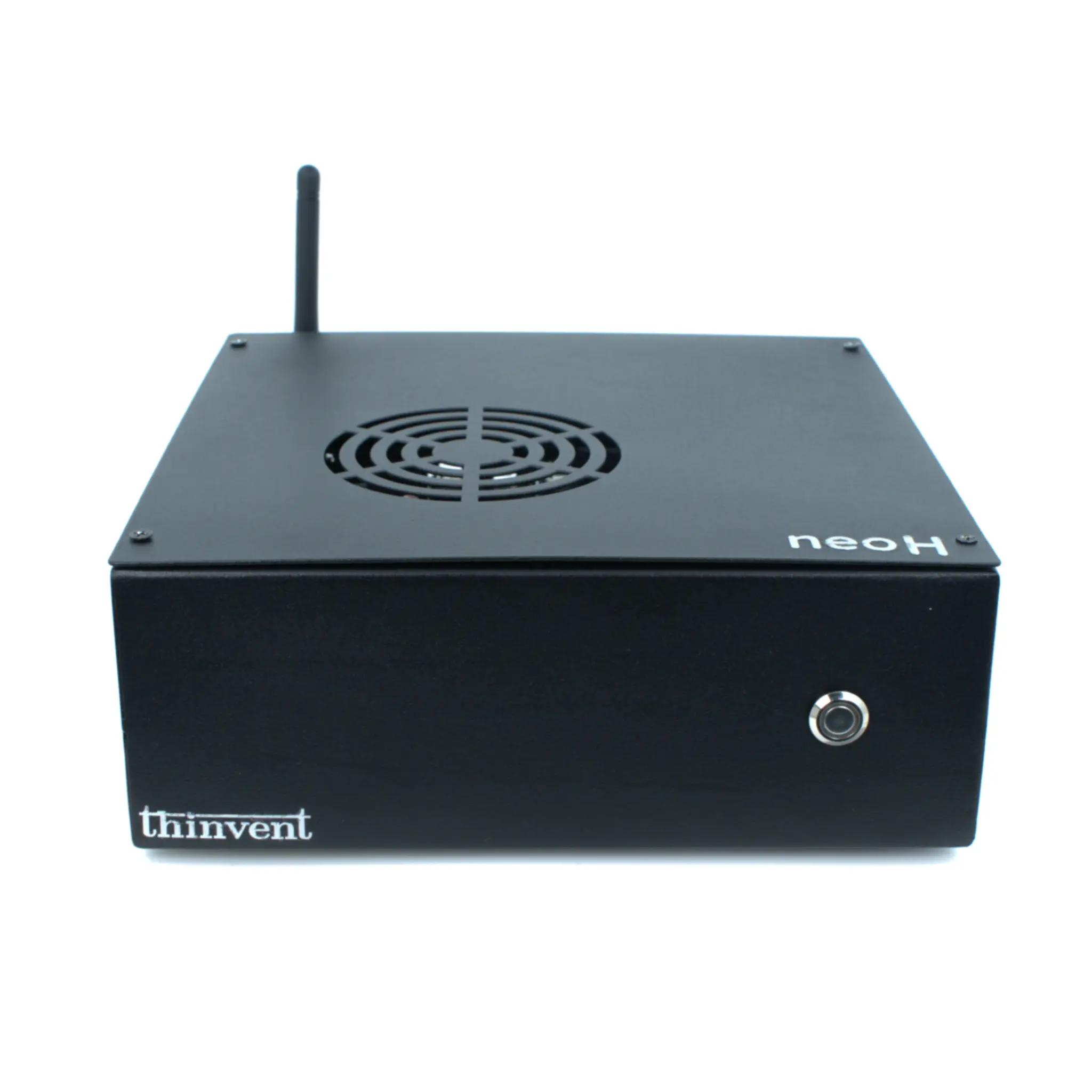
Thinvent offers a robust range of industrial computers powered by top-end CPUs to meet the most demanding operational challenges. Our product lines, including fanless industrial PCs, compact Mini PCs, and powerful workstations, integrate the latest Intel Core i5 and i7 processors from the 12th, 13th, and 14th generations. These systems are built with industrial-grade components for superior durability, feature wide-range power input for unstable environments, and support extensive customization of memory, storage, and I/O. Whether for harsh factory floors, intelligent transportation systems, or cutting-edge research labs, Thinvent provides the reliable, high-performance computing backbone required for mission-critical applications worldwide.