What is a Trusted Platform Module (TPM)?
A Trusted Platform Module (TPM) is a dedicated hardware-based security chip (cryptoprocessor) that provides a secure, tamper-resistant foundation for a computing system. Its primary function is to generate, store, and manage cryptographic keys used for system integrity verification, disk encryption, and user authentication. By performing critical security operations in isolated hardware, a TPM protects sensitive data from software-based attacks and physical tampering, offering a higher level of security than software-only solutions.
Key Specifications and Technical Details
A TPM is a microcontroller that adheres to standards set by the Trusted Computing Group (TCG). Key technical features include:
-
Secure Cryptoprocessor: Performs cryptographic operations (RSA, SHA, HMAC) within the chip.
-
Protected Storage: Safeguards encryption keys, certificates, and passwords in a manner that prevents external software from accessing them.
-
Platform Integrity Measurement: Creates a "chain of trust" by measuring the boot process (BIOS, bootloader, OS), ensuring the system starts in a known, secure state.
-
Remote Attestation: Allows a system to prove its integrity to a remote server, confirming it has not been compromised.
-
Hardware-Bound Encryption: Enables features like BitLocker drive encryption, where the encryption key is sealed to the specific TPM hardware, making the data inaccessible if the drive is removed.
Use Cases and Applications
TPM technology is critical for securing industrial and commercial computing environments:
-
Full Disk Encryption: Essential for BitLocker (Windows) and other encryption tools to protect data at rest.
-
Secure Boot & System Integrity: Verifies that only authorized, untampered software runs during startup, preventing rootkit and bootkit attacks.
-
Password Protection: Securely stores platform and user credentials.
-
Digital Rights Management (DRM): Protects licensed software and media.
-
Secure Email & VPN Access: Manages keys for secure communication protocols.
-
IoT Device Identity: Provides a unique, unforgeable identity for devices in industrial IoT networks.
TPM 2.0 vs. TPM 1.2 Comparison
| Feature | TPM 2.0 | TPM 1.2 |
|---|---|---|
| Cryptographic Algorithms | Supports newer algorithms (e.g., SHA-256, ECC, AES). More flexible. | Primarily uses older algorithms (SHA-1, RSA). |
| Architecture | More flexible command set and enhanced authorization models. | Fixed, simpler command set. |
| Performance | Generally faster and more efficient for modern cryptographic operations. | Slower with limited algorithm support. |
| Industry Adoption | Current standard, required for Windows 11. | Legacy standard, now deprecated. |
Thinvent Products Featuring TPM Technology
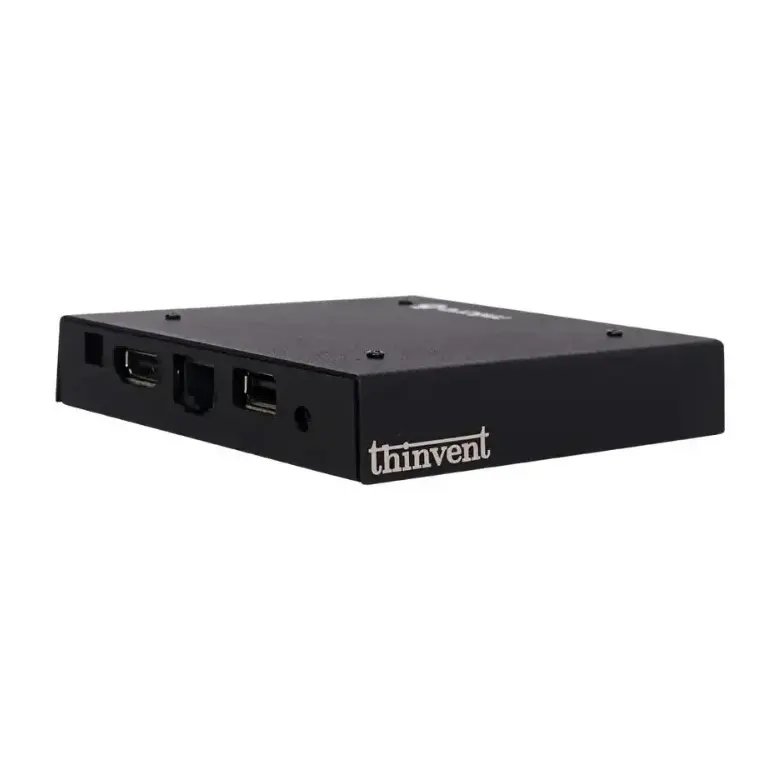
Thinvent integrates TPM 2.0 security into a wide range of its industrial computing solutions to meet stringent security requirements. Our fanless Mini PCs, Thin Clients, and Industrial Panel PCs are designed with hardware-based security at their core. This ensures that systems deployed in sensitive applications—from factory automation and digital signage to edge computing and kiosks—are protected against unauthorized access and data breaches. By leveraging TPM technology, Thinvent devices provide a trusted foundation for secure boot, device identity, and data encryption, offering peace of mind for global deployments in critical infrastructure.