What Are Rugged Industrial Computers for Warehouses?
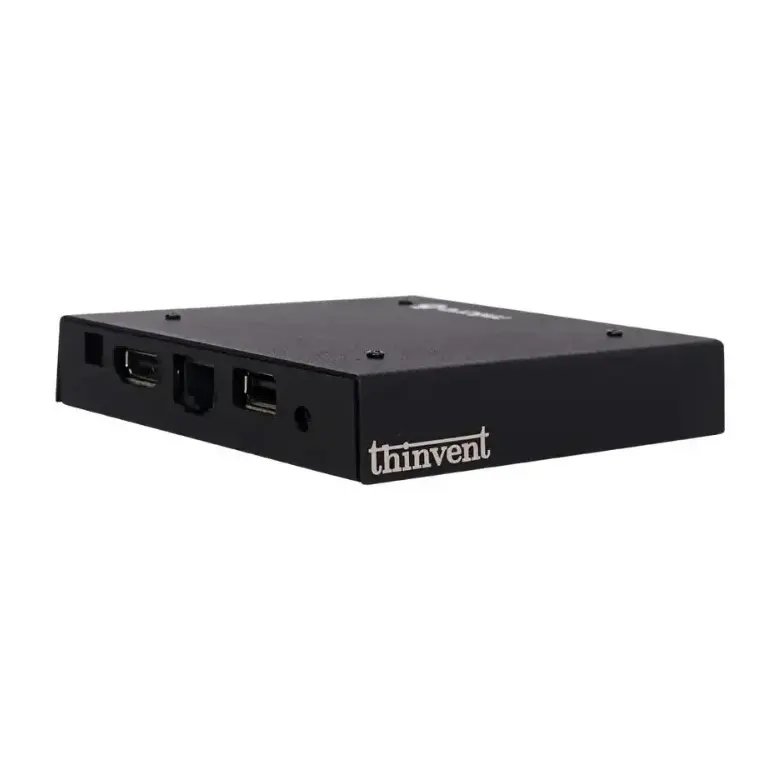
Rugged industrial computers are specialized computing systems engineered to withstand the harsh environmental conditions of warehouse operations. Unlike standard office PCs, these devices are built with durability, reliability, and continuous operation in mind. They are essential for managing critical logistics, inventory, and automation systems where downtime is not an option. Key design features include fanless cooling for silent, dust-resistant operation, wide operating temperature ranges, and robust enclosures that protect against physical shocks, vibrations, and electrical interference commonly found in industrial settings.
Key Specifications for Warehouse Computing
Selecting the right industrial computer for a warehouse depends on the specific application. For basic tasks like running a Warehouse Management System (WMS) terminal or a simple barcode scanner, an efficient, low-power processor like an Intel N-series or an ARM-based chip is sufficient. For more demanding applications such as real-time inventory databases, automated guided vehicle (AGV) control, or multi-monitor surveillance systems, higher-performance Intel Core i3, i5, or i7 processors with more cores and RAM are necessary. Critical specifications to consider include:
-
Rugged Design: Fanless, ventless chassis to prevent dust ingress.
-
Wide Voltage Input: To handle power fluctuations (e.g., 9-36V DC).
-
Extended Temperature Range: Operation from -20°C to 60°C or wider.
-
Rich I/O Connectivity: Multiple Ethernet ports for network redundancy, serial ports (RS232/485) for legacy equipment, and ample USB ports for scanners and peripherals.
-
Reliable Storage: Industrial-grade SSDs with high endurance for constant data logging.
Applications and Use Cases in Warehouse Operations
Industrial computers serve as the backbone of modern warehouse automation, powering a wide array of critical systems:
-
Warehouse Management Systems (WMS): Running terminal software for order picking, packing, and shipping.
-
Inventory Control: Powering barcode/RFID scanning stations and real-time inventory tracking software.
-
Material Handling: Controlling conveyor systems, sorters, and robotic pick-and-place arms.
-
Fleet Management: Operating software for managing forklifts and Automated Guided Vehicles (AGVs).
-
Digital Signage & Kiosks: Displaying operational metrics, safety information, or serving as interactive workstations.
-
Surveillance & Security: Running video management software for monitoring warehouse floors and access points.
Comparison: Entry-Level vs. High-Performance Warehouse PCs
| Feature | Entry-Level / Terminal PC | High-Performance / Control PC |
|---|---|---|
| Typical Processor | Intel N100, ARM Cortex | Intel Core i5/i7 (12th/14th Gen) |
| Core Count | 4 Cores | 6-14+ Cores |
| Typical RAM | 4-8 GB | 16-32+ GB |
| Storage | 128-256 GB eMMC/SSD | 512 GB - 1 TB NVMe SSD |
| Primary Use Case | Thin client, single WMS terminal, basic scanning | Server, database host, AGV control, multi-monitor surveillance |
| Operating System | Embedded Linux, Lightweight OS | Windows 11 Pro/Enterprise, Standard Linux |
| Key Advantage | Cost-effective, low power, fanless | High computational power for complex automation |
Thinvent Rugged Industrial Computers for Warehouses
Thinvent offers a comprehensive range of industrial-grade computing solutions designed to meet the diverse demands of warehouse environments. Our product lineup includes compact and fanless Industrial PCs (IPCs) and Mini PCs built with durability as a core principle. For lightweight terminal applications, our ARM-based Thin Clients and Micro Mini PCs provide reliable, low-maintenance operation. For more processing-intensive tasks, our systems feature powerful Intel processors from the efficient N-series up to the latest 14th Generation Core i5 models. Every Thinvent industrial computer is engineered for 24/7 operation, featuring wide-temperature components, robust metal enclosures, and a rich set of industrial I/O ports to seamlessly integrate with your existing warehouse infrastructure, from scanners and scales to PLCs and network backbones.