What is the Best PC for Industrial Use?
The "best" PC for industrial applications is not a single model but a category defined by reliability, durability, and performance tailored to specific operational environments. Unlike consumer PCs, the best industrial computers prioritize fanless cooling for silent, dust-proof operation, wide operating temperature ranges, and robust connectivity for machine interfacing. Key factors include the processor's performance-per-watt, memory and storage scalability, and support for industrial operating systems and protocols.
Key Specifications for Industrial PCs
Industrial PCs (IPCs) are characterized by several critical technical specifications. Processors like Intel's N-series (e.g., N100) offer excellent efficiency for basic automation and HMI tasks, while Core i3/i5/i7 series provide higher performance for data acquisition and edge computing. Essential features include:
-
Fanless Design: Eliminates moving parts, preventing dust ingress and enabling 24/7 operation in harsh conditions.
-
Wide Voltage Input: Often supports 9-36V DC, protecting against power fluctuations common in industrial settings.
-
Rich I/O: Multiple Ethernet ports (often with PoE), serial COM ports (RS-232/485), and USB ports for connecting sensors, PLCs, and peripherals.
-
Extended Temperature Range: Operates reliably from -20°C to 60°C or beyond.
-
Shock & Vibration Resistance: Built to withstand the rigors of factory floors or mobile installations.
Applications and Use Cases
The right industrial PC is selected based on its intended application:
-
Machine Automation & HMI: Acts as the control interface for PLCs and CNC machines, requiring reliable operation and multiple display outputs.
-
Digital Signage & Kiosks: Used in retail, transportation, and public spaces, demanding compact form factors and 24/7 reliability.
-
Edge Computing & IoT Gateways: Collects and processes data from sensors on the factory floor, needing robust networking and processing power.
-
Thin Clients & VDI: Provides secure, centralized access to enterprise applications in manufacturing and office environments.
Comparing Common Industrial PC Form Factors
| Form Factor | Typical Processor | Best For | Key Advantages |
|---|---|---|---|
| Panel PC / All-in-One | Intel Celeron, Core i3/i5 | Human-Machine Interface (HMI), Control Rooms | Integrated display, saves space, rugged touchscreen. |
| Box PC / Mini PC | Intel N-series, Core i3/i5/i7 | Edge Computing, Automation, Digital Signage | Highly flexible, wall/DIN-rail mountable, extensive I/O. |
| Thin Client | ARM, Intel Celeron/N-series | Virtual Desktop Infrastructure (VDI), Secure Terminals | Low power, centralized management, enhanced security. |
Thinvent's Range of Industrial Computing Solutions
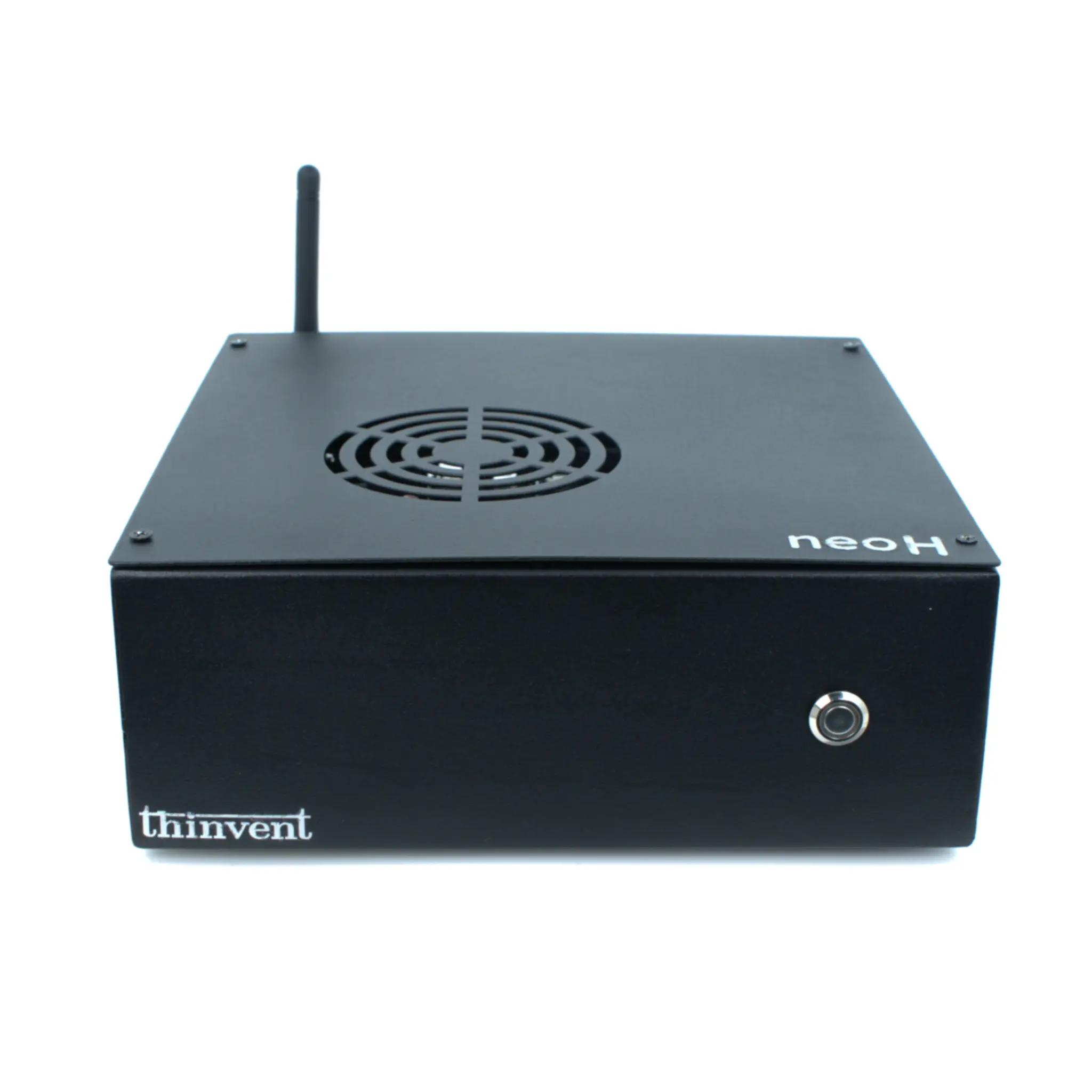
Thinvent specializes in manufacturing robust industrial computers that embody these critical features. Our product portfolio includes compact Aero Mini PCs with efficient Intel N-series processors for space-constrained and fanless applications, ideal for digital signage and light automation. For more demanding computational tasks, our series featuring Intel Core i3, i5, and i7 processors deliver the necessary performance for data-intensive edge computing and complex HMIs. All Thinvent systems are engineered for durability, offering wide operating temperature ranges, multiple mounting options, and a selection of operating systems including Windows IoT, Linux, and FreeDOS to seamlessly integrate into any industrial ecosystem.