Industrial computers optimized for Google Cloud are specialized hardware platforms designed to run cloud-native applications, manage edge computing workloads, and interface with Google Cloud services efficiently and reliably. Unlike standard commercial PCs, these systems are built for 24/7 operation in demanding environments, featuring robust construction, wide operating temperature ranges, and often fanless, solid-state designs for silent and maintenance-free operation. Their optimization ensures seamless integration with Google Cloud's ecosystem, including Compute Engine, IoT Core, Anthos, and AI/ML services, providing a stable and performant foundation for data processing, analytics, and control at the network edge.
Key Specifications for Cloud-Optimized Hardware
The ideal industrial computer for Google Cloud balances connectivity, processing power, and reliability. Key specifications include:
-
High-Performance Processors: Modern Intel Core i3, i5, or efficient Intel N-series and ARM-based CPUs provide the compute power for local data preprocessing, containerized applications, and running lightweight virtual machines.
-
Ample Memory & Storage: Sufficient RAM (8GB to 32GB+) and fast SSD storage (256GB to 1TB+) are crucial for caching data, running multiple services, and ensuring responsive performance for cloud applications.
-
Robust Connectivity: Multiple Gigabit Ethernet ports (often 2 or more) are essential for reliable, high-bandwidth communication with cloud APIs and local networks. Support for Wi-Fi 6/6E and 4G/5G modules enables flexible deployment.
-
Operating System Flexibility: Support for Google's Container-Optimized OS, Ubuntu Linux, or Windows 11 IoT/Pro allows developers to choose the optimal environment for their specific Google Cloud workloads and development tools.
Primary Use Cases and Applications
These computers serve as the physical bridge between operational technology (OT) and Google Cloud. Common applications include:
-
Edge AI and Machine Learning: Running TensorFlow Lite or other ML models locally on the edge device, with data synced to Google Cloud AI Platform.
-
Industrial IoT (IIoT) Gateways: Aggregating sensor data from factory floors, processing it locally, and securely transmitting insights to Google Cloud IoT Core.
-
Cloud-Managed Digital Signage & Kiosks: Remotely deploying and managing content via Google Cloud for retail, hospitality, or corporate environments.
-
Remote Monitoring and Control: Hosting applications that monitor equipment health and enable control functions, with data visualized in Google Cloud's Looker or other analytics services.
Thinvent's Google Cloud-Optimized Industrial PCs
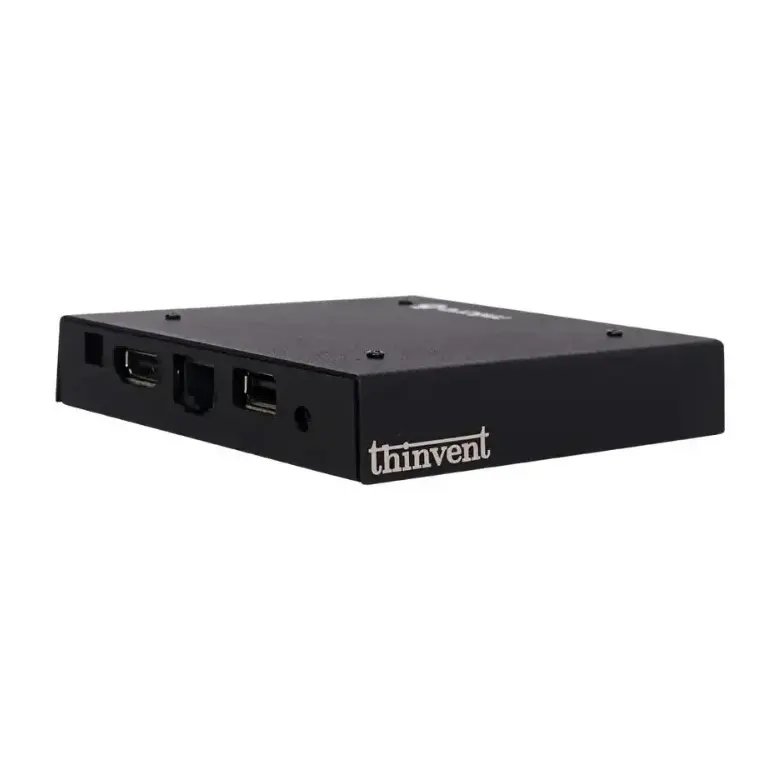
Thinvent offers a comprehensive range of industrial computing solutions engineered for seamless operation with Google Cloud services. Our product lines, including fanless Industrial PCs, compact Mini PCs, and efficient Thin Clients, are built with the durability and connectivity required for edge deployments.
Thinvent Industrial PC Series (e.g., IPC5, IPC3): Featuring powerful Intel Core processors (12th/14th Gen i3, i5), these systems are ideal for demanding edge computing, local analytics, and hosting containerized applications that integrate with Google Kubernetes Engine (GKE) or Anthos. Their rugged, fanless design ensures reliability in harsh conditions.
Thinvent Mini PC Series (e.g., Aero, Treo): Balancing performance and compact size, these units with Intel N100, Core i3, or Core i5 processors are perfect for space-constrained environments running cloud-connected applications for digital signage, light edge servers, or office productivity tools linked to Google Workspace.
Thinvent Thin Client Series (e.g., Micro 5, Micro 6 Pro): Powered by energy-efficient ARM processors, these devices are optimized for virtual desktop infrastructure (VDI) and cloud-based applications. They provide a secure, low-maintenance endpoint for accessing Google Cloud virtual desktops or web-based tools, minimizing local management overhead.
All Thinvent systems offer the OS flexibility, robust networking, and reliable hardware needed to build a resilient and efficient bridge to Google Cloud, ensuring your applications perform consistently from the edge to the cloud.