What Are Industrial X86 Computing Boards?
Industrial x86 computing boards are the core processing modules built around the ubiquitous x86 instruction set architecture, designed specifically for demanding, non-consumer environments. Unlike standard consumer motherboards, these boards are engineered for longevity, reliability, and operation in harsh conditions. They serve as the foundational hardware for building custom industrial PCs, embedded systems, and specialized computing solutions where consistent performance, extended temperature ranges, and resistance to shock, vibration, and dust are critical.
Key Specifications and Technical Details
These boards are characterized by their robust construction and industrial-grade components. Key specifications typically include support for a wide range of Intel and AMD x86 processors, from low-power Celeron and Pentium series to high-performance Core i3, i5, and i7 CPUs. They feature industrial-grade memory slots (often supporting ECC RAM for data integrity), multiple expansion interfaces (PCI, PCIe, Mini-PCIe), and a rich set of I/O ports including multiple Ethernet, USB, serial (COM), and display outputs. A defining feature is their extended operational temperature range, often from -20°C to 70°C or wider, and support for 24/7 continuous operation. Many are also fanless, relying on passive cooling for silent and maintenance-free performance.
Primary Use Cases and Applications
The reliability of industrial x86 boards makes them ideal for mission-critical applications across various sectors. In manufacturing, they power machine vision systems, PLCs (Programmable Logic Controllers), and HMI (Human-Machine Interface) panels on the factory floor. They are essential in transportation for in-vehicle computing, ticketing systems, and fleet management. Other key applications include digital signage in public spaces, kiosks, medical diagnostic equipment, network appliances, and automation controllers in utility and energy sectors. Their compatibility with standard x86 software (like Windows IoT, Linux distributions) allows for easy integration and software development.
Comparison: Industrial vs. Consumer Boards
| Feature | Industrial X86 Board | Standard Consumer Motherboard |
|---|---|---|
| Operating Temperature | Extended range (e.g., -20°C to 70°C) | Standard range (0°C to 40°C) |
| Longevity & Support | Long-term availability (5-10+ years) | Short product cycles (1-2 years) |
| Durability | Designed for shock, vibration, 24/7 operation | For stable, office/home environments |
| Expansion & I/O | Multiple COM, LAN, GPIO; industrial connectors | Focus on USB, audio, gaming ports |
| Power Design | Wide-range DC input (e.g., 9-36V DC) | Standard ATX power supply |
| Cooling | Often fanless with heatsink | Typically active (fan) cooling |
Thinvent's Industrial X86 Computing Solutions
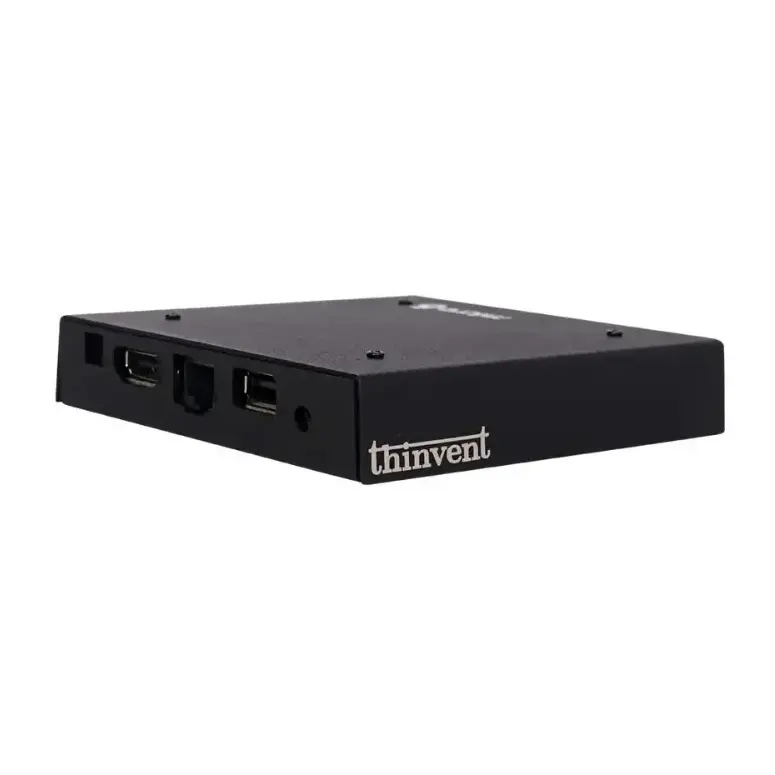
Thinvent offers a comprehensive range of ready-to-deploy systems built on reliable industrial x86 architecture, saving you the integration effort of a bare board. Our product lines include robust Industrial PCs (IPC series) featuring Intel Core processors for high-performance automation and control tasks. For space-constrained and fanless applications, our Treo and Aero Mini PC series provide compact, efficient computing with Intel N-series and Core processors. These complete solutions inherit the durability and longevity of industrial-grade components, come with a choice of operating systems, and are tested for reliability in challenging environments, offering a turnkey alternative to custom board-level integration.