What Is the HP Z8 Fury G5?
The HP Z8 Fury G5 is a tower workstation built around a single Intel Xeon W-3400 "Sapphire Rapids" processor, scaling from 12 up to 56 cores, with support for up to 2TB of DDR5-4800 ECC memory and up to four double-width GPUs. It is designed for the heaviest compute workloads — 3D rendering, simulation, video production and AI model training — and it is typically deployed as a small number of high-cost, high-power machines in a studio, lab or engineering department.
Workstation-Class vs. Deployment-Class Computing
It is worth separating two very different jobs. A machine like the Z8 Fury G5 is a compute machine: it sits on a desk or in a rack and crunches numbers. The deployment layer is everything else — the terminals, kiosks, operator stations, digital signage players and shop-floor panels that people actually touch, and which have to run every day for years in dusty, hot or vibration-heavy environments. Those systems do not need 56 cores or 2TB of RAM. They need low power draw, no moving parts, a long service life and an operating system image that can be rolled out identically across hundreds of units.
What Deployment Hardware Actually Needs
| Requirement | Why It Matters | Typical Target |
|---|---|---|
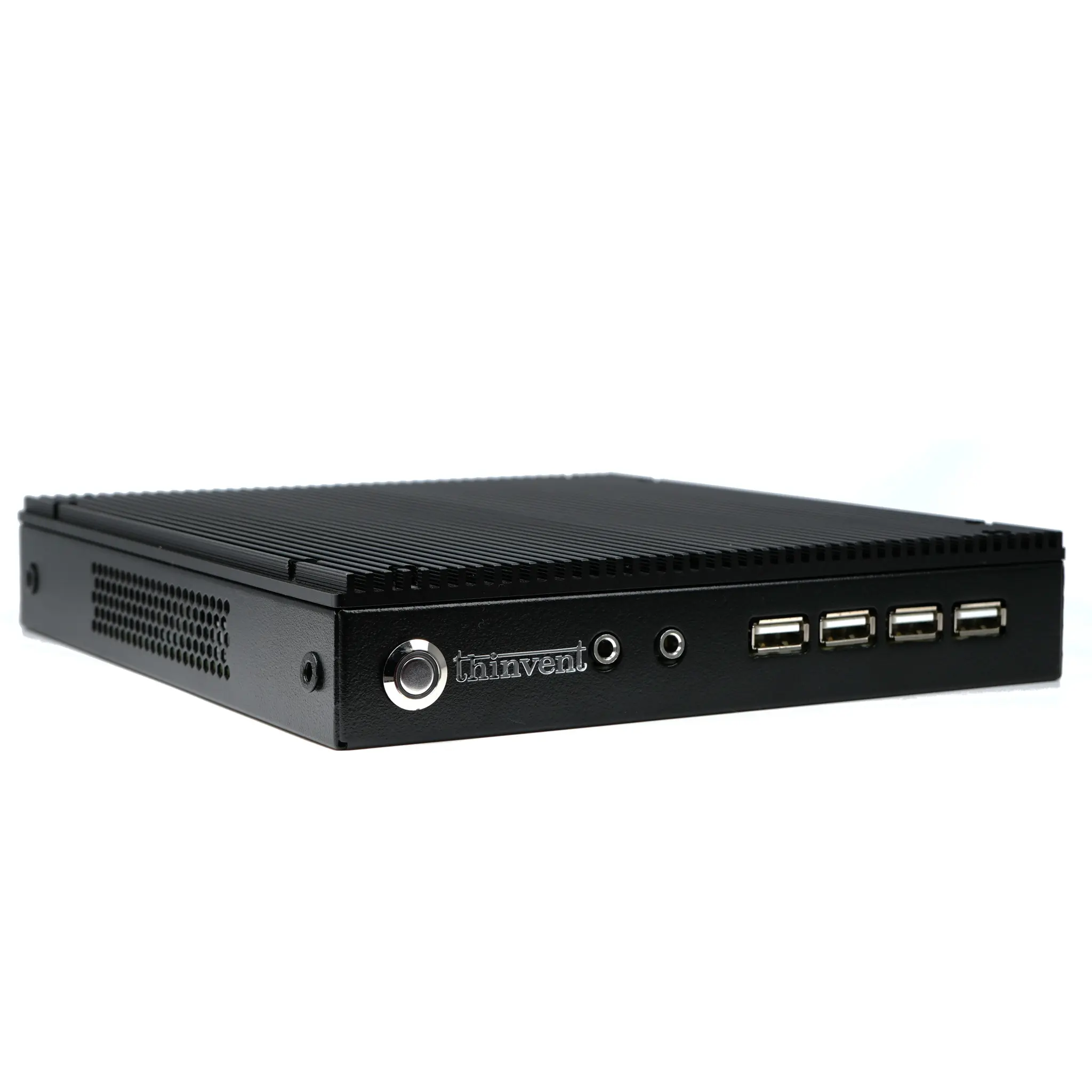
| Fanless cooling | Dust and airborne particles are the main killer of office PCs on a factory floor | 0 moving parts, sealed chassis |
| Wide DC input | Runs from a 12V/19V adapter, DIN rail supply or vehicle power | 12V–19V DC |
| Low idle power | Hundreds of units left on overnight | 6–15W idle |
| Dual display | Operator screen plus a status or dashboard panel | 2x HDMI or HDMI + VGA |
| Dual Gigabit Ethernet | One port for the plant network, one for a machine or camera subnet | 2x 1000 Mbps |
| Long-life OS images | Identical image across a fleet, remote re-imaging | Windows 11 IoT / Linux LTS |
| Mounting flexibility | VESA behind a monitor, DIN rail in a panel | VESA 75/100, wall bracket |
Common Applications
Fanless mini PCs and thin clients are used as point-of-sale terminals, hospital nursing-station terminals, bank branch desktops, library and lab PCs, CNC and PLC front-end panels, CCTV viewing stations, warehouse scanner stations, and digital signage players. In virtual desktop environments they act as thin clients, where all the heavy processing happens on a central server and the endpoint only needs to render the session reliably.
Thinvent's Products for This Role
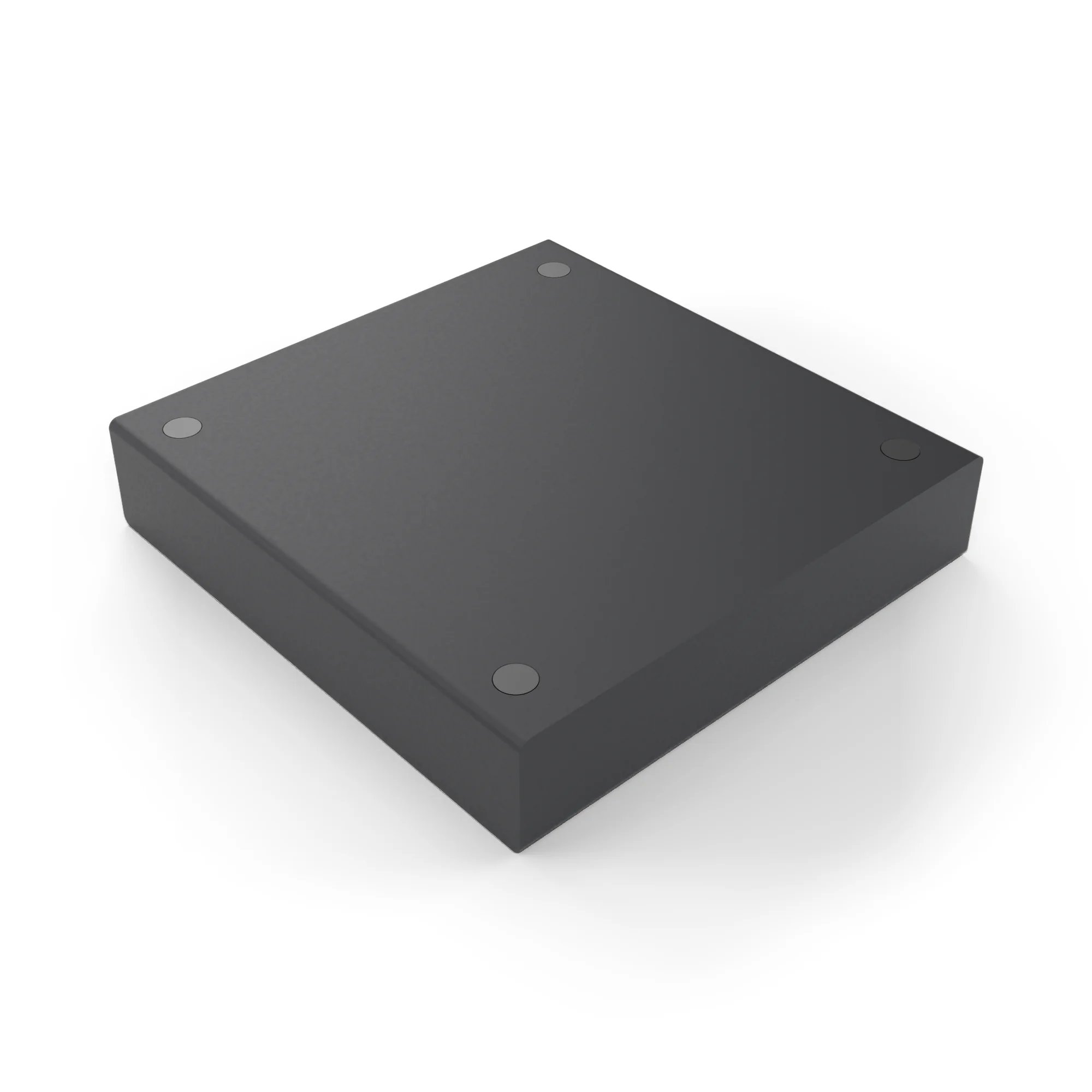
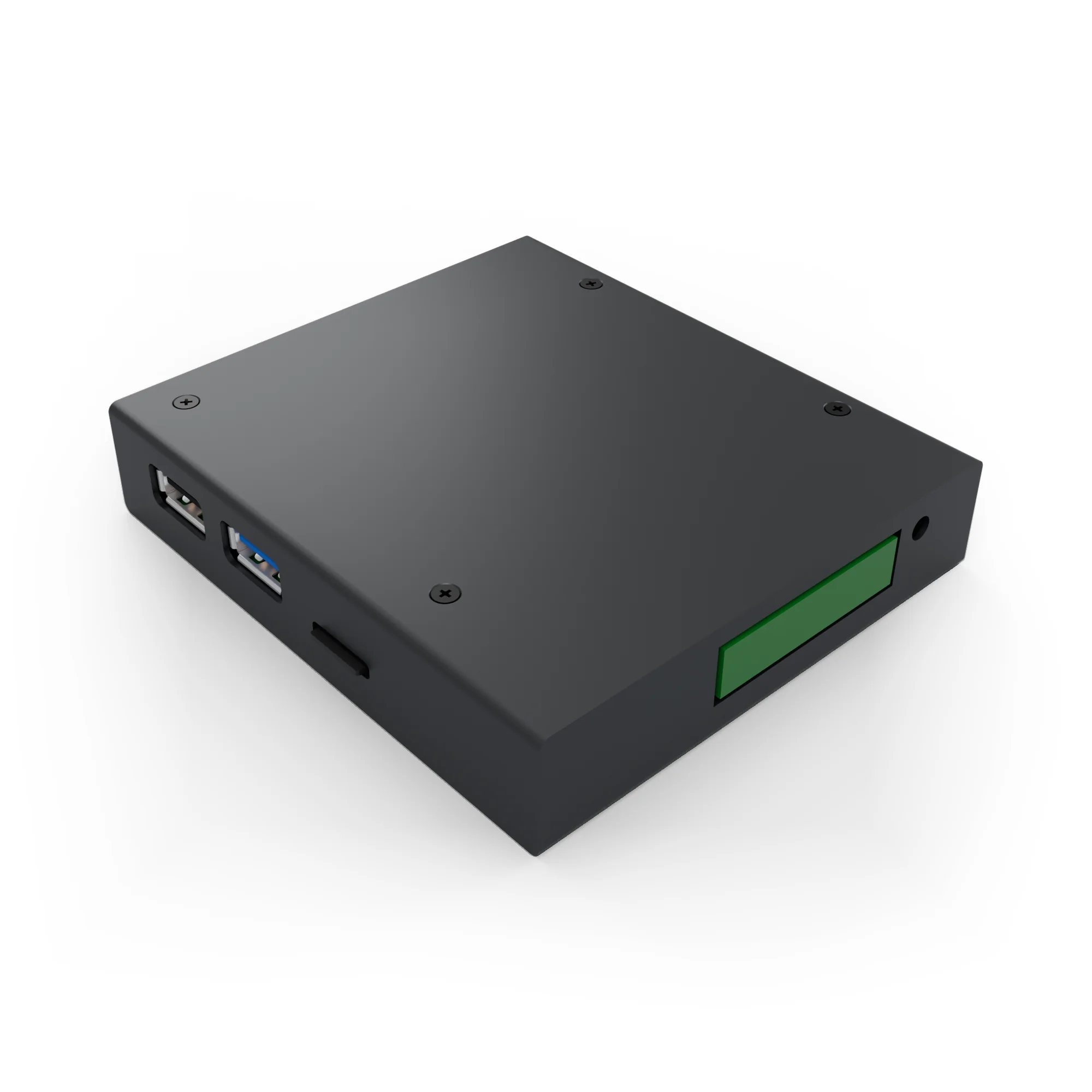
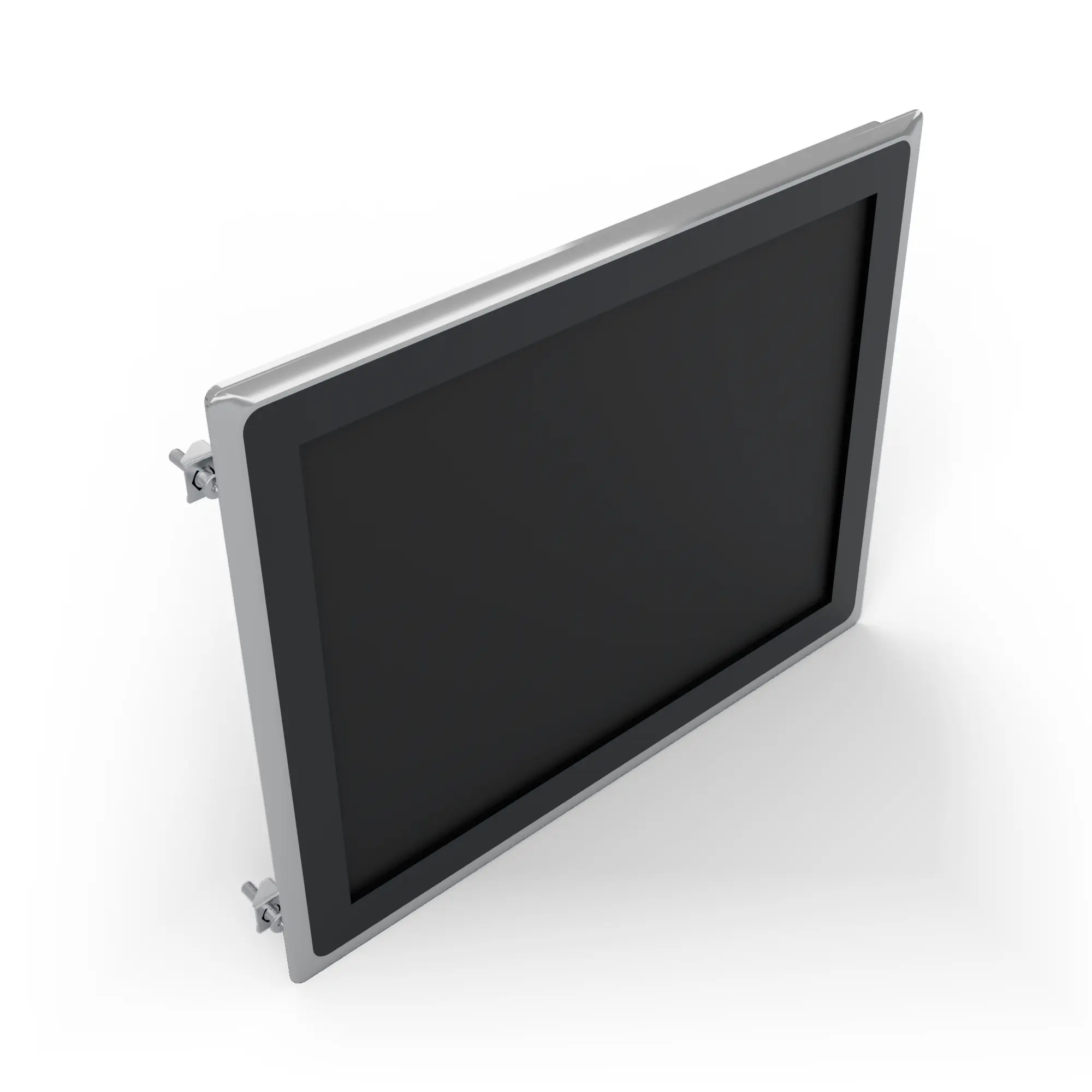
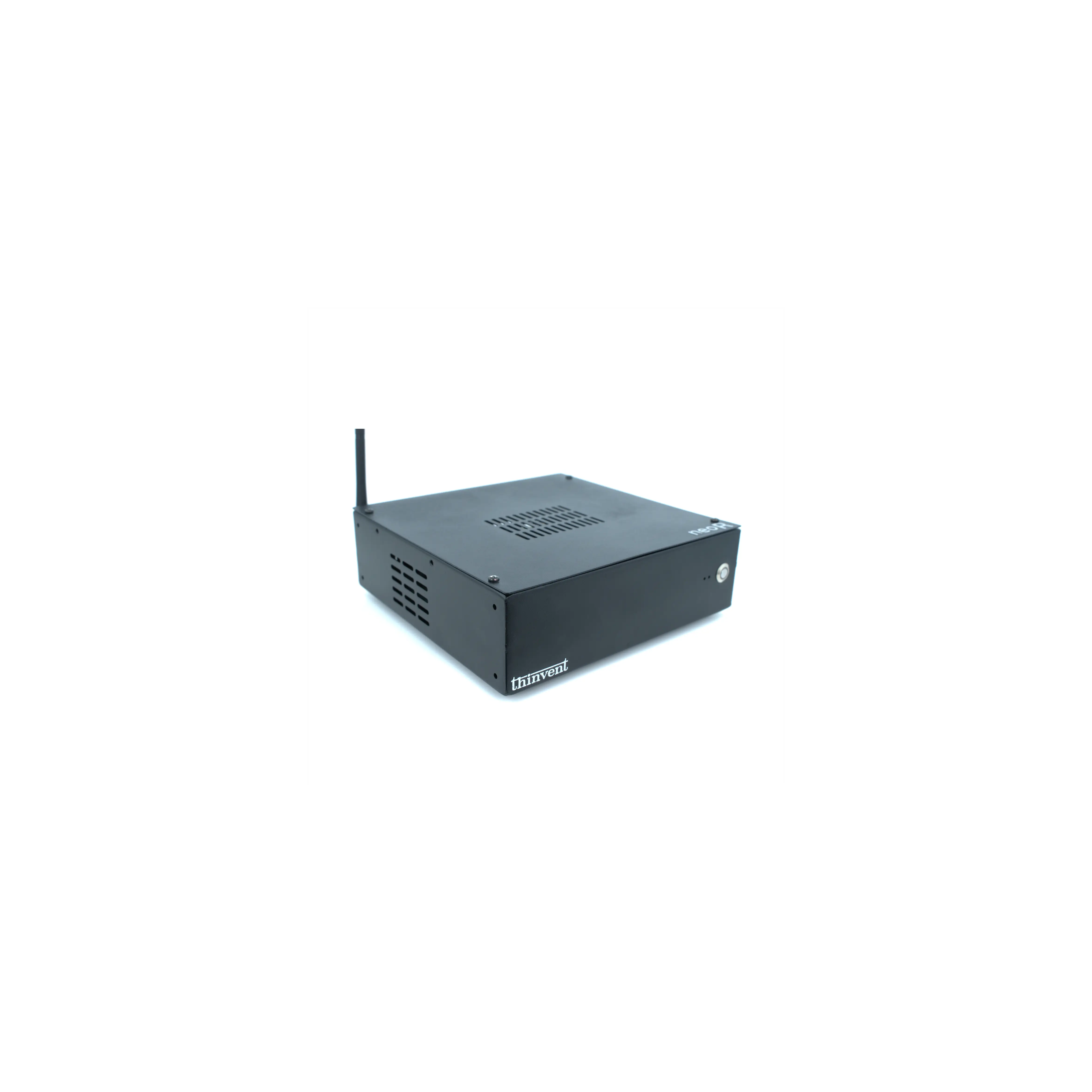
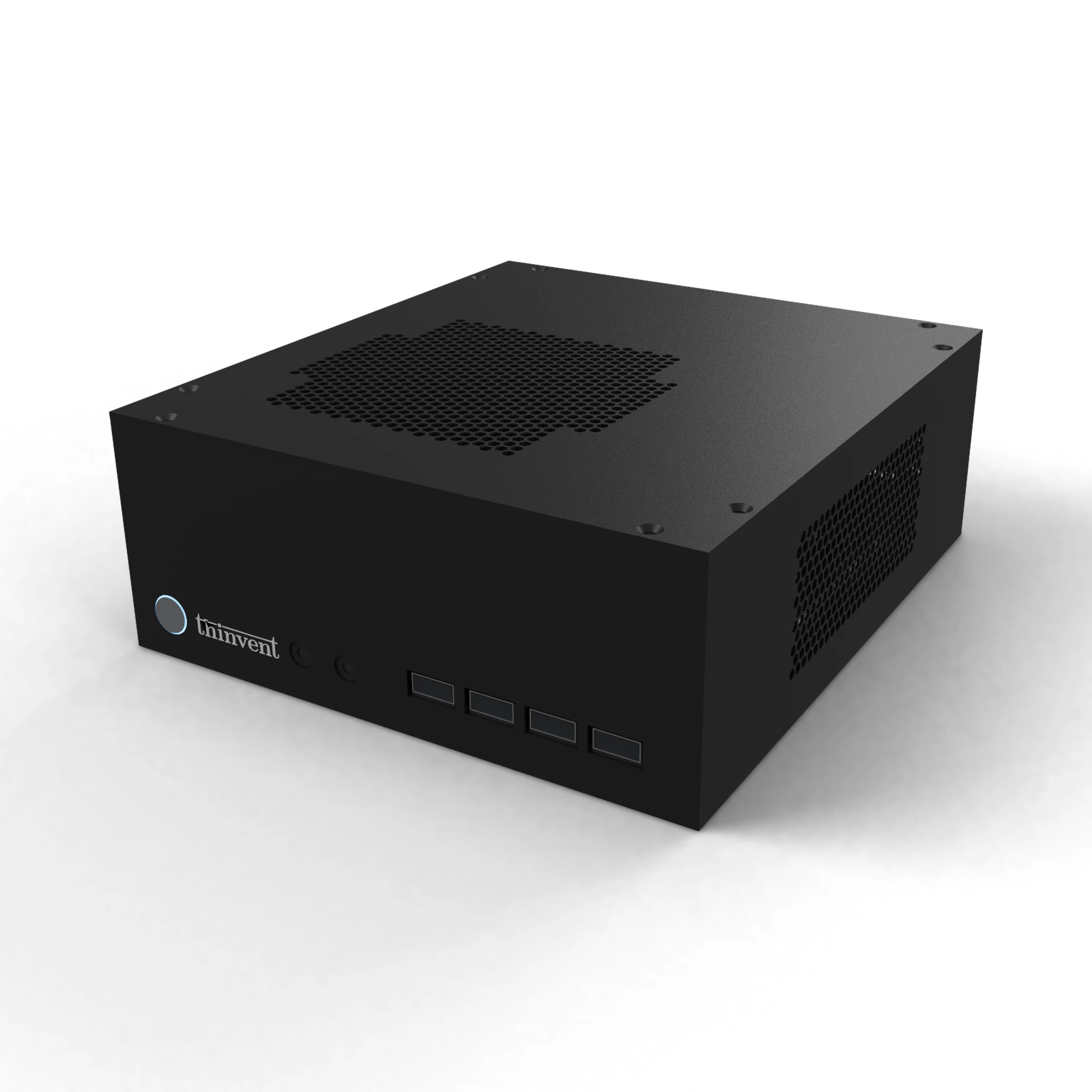
Thinvent builds the endpoint and edge layer rather than the compute tower: industrial computers, mini PCs, thin clients and all-in-one PCs, all designed for continuous duty with fanless or low-noise cooling, DC power input, dual display outputs and dual Gigabit Ethernet. They are supplied with Windows 11 IoT, Windows 11 Pro, Ubuntu Linux LTS, FreeDOS or no OS, so a fleet can be imaged consistently. If your project involves a small number of very high-core-count workstations alongside a large number of deployment endpoints, Thinvent covers the endpoints — and our team can advise on matching specifications to the environment.