What Are Computer Components and What Do They Cost?
Computer components, or комплектующие для компьютера, are the individual hardware parts that make up a complete system. For industrial and embedded applications, these components are selected for their reliability, durability, and performance in demanding environments. Key components include the processor (CPU), memory (RAM), storage (SSD), and the system's form factor, such as a Mini PC or Industrial PC. Pricing is determined by the specifications and quality of these components, with industrial-grade parts typically commanding a premium over consumer equivalents due to extended lifecycles, wider operating temperature ranges, and robust construction.
Key Specifications and Technical Details
When evaluating components for an industrial computer, several core specifications define performance and suitability:
-
Processor (CPU): The brain of the system. Modern industrial PCs often use efficient Intel processors like the N-series (e.g., N100) or Core i-series (e.g., i3, i5). Key factors are core count (4, 6, 10+), generation (12th, 13th, 14th), and thermal design power (TDP).
-
Memory (RAM): Crucial for multitasking and application performance. Common configurations are 8GB, 16GB, or 32GB of DDR4/DDR5 memory. Industrial systems often use non-ECC or ECC memory for error correction.
-
Storage (SSD): Provides the operating system and data storage. Speeds and reliability vary; industrial SSDs are built for 24/7 operation. Common capacities are 128GB, 256GB, 512GB, and 1TB.
-
Form Factor & Cooling: Industrial PCs come as fanless Mini PCs, ruggedized boxes, or Panel PCs. Fanless designs use passive cooling for silent, reliable operation in dusty environments.
-
Connectivity: Includes Gigabit Ethernet ports, multiple USB 3.2/Type-C ports, and display outputs (HDMI, DisplayPort) for peripherals and monitors.
Industrial Use Cases and Applications
The right components enable computers to excel in specific industrial roles:
-
Digital Signage & Kiosks: Fanless Mini PCs with low-power CPUs (Intel N-series) are ideal for driving displays in retail, hospitality, and public spaces.
-
Factory Automation & IoT Gateways: Rugged Industrial PCs with multiple I/O ports connect to machinery, sensors, and PLCs on the factory floor.
-
Thin Clients & VDI: Compact systems with basic specs securely access virtualized desktop environments in offices and call centers.
-
Embedded Systems: Headless computers integrated into medical devices, transportation systems, or robotics, requiring long-term component availability.
Comparison of Common Industrial Component Tiers
| Component Tier | Typical Processor | Typical RAM | Typical Storage | Best For |
|---|---|---|---|---|
| Entry-Level / Basic Computing | Intel N95, N100, Celeron | 4GB - 8GB | 128GB SSD | Digital signage, thin clients, simple kiosks |
| Mainstream / Office Performance | Intel i3, i5 (10th-13th Gen) | 8GB - 16GB | 256GB - 512GB SSD | Industrial workstations, automation controllers, edge servers |
| High-Performance / Workstation | Intel i5, i7 (13th-14th Gen) | 16GB - 64GB | 512GB - 1TB+ SSD | Machine vision, data analytics, complex simulation |
Thinvent Industrial Computers and Components
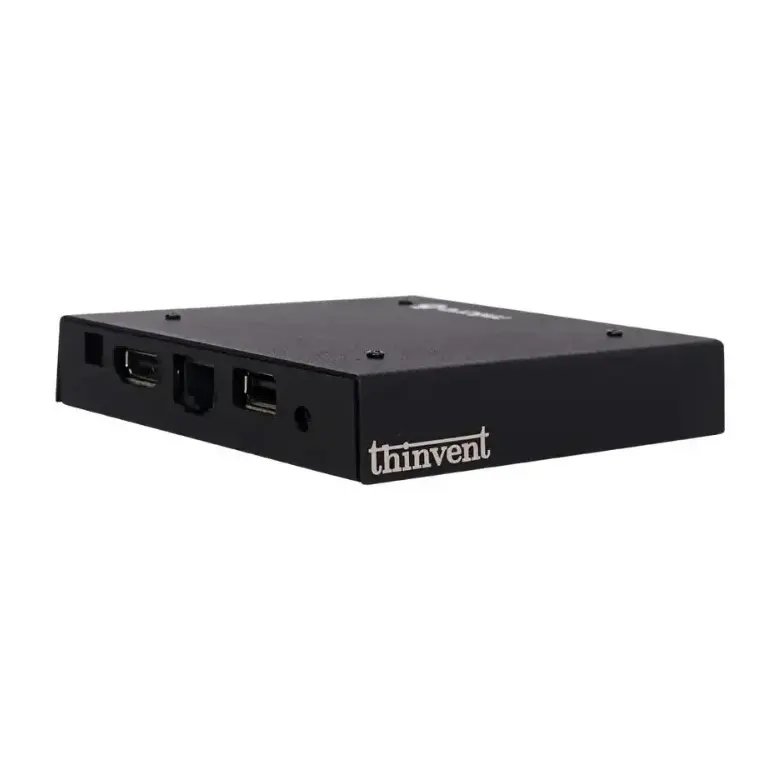
Thinvent specializes in pre-configured, reliable industrial computing systems built with high-quality components. Our product range allows you to select the right specification tier for your application without sourcing individual parts. For example, our Aero Mini PC series features the efficient Intel N100 processor, up to 16GB RAM, and SSD storage in a compact, fanless chassis—perfect for cost-sensitive, space-constrained deployments. For more demanding tasks, we offer systems with Intel Core i3, i5, and i7 processors, greater memory, and storage options. All Thinvent systems are engineered for 24/7 operation, with wide temperature tolerance and stable, long-term component supply, providing a total solution rather than just individual parts.