What is Custom Computer Assembly?
Custom computer assembly, or "сборка компьютера," refers to the process of selecting and integrating individual hardware components to create a complete system tailored to specific performance, form factor, and environmental requirements. Unlike off-the-shelf consumer PCs, industrial-grade custom assemblies prioritize reliability, longevity, and compatibility with specialized software and hardware for commercial and industrial applications.
Key Specifications for Industrial Assembly
When planning a custom industrial computer build, several core specifications define the system's capability:
-
Processor (CPU): The central processing unit dictates overall performance. Options range from efficient, fanless Intel N-series processors (e.g., N100) for basic tasks and digital signage to powerful Intel Core i3/i5/i7 CPUs for data processing and machine vision.
-
Memory (RAM): System memory, or RAM, is crucial for multitasking and running applications smoothly. Industrial PCs typically start at 8GB, with 16GB or 32GB recommended for demanding software.
-
Storage (SSD): Solid-state drives provide fast boot times and data access. Capacities from 128GB to 1TB are common, with industrial-grade SSDs offering better endurance for 24/7 operation.
-
Form Factor: This defines the physical size and mounting options. Common industrial form factors include compact Mini PCs for space-constrained environments, rugged Panel PCs for HMI interfaces, and modular Industrial PCs for expansion.
-
Operating System: The choice of OS (Windows 11 IoT/Pro, Linux distributions like Ubuntu, or a lightweight embedded OS) depends on software compatibility and security needs.
Applications and Use Cases
Custom-built industrial computers are deployed in environments where standard PCs would fail. Their primary applications include:
-
Factory Automation & Control: Operating PLCs, SCADA systems, and acting as a gateway for IoT data collection on the shop floor.
-
Digital Signage & Kiosks: Powering interactive displays and information terminals in retail, transportation, and public spaces, often requiring fanless, silent operation.
-
Thin Clients & VDI: Serving as durable endpoints for virtual desktop infrastructure in offices, hospitals, and call centers.
-
Edge Computing: Processing data locally in harsh environments (e.g., outdoors, vehicles) before sending it to the cloud, requiring wide temperature tolerance and shock resistance.
Comparison of Common Industrial PC Configurations
| Use Case | Recommended Processor | Typical RAM | Typical Storage | Key Feature |
|---|---|---|---|---|
| Basic Digital Signage / Thin Client | Intel N100 (4 cores) | 8 GB | 128 GB SSD | Fanless, Low Power |
| General Purpose Industrial HMI | Intel i3 (10th-12th Gen) | 16 GB | 256 GB SSD | Balanced Performance |
| Machine Vision / Data Acquisition | Intel i5/i7 (12th-14th Gen) | 32 GB | 512 GB+ SSD | High Compute, Multiple I/O |
| Rugged Edge Gateway | Intel Celeron / Atom Series | 8-16 GB | 128-256 GB SSD | Wide Temp, DC Power, DIN-Rail |
Thinvent Custom Assembly Solutions
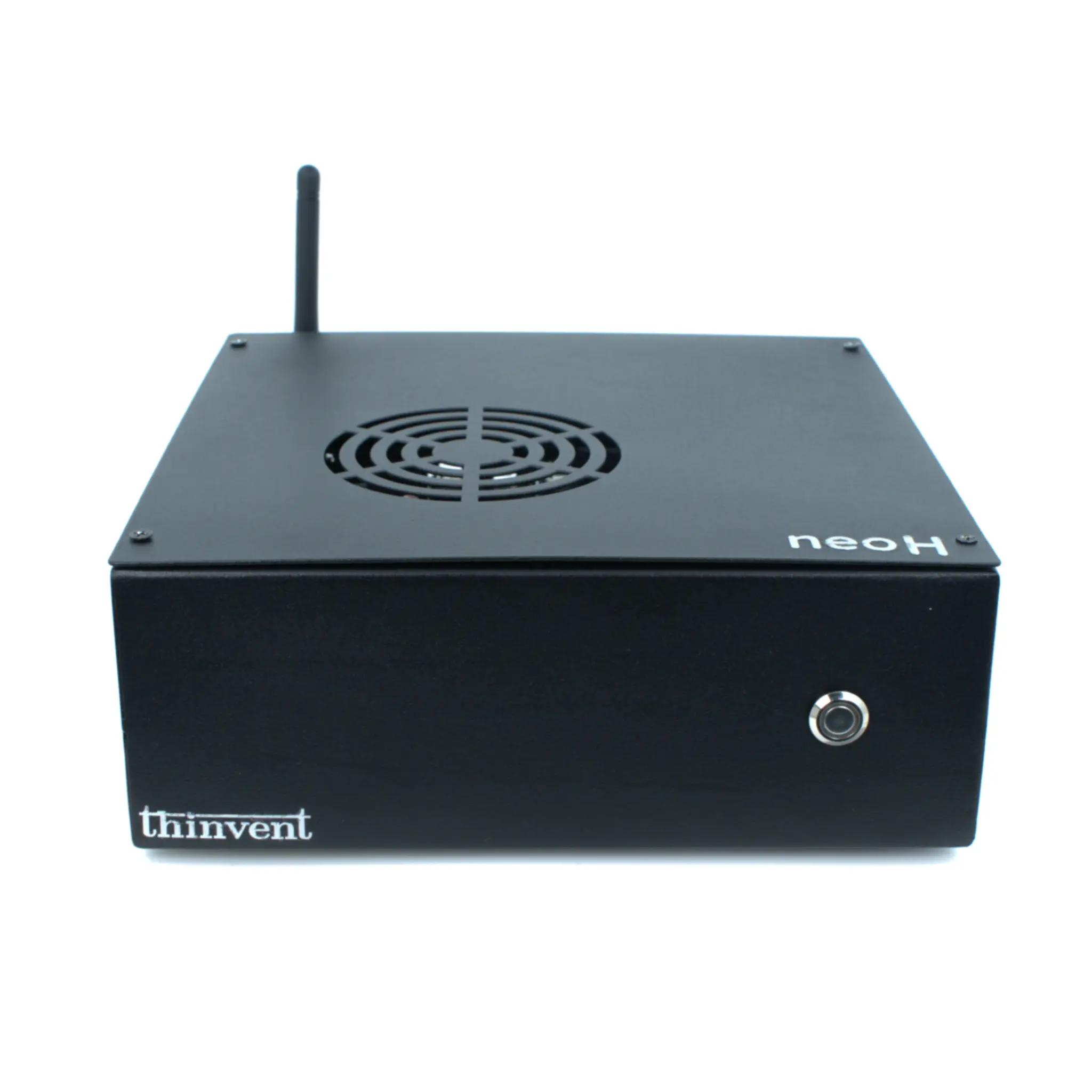
Thinvent specializes in providing robust, customizable industrial computing platforms perfect for professional assembly projects. Our product range offers a solid foundation for building a system tailored to your exact needs. For instance, the Thinvent Aero Mini PC series features the efficient Intel N100 processor in a compact, fanless chassis, making it an ideal starting point for builds requiring silent operation and reliability in digital signage, kiosk, or light-duty control applications. It comes with various OS options and can be configured with different memory and storage capacities. For more demanding tasks, our portfolio includes systems with higher-performance Intel Core processors, greater expansion capabilities, and industrial-grade connectivity, all designed for integration into larger automation and IoT solutions.