What is a File Server?
A file server is a dedicated computer system designed to store, manage, and share digital files across a network. It acts as a central repository, allowing multiple users or client devices to access documents, media, and data simultaneously. For businesses, a reliable file server improves collaboration, ensures data security through centralized backups, and streamlines workflow by eliminating the need for scattered local storage.
Key Specifications for a File Server
When selecting hardware for a file server, several technical aspects are critical. Storage capacity and expandability are paramount; look for systems with multiple drive bays or support for external storage arrays. Network connectivity is equally important, with Gigabit Ethernet (or faster) being essential for fast data transfer. Processor and RAM should be sufficient to handle multiple concurrent access requests without bottlenecking; a modern multi-core CPU (like an Intel N-series or i3/i5) and at least 8GB of RAM are recommended for small to medium-sized workgroups. Reliability features such as fanless cooling (for silent, dust-resistant operation in offices), support for RAID configurations (for data redundancy), and robust build quality for 24/7 operation are key differentiators for industrial-grade solutions.
Ideal Use Cases and Applications
File servers are versatile and serve numerous business functions:
-
Small Office/Home Office (SOHO): Centralizes family or small team documents, photos, and project files.
-
Business Workgroups: Provides a shared drive for departments like marketing, engineering, or finance to collaborate on live files.
-
Media Storage and Streaming: Acts as a network-attached storage (NAS) hub for video archives, music libraries, or surveillance footage.
-
Backup and Archiving: Serves as a primary destination for automated backups of critical business data from all networked computers.
-
Lightweight Application Hosting: Can run lightweight server applications for print serving, local DNS, or a company wiki.
Comparison: Key Considerations
| Feature | Entry-Level / SOHO | Business / Workgroup |
|---|---|---|
| Primary Use | Basic file sharing, personal media | Collaborative projects, departmental data, backups |
| Recommended CPU | Intel Celeron/N-series (4 cores) | Intel i3/i5 (6+ cores) |
| Recommended RAM | 8 GB | 16 GB or more |
| Storage | Single SSD (256GB-1TB) or dual-drive RAID | Multiple drives in RAID 1/5/10, support for NAS expansion |
| Network | Single Gigabit Ethernet | Dual Gigabit Ethernet for failover/load balancing |
| OS Flexibility | Windows 11 Pro, Linux | Windows Server, Linux distributions, or dedicated NAS OS |
Thinvent File Server Solutions
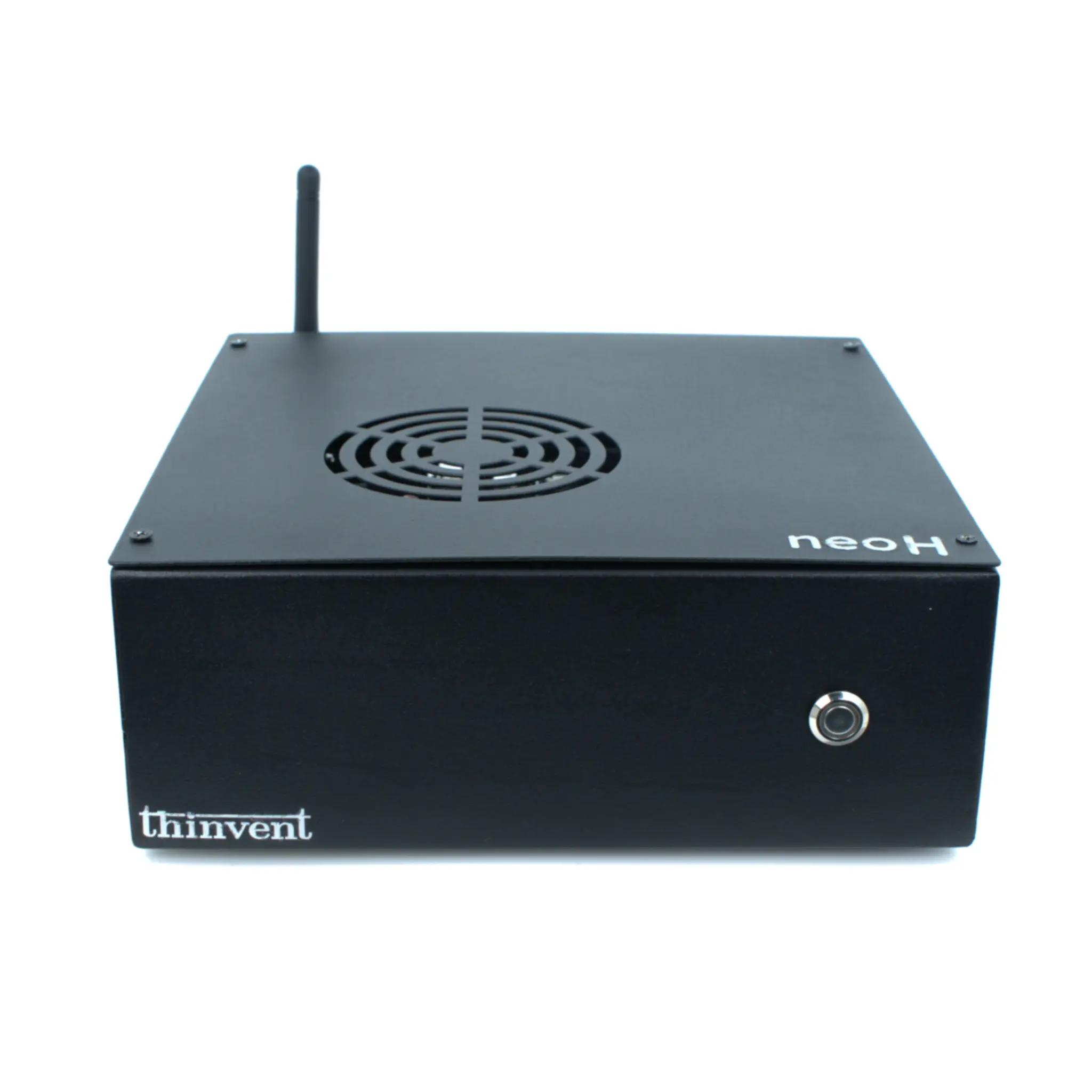
Thinvent offers a range of industrial-grade computing platforms perfectly suited for building robust, reliable file servers. Our Aero Mini PC series, for example, provides a compact, fanless foundation with efficient Intel processors, ample RAM, and SSD storage options. Their small form factor, low power consumption, and support for various operating systems (including Windows 11 Pro, Ubuntu Linux, and headless configurations) make them ideal for silent, always-on server duty in office environments. For larger storage needs, our systems are designed with connectivity to support external RAID enclosures or can be configured as part of a larger network-attached storage solution. Explore Thinvent's durable and versatile industrial PCs to find the perfect hardware backbone for your centralized data management needs.