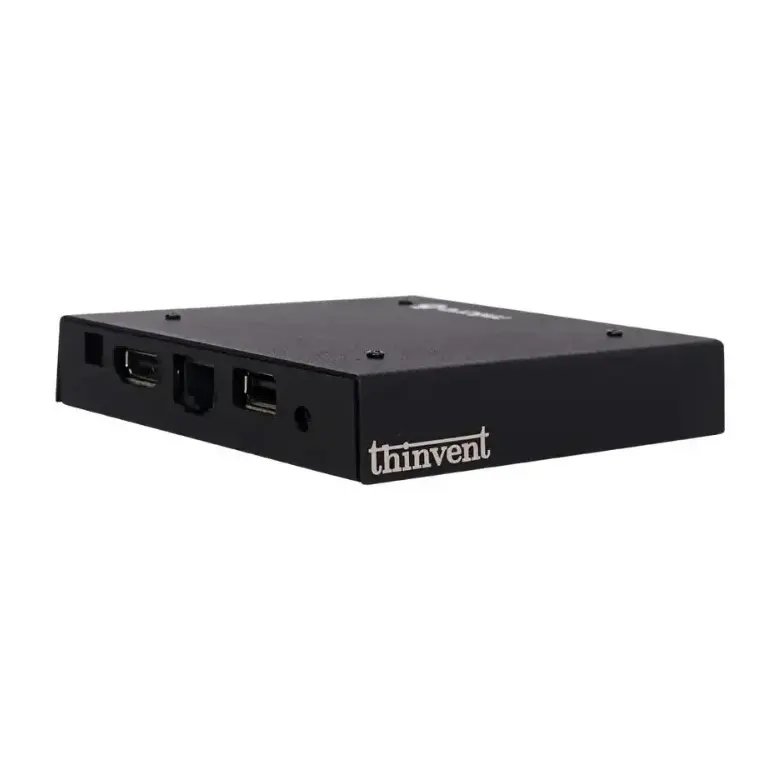
Industrial-Grade Computing for Demanding Environments
The query "ةخىهفخ" does not correspond to a recognised product name, brand, model number, or technical standard in the industrial computing space. It appears to be a random or mistyped character string rather than a searchable technical term. If you were looking for a specific model, technology, or application, we recommend refining your search using a clear product name, processor model (such as Intel® Core™ i3-1215U or Intel® Processor N100), or a use-case term like "fanless industrial PC" or "thin client for VDI."
To help you find the right system, here is an overview of the categories Thinvent manufactures and the specifications that matter most when choosing between them.
Choosing the Right Form Factor
Industrial computers, mini PCs, thin clients and all-in-one PCs serve different deployment needs, but they share a common goal: reliable, long-life operation in environments where consumer hardware struggles.
| Form Factor | Typical Use Case | Key Traits |
|---|---|---|
| Industrial PC | Factory floors, kiosks, machine control, edge gateways | Fanless cooling, wide-temperature tolerance, serial (DB9) ports, DIN/panel mounting, 24/7 duty cycles |
| Mini PC | Office productivity, digital signage, retail POS | Compact footprint, VESA mount, low power draw, quiet operation |
| Thin Client | VDI, Citrix, RDP, call centres, education labs | Centralised management, minimal local storage, low maintenance |
| All-in-One PC | Reception desks, point-of-sale, information kiosks | Integrated display (21.5" / 23.8"), reduced cabling, clean installation |
Processors, Memory and Storage
Modern industrial systems are built around low-power, high-efficiency Intel® processors. The Intel® Core™ i3-1215U, for example, offers 6 cores (2 performance + 4 efficient), speeds up to 4.4 GHz and 10 MB of cache — enough for multitasking workloads such as data acquisition, SCADA front-ends and multi-window operator stations. Entry-tier Intel® processors like the N100 and N150 suit lighter tasks such as thin-client sessions and digital signage.
Memory and storage should be sized to the workload: 8 GB is adequate for basic kiosk and thin-client roles, 16 GB suits industrial control and multi-application use, and 32 GB or more is appropriate for virtualisation or heavy data processing. SSD capacities from 128 GB to 1 TB cover most deployments, and fanless designs remove the single most common mechanical failure point in dusty or hot environments.
Connectivity and Operating Systems
Industrial deployments often depend on legacy and modern interfaces coexisting on one machine. Look for multiple Gigabit Ethernet ports (including dual-Ethernet configurations for network segmentation), HDMI outputs for dual-display setups, USB 3.2 Gen 2 and USB-C for peripherals, and quad DB9 serial ports where PLCs, sensors or older equipment must be connected.
Operating system choice matters too. Windows 11 Pro and Windows 11 IoT Value support long-term industrial rollouts, while Ubuntu Linux 24.04 LTS and embedded Linux options suit locked-down, licence-free installations. A DOS or no-OS configuration is useful when you plan to image your own software stack.
Thinvent Products Built for These Requirements
Thinvent manufactures industrial computers, mini PCs, thin clients and all-in-one PCs designed for continuous operation worldwide. Our IPC range pairs Intel® Core™ i3-1215U class processors with 16 GB DDR4 memory, 1 TB SSD storage and optional quad DB9 serial connectivity, with a choice of Windows 11 Pro, Windows 11 IoT Value, DOS, or Thinux™ Embedded Linux. Fanless chassis options, dual Gigabit Ethernet and flexible display outputs make them suitable for factory automation, kiosks, VDI and edge computing. If you can share the exact model or application you are searching for, our team can recommend the right configuration.