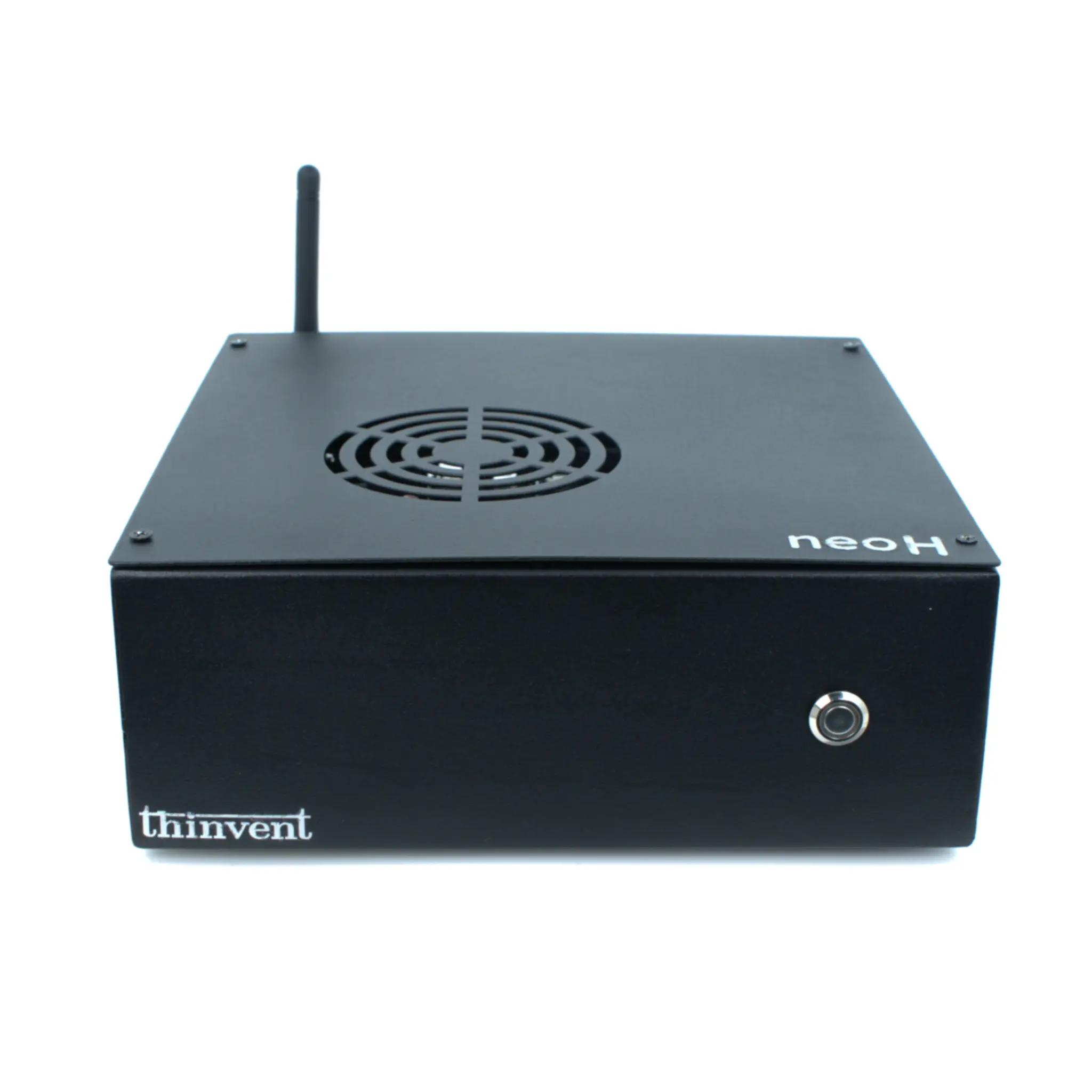
What Are Industrial Mini PCs?
Industrial Mini PCs are compact, ruggedized computing systems designed for demanding environments and specialized applications beyond typical office use. They are engineered for reliability, long-term availability, and operation in conditions with wide temperature ranges, dust, vibration, or continuous 24/7 operation. Unlike consumer-grade desktops, these systems often feature fanless cooling for silent and maintenance-free operation, industrial-grade components, and extensive connectivity options for integrating with machinery and sensors.
Key Specifications and Technical Details
The core of a modern industrial mini PC is a low-power, high-efficiency processor, such as the Intel® N-series (e.g., N100). Key specifications to consider include:
-
Processor: Modern Intel processors (e.g., 12th Gen N100) with multiple cores (e.g., 4 cores) provide efficient performance for compute-intensive tasks.
-
Memory (RAM): Configurations typically range from 8GB to 16GB of DDR4 RAM, ensuring smooth multitasking.
-
Storage: Solid-state drives (SSDs) from 128GB to 512GB offer fast boot times, application loading, and data reliability.
-
Form Factor: Ultra-compact designs save valuable space in control cabinets, kiosks, or behind displays.
-
Connectivity: Multiple Gigabit Ethernet ports, USB 3.2, HDMI/DisplayPort outputs, and optional serial ports (COM) are standard for industrial interfacing.
-
Operating System: Support for various OS options, including Windows 11 IoT/Pro, Linux distributions (Ubuntu, Thinux™), or FreeDOS, provides flexibility for different software ecosystems.
Common Use Cases and Applications
These versatile computers are deployed across numerous industries:
-
Digital Signage & Kiosks: Driving interactive displays, menu boards, and information points in retail, hospitality, and public spaces.
-
Factory Automation & IoT Gateways: Acting as a control node or data aggregation point on the factory floor, connecting PLCs and sensors to network systems.
-
Thin Client & VDI: Providing a secure, manageable endpoint for accessing virtual desktop infrastructures in offices, call centers, and healthcare.
-
Embedded Systems: Serving as the brain for medical devices, transportation systems, and other dedicated equipment requiring stable, long-life hardware.
Comparison of Common Industrial Mini PC Processors
| Processor Model | Cores/Threads | Typical Use Case | Key Advantage |
|---|---|---|---|
| Intel N100 | 4 Cores / 4 Threads | Digital Signage, Basic Thin Client, IoT Gateway | Excellent power efficiency, fanless design, modern graphics. |
| Intel N95 | 4 Cores / 4 Threads | Entry-Level Kiosk, Lightweight Computing | Cost-effective for basic display and connectivity tasks. |
| Intel J4125 | 4 Cores / 4 Threads | Legacy/Established Embedded Systems | Proven reliability, widely supported in long-lifecycle projects. |
| Intel i3/i5 (U-Series) | 6-10 Cores / 8-12 Threads | Advanced Automation, Edge AI, Multi-display Setups | Higher CPU performance for data processing and light AI workloads. |
Thinvent Industrial Mini PCs
Thinvent specializes in robust, fanless industrial computing solutions built for professional environments. Our product range, such as the Aero Mini PC series, incorporates the latest efficient Intel processors (like the N100) in a compact, durable chassis. We offer extensive customization in memory, storage, and operating systems to match your project's exact requirements. Designed for 24/7 reliability, Thinvent mini PCs are an ideal choice for system integrators and businesses looking for a stable computing foundation for digital signage, industrial automation, thin client deployments, and embedded applications.