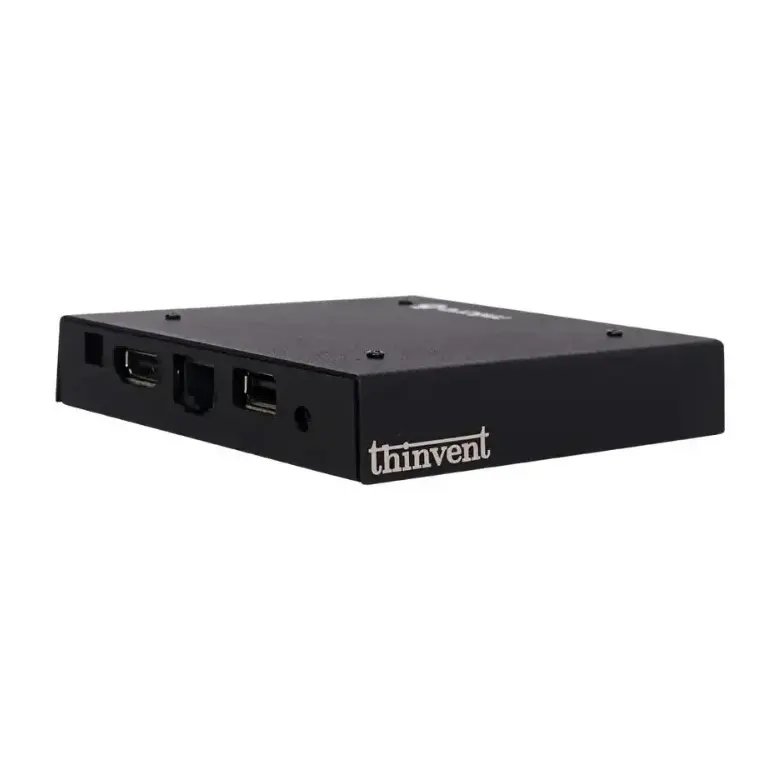
What is a Fanless PC?
A fanless PC is a computer system designed without any mechanical cooling fans. Instead of relying on moving parts to dissipate heat, these systems use passive cooling techniques such as large heatsinks, heat pipes, and thermally conductive chassis to draw heat away from the processor and other components. This design eliminates the noise, dust accumulation, and mechanical failure points associated with traditional fan-based cooling, making fanless PCs ideal for environments where silence, reliability, and cleanliness are critical.
Key Specifications and Technical Details
Fanless PCs typically feature low-power processors that generate less heat, enabling effective passive cooling. Common processor choices include Intel® N-series (e.g., N100), Intel® Core™ i3/i5 U-series (e.g., i3-1215U, i5-1240P), and ARM® Cortex-A series (e.g., Cortex A53, A55). These processors offer a balance of performance and thermal efficiency, with TDPs ranging from 6W to 28W. Memory configurations vary from 2GB to 16GB, with storage options including eMMC (16GB to 64GB) and SSDs (128GB to 512GB). Connectivity typically includes Gigabit Ethernet, HDMI, USB 3.2, and optional WiFi.
| Feature | Entry-Level (ARM) | Mid-Range (Intel N) | High-Performance (Intel Core) |
|---|---|---|---|
| Processor | ARM Cortex A53/A55 | Intel N100 | Intel i3-1215U / i5-1240P |
| Cores/Threads | 4 cores | 4 cores | 6-12 cores |
| Max Frequency | 1.9 GHz | 3.4 GHz | 4.4 GHz |
| Typical RAM | 2-4 GB | 4 GB | 8-16 GB |
| Storage | 16-64 GB eMMC | 128 GB SSD | 256-512 GB SSD |
| Power Consumption | ~5W | ~6W | 15-28W |
Use Cases and Applications
Fanless PCs excel in environments where noise, dust, or vibration are concerns. Common applications include:
-
Digital Signage: Silent operation in retail stores, museums, and lobbies.
-
Industrial Automation: Dust-free operation in factories and workshops.
-
Medical Environments: Quiet computing for patient rooms and clinics.
-
Home Theater PCs (HTPC): Noise-free media streaming and playback.
-
Edge Computing: Reliable operation in remote or harsh conditions.
-
Office Workstations: Quiet computing for open-plan offices.
The lack of moving parts also reduces maintenance requirements and extends the lifespan of the system, making fanless PCs a cost-effective long-term investment.
Comparison with Traditional PCs
| Feature | Fanless PC | Traditional PC (with fans) |
|---|---|---|
| Noise Level | 0 dB (silent) | 20-40 dB (audible) |
| Dust Resistance | High (sealed design) | Low (dust accumulates on fans) |
| Reliability | High (no fan failures) | Moderate (fan bearings wear out) |
| Performance | Moderate (limited by thermal design) | High (can use high-TDP CPUs) |
| Form Factor | Compact, often rugged | Varies, typically larger |
Thinvent's Fanless Product Range
Thinvent offers a comprehensive lineup of fanless PCs designed for diverse applications. Our portfolio includes:
-
ARM-based fanless thin clients (Micro 5, Micro 6 Pro) for ultra-low power and silent operation.
-
Intel N-series fanless mini PCs (Treo, IPC1) for balanced performance and efficiency.
-
Intel Core i3/i5 fanless industrial PCs (IPC3, IPC5) for demanding workloads.
-
Aero Mini PC series with Intel Core processors for high-performance fanless computing.
All Thinvent fanless PCs feature robust aluminum chassis for effective heat dissipation, support for multiple operating systems (Windows, Linux), and flexible mounting options including VESA and wall-mount kits. Explore our complete range to find the perfect silent computing solution for your needs.